
GSIX

A Tree|エイ・ツリー|吉野杉の無垢材の魅力が、GINZA SIXを彩る。|GINZA SIX

A Tree(エイ・ツリー)

The charm of solid Yoshino cedar
graces GINZA SIX.

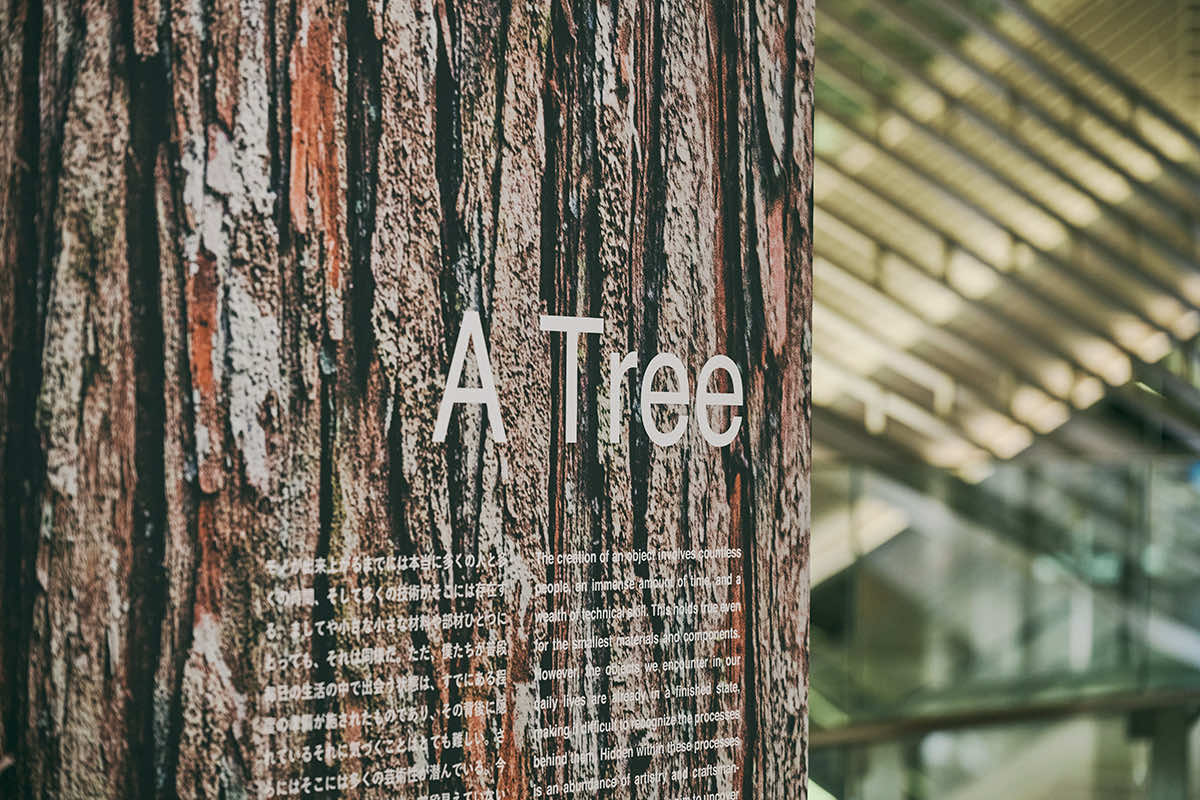
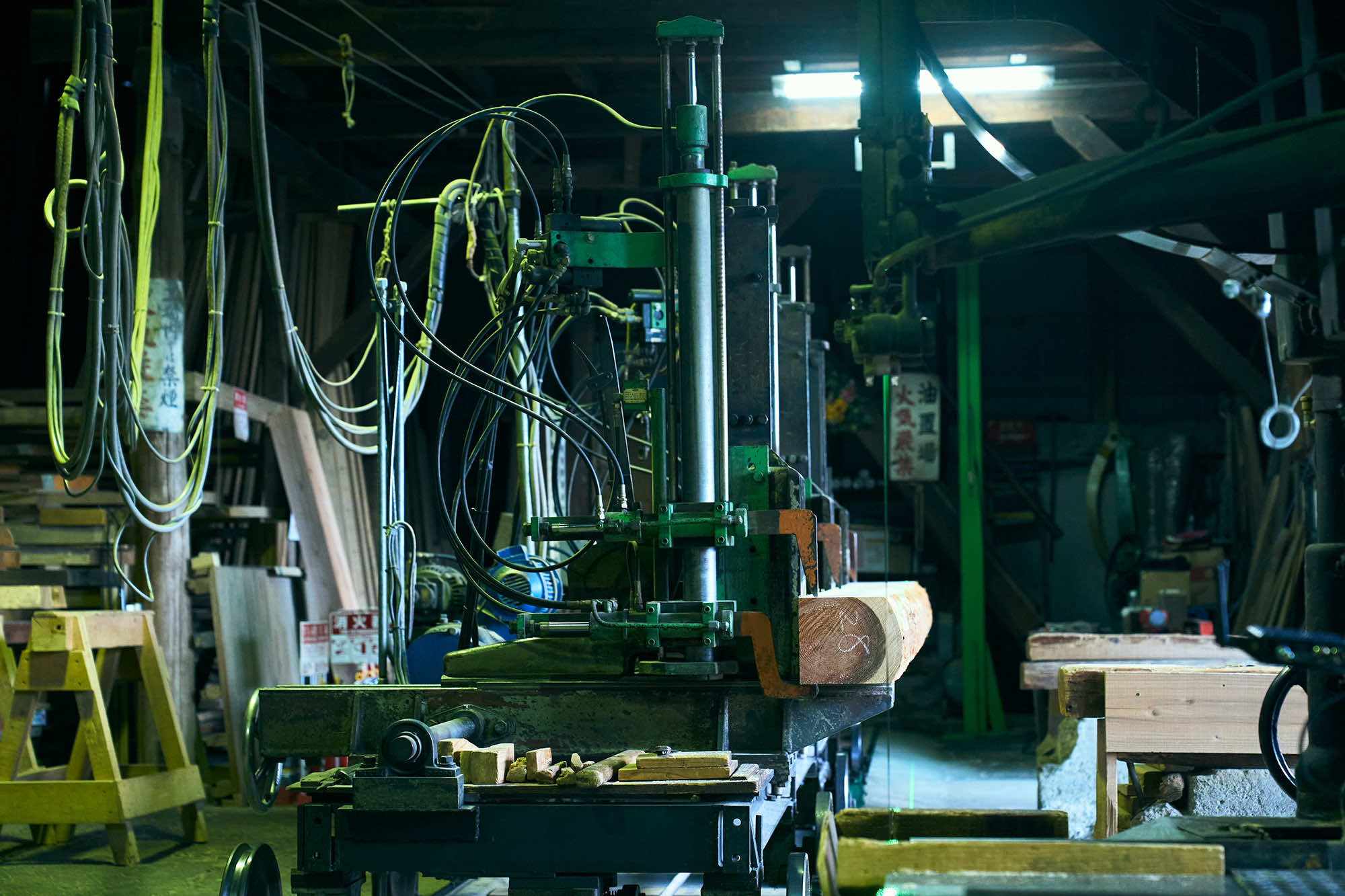
The wood used as a building material and to make woodworking products comes from trees that have grown in forests over many years. Before entering the mountains, we offer prayers to the gods with a deep reverence for nature. The timber is carefully processed to avoid any sacrilege of such blessings. Set to launch on April 17, the A Tree exhibition, directed by Keisuke Nakamura, a representative of the architectural firm DAIKEI MILLS, will feature Yoshino cedar wood as its central theme. This grand project transcends the boundaries of conventional exhibitions and puts the materials themselves front and center as they are transformed and evolve into furniture and small-scale architectural structures. We will continue expanding the project’s functions as a communication tool incorporating elements of art and culture while working with artists both in Japan and abroad. Here we present an overview of this three-year exhibition, accompanied by an interview with Keisuke Nakamura.

A Tree:Phase 1

Creators
DAIKEI MILLS, HOUEI FORESTRY, Ohtani Mokuzai
Exhibition Venue
Rest areas around the central atrium on the 3rd to 5th floors
Exhibition Period
From Thursday, April 17, 2025

Returning to the roots of manufacturing

In the central atrium of GINZA SIX, Yayoi Kusama, Kohei Nawa, Jean Jullien, Kenji Yanobe, and other world-renowned contemporary artists have created massive installations that add to the complex’s reputation as a commercial facility with an affinity for art and culture. Starting on April 17 of this year, a new initiative called A Tree will launch in the rest areas adjacent to the atrium. The project features Yoshino cedar sourced from the mountains of Yoshino.

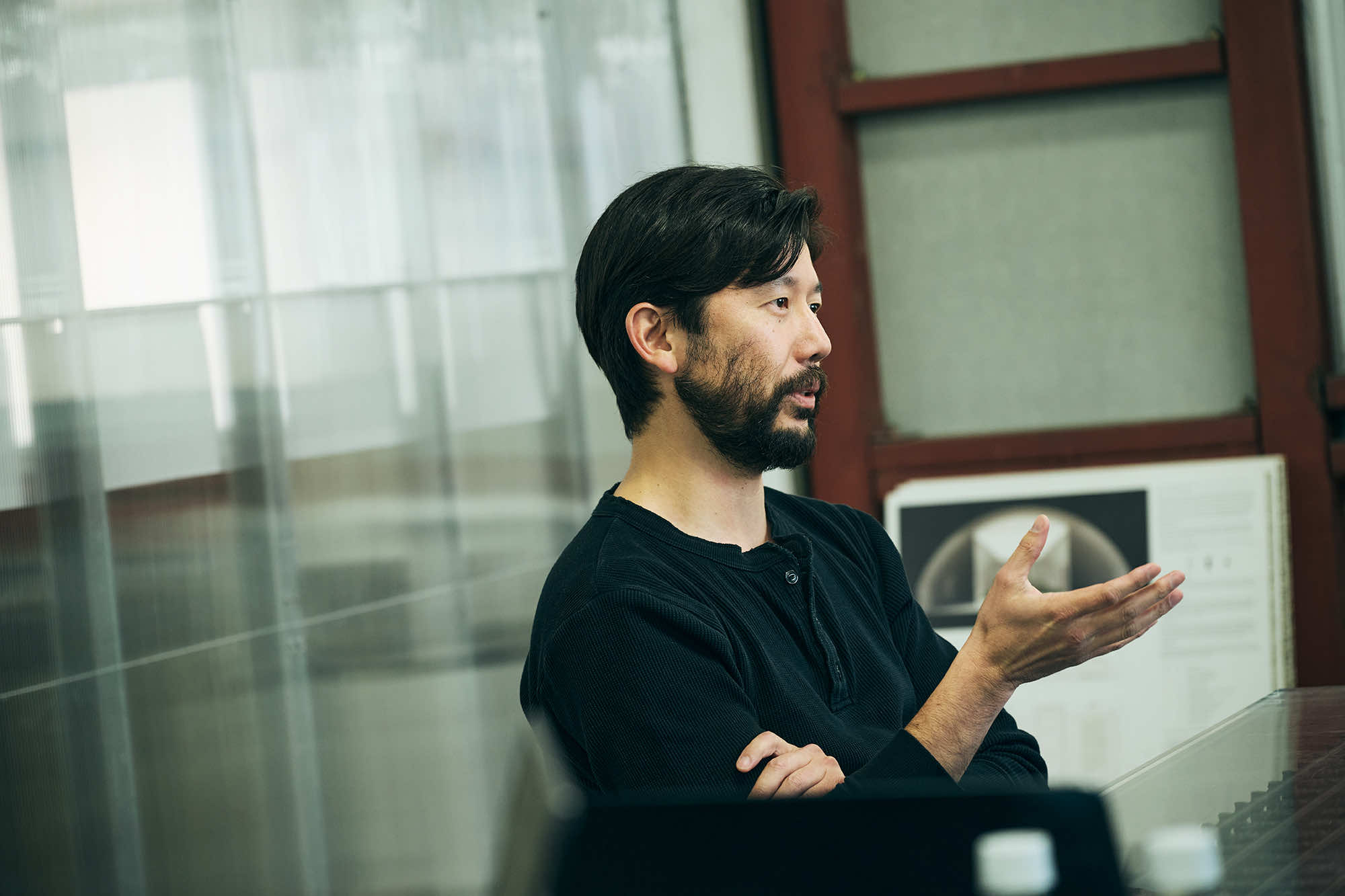
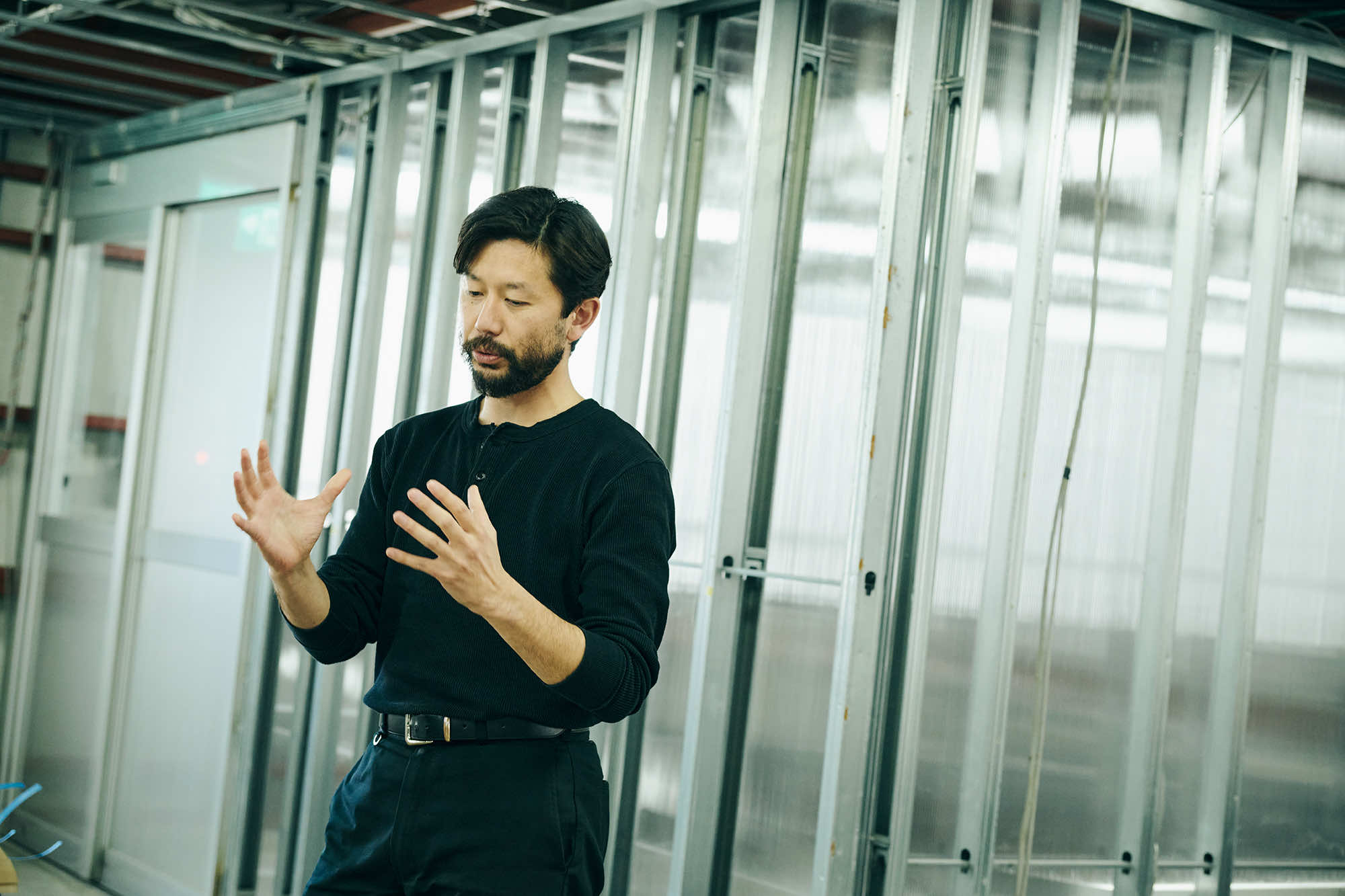
“For this exhibition,” comments Mr. Nakamura, “we returned to the fundamental question of what the essence of manufacturing is, and explored what can only be achieved and what message should be conveyed at GINZA SIX. Every day, all sorts of things are being made, but many aspects, like the environment from which the materials are sourced and the processes they undergo before reaching consumers, remain obscure and aren’t readily apparent from the finished product. The origins of the materials, the processes by which products are shaped, and the distribution chains that bring them to people... I think it’s important to focus on these core aspects of manufacturing and to take the time to present the process in detail. I believe only a commercial facility with a long-standing commitment to art and culture can successfully express this process as art. And that is precisely why it’s worth doing.”

Trees are felled, distributed,
and turned into artwork.

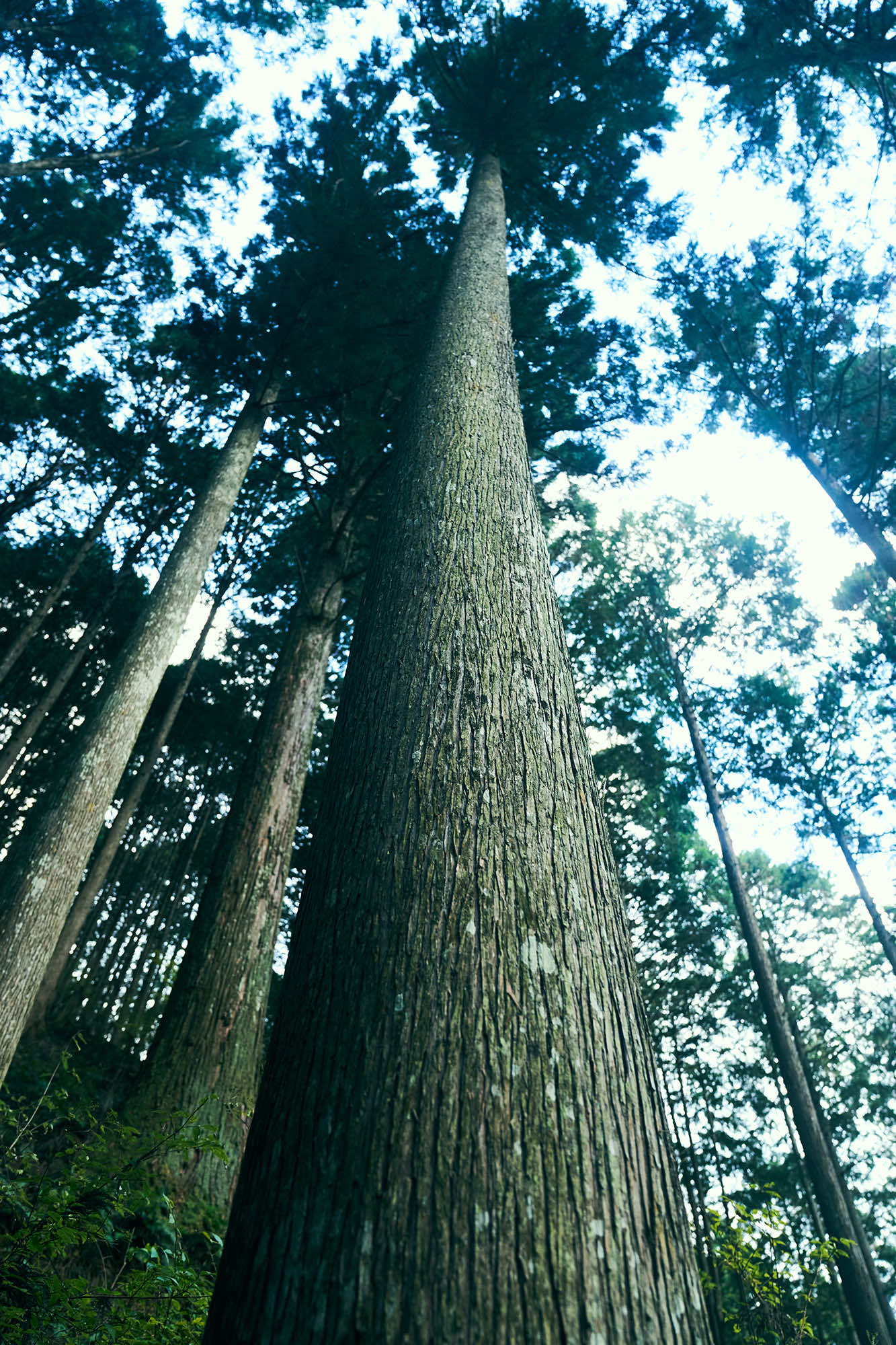
From the perspective of an art exhibition where the materials take center stage, Mr. Nakamura focused on Yoshino cedar—a timber harvested in the Yoshino forestry region of Nara Prefecture and renowned as Japan’s representative building and woodworking material.

“Wood is a vital material that has long supported Japanese society,” says Mr. Nakamura, “from uses such as for large-scale construction to small everyday items like chopsticks. Of the many types of wood available, we focused on Yoshino cedar because it best embodies the essence of Japan. I wanted to take a deep dive into the process—from the moment the wood is cut to the final product—using timber sourced from the Yoshino region, Japan’s leading cedar production region and a UNESCO World Heritage Site.”

The meaning of manufacturing
with nature’s bounty

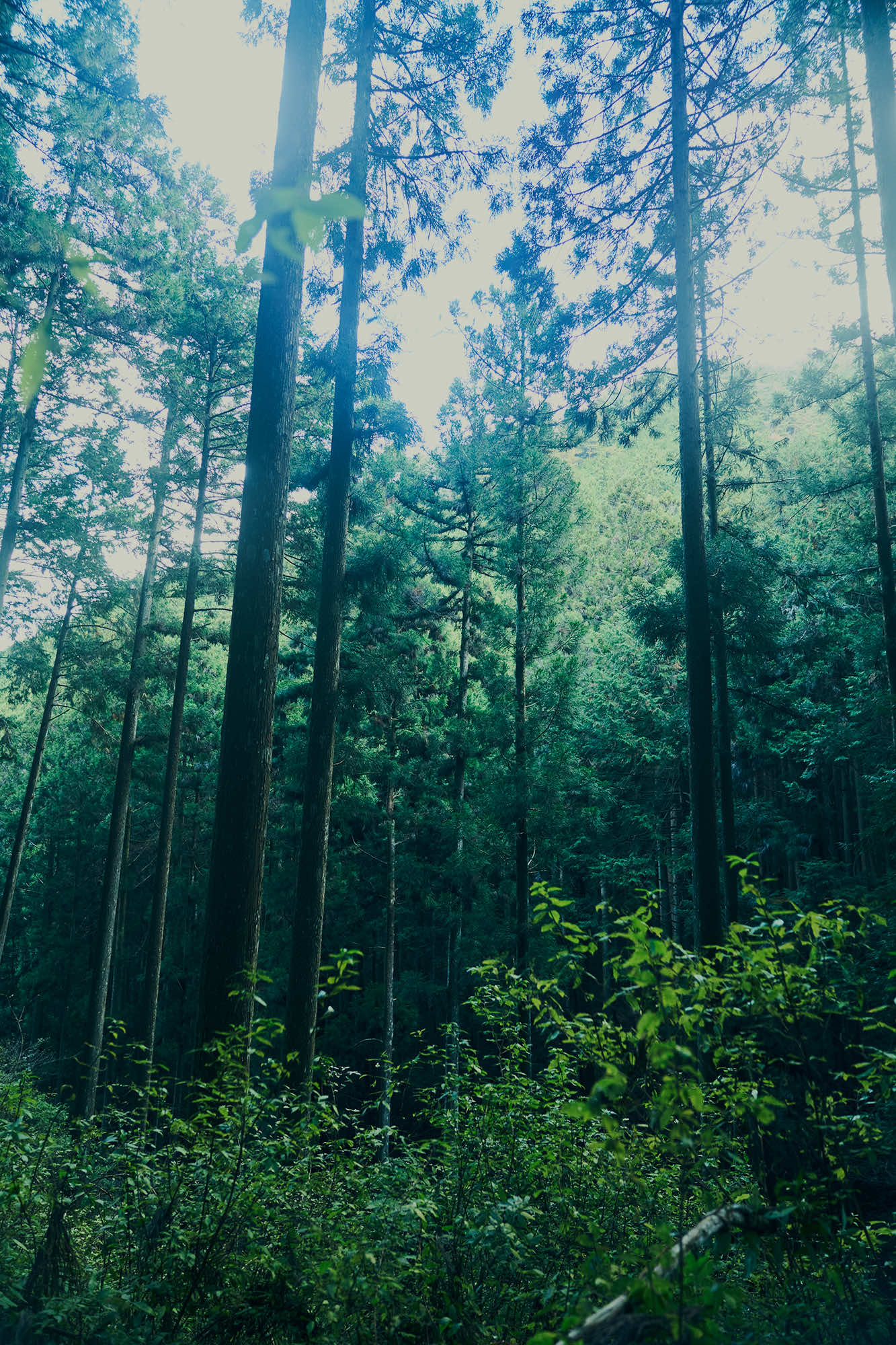
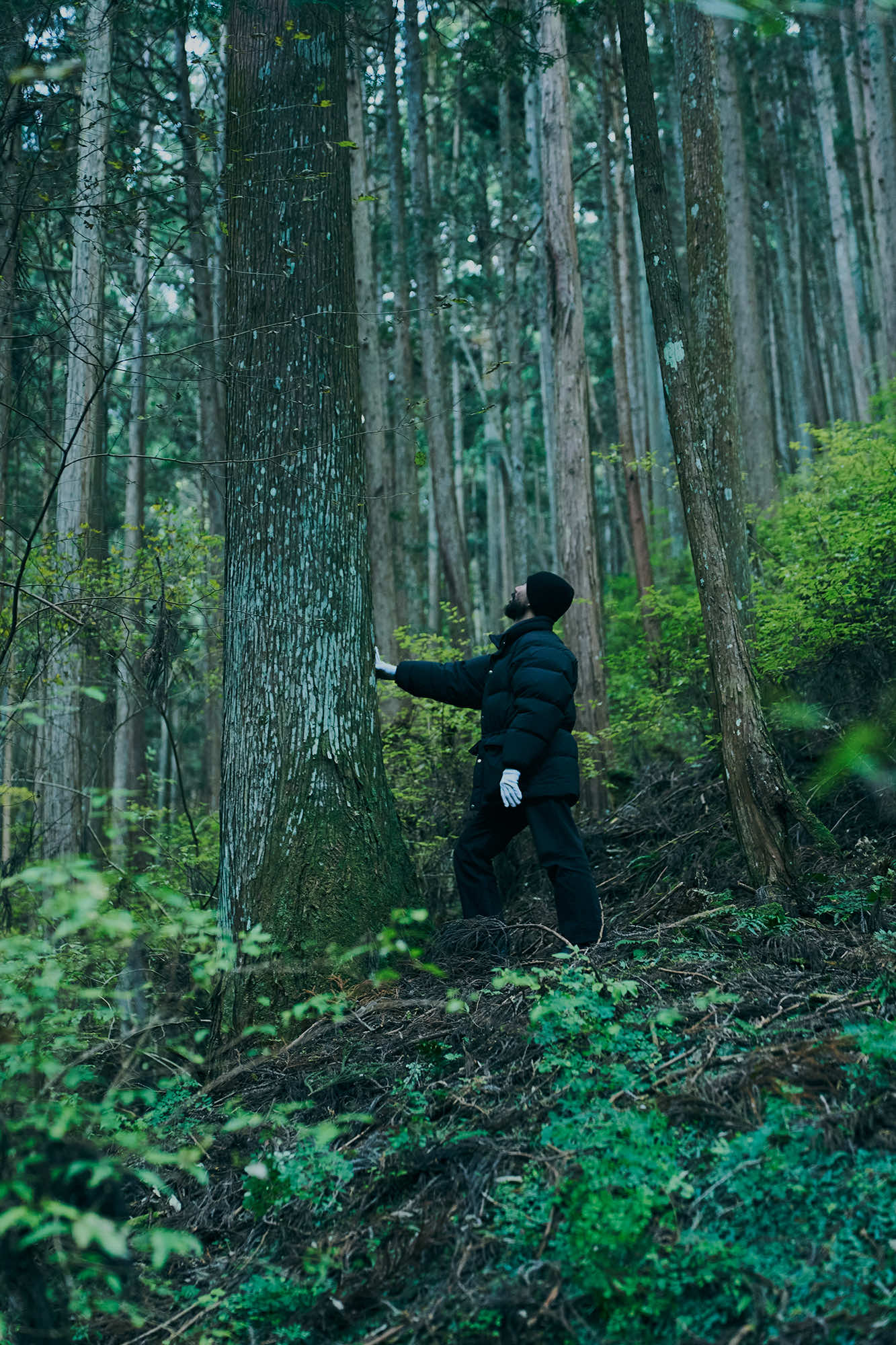
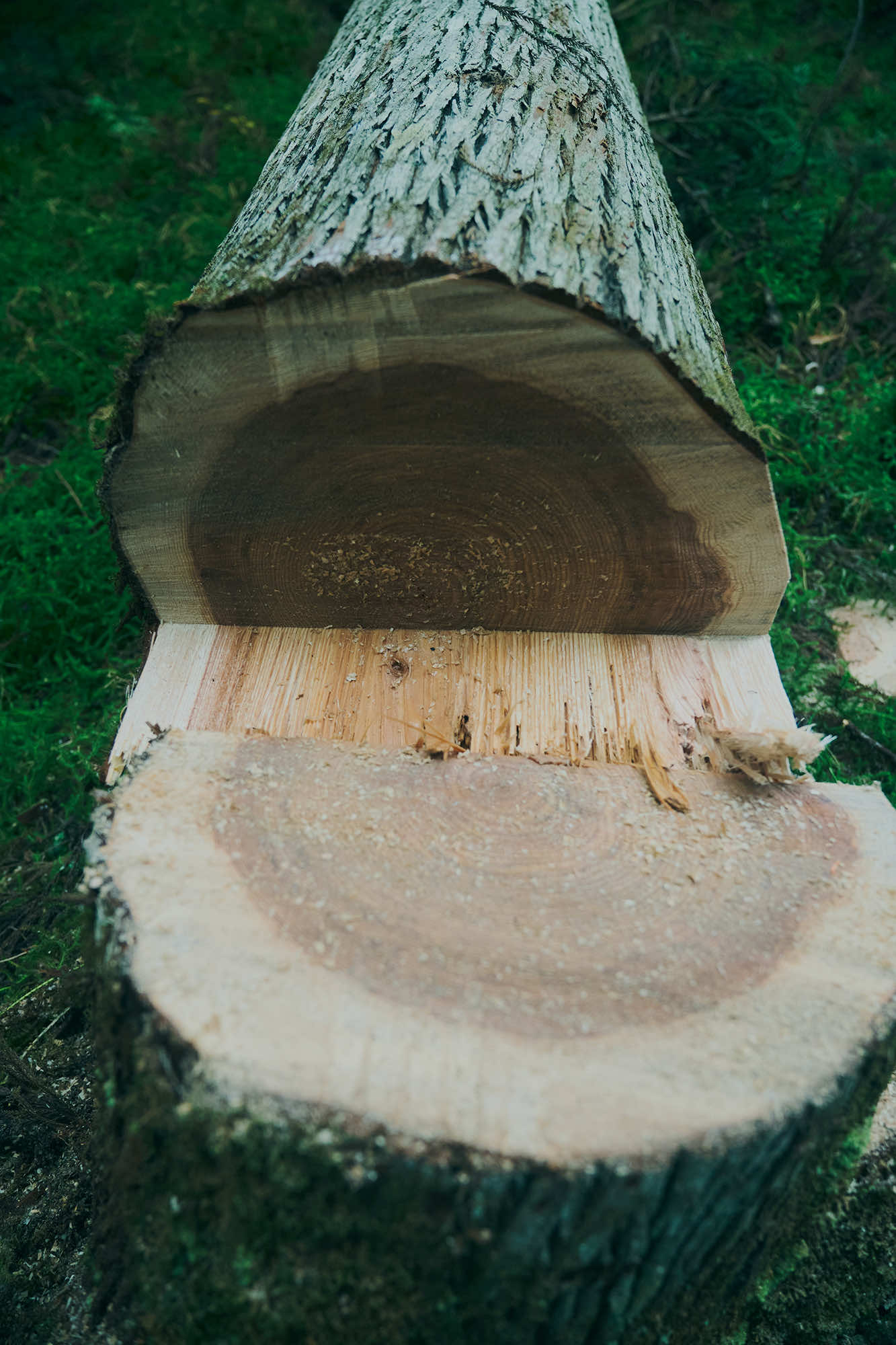
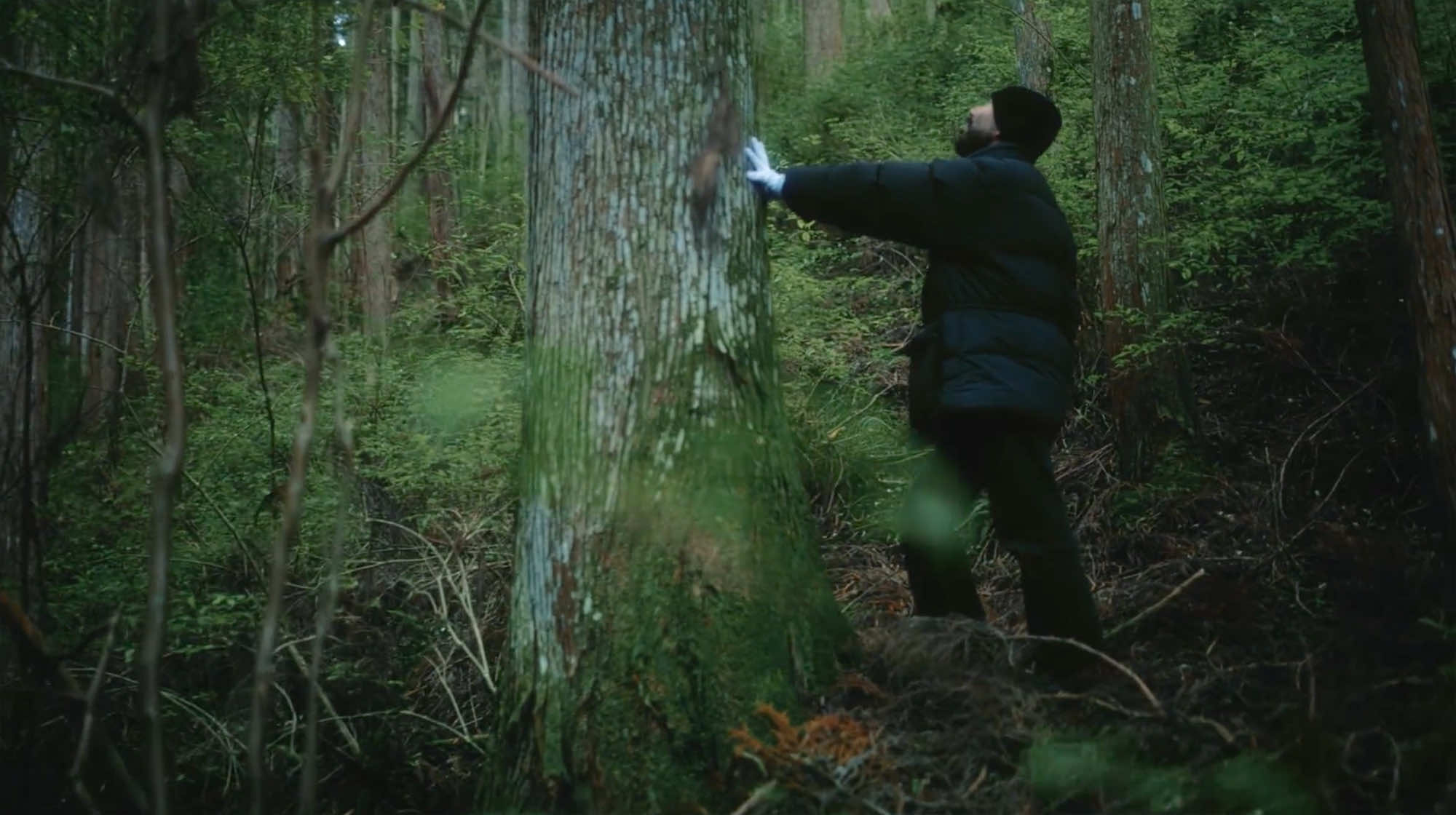
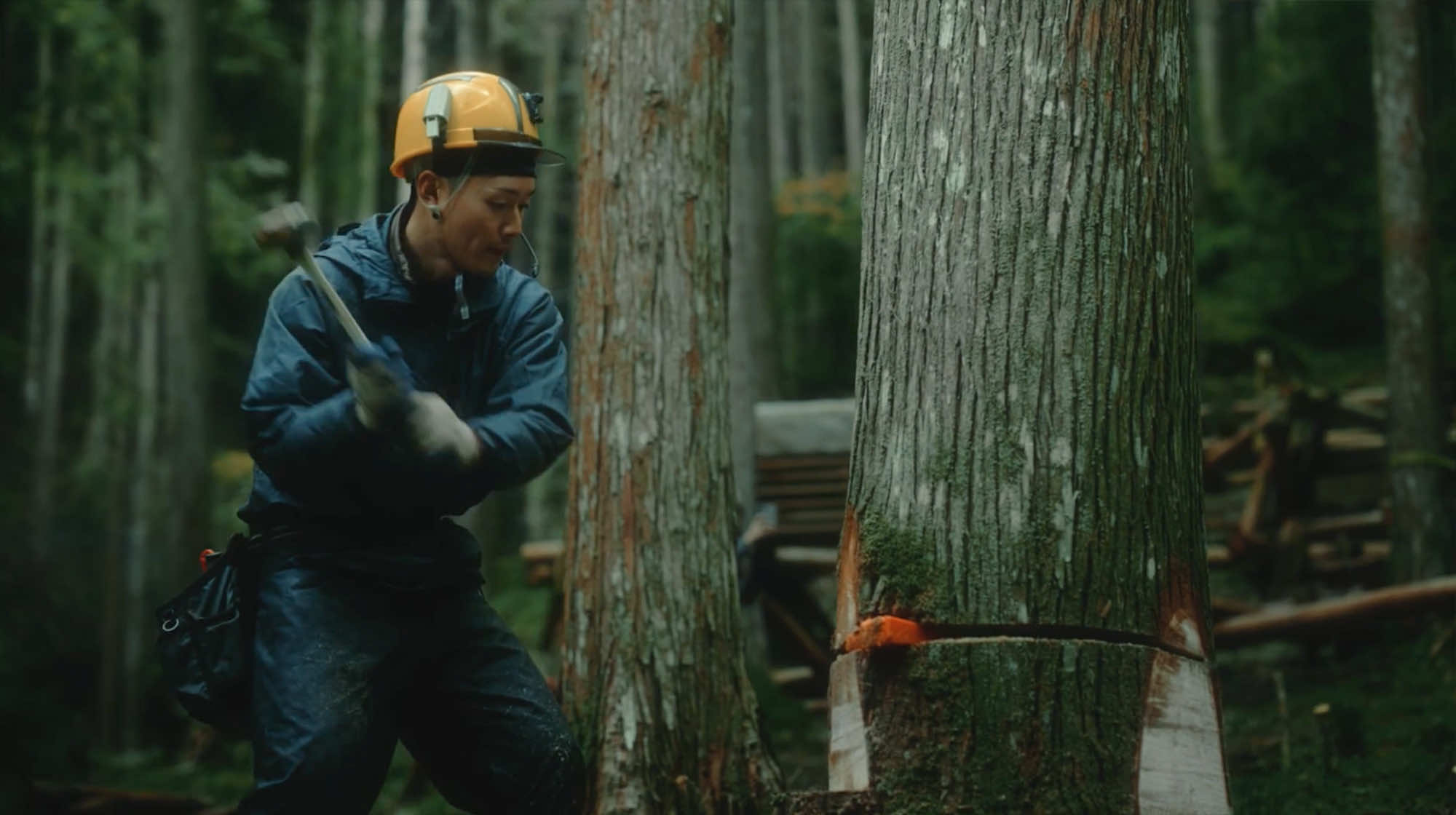
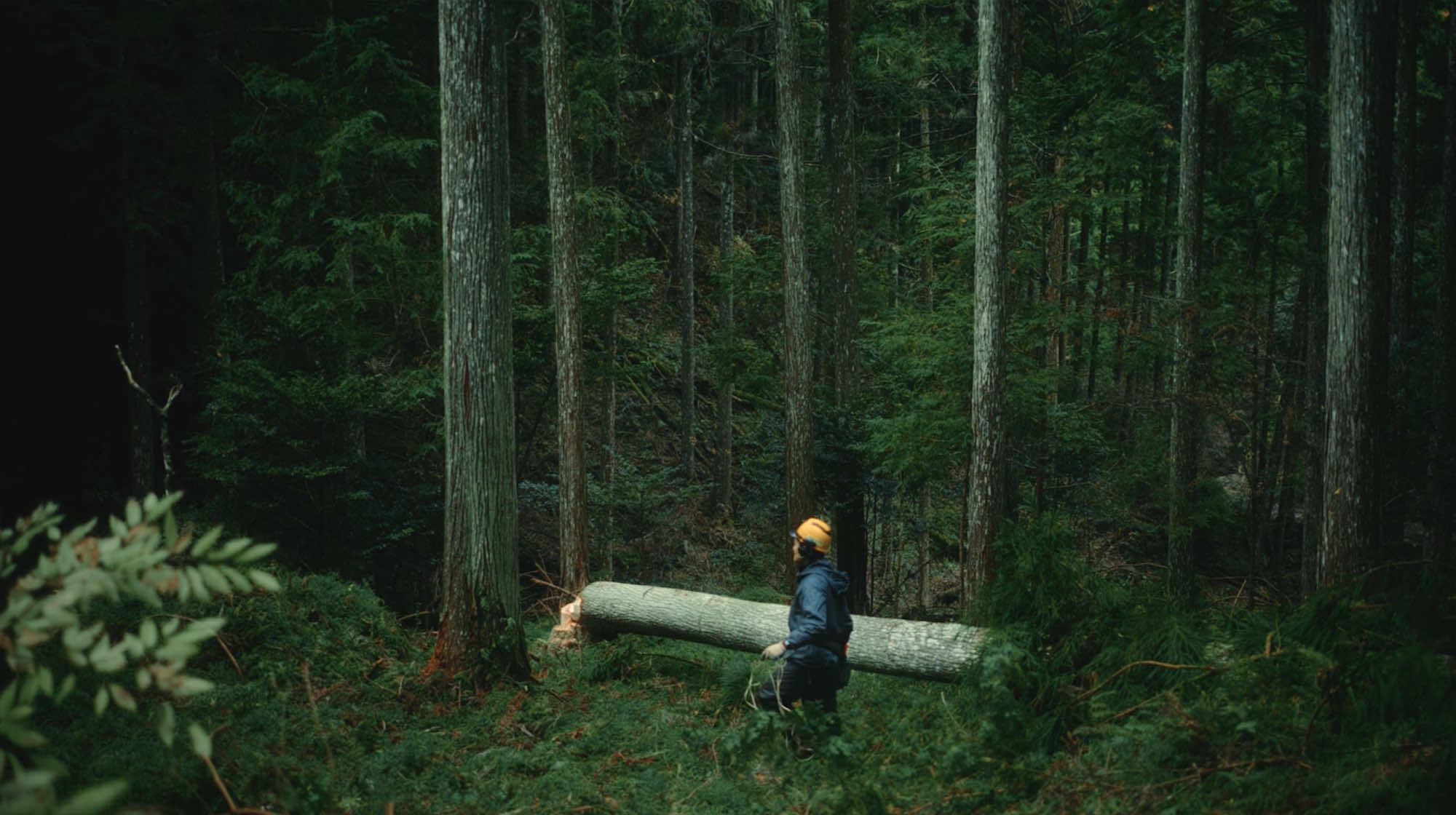
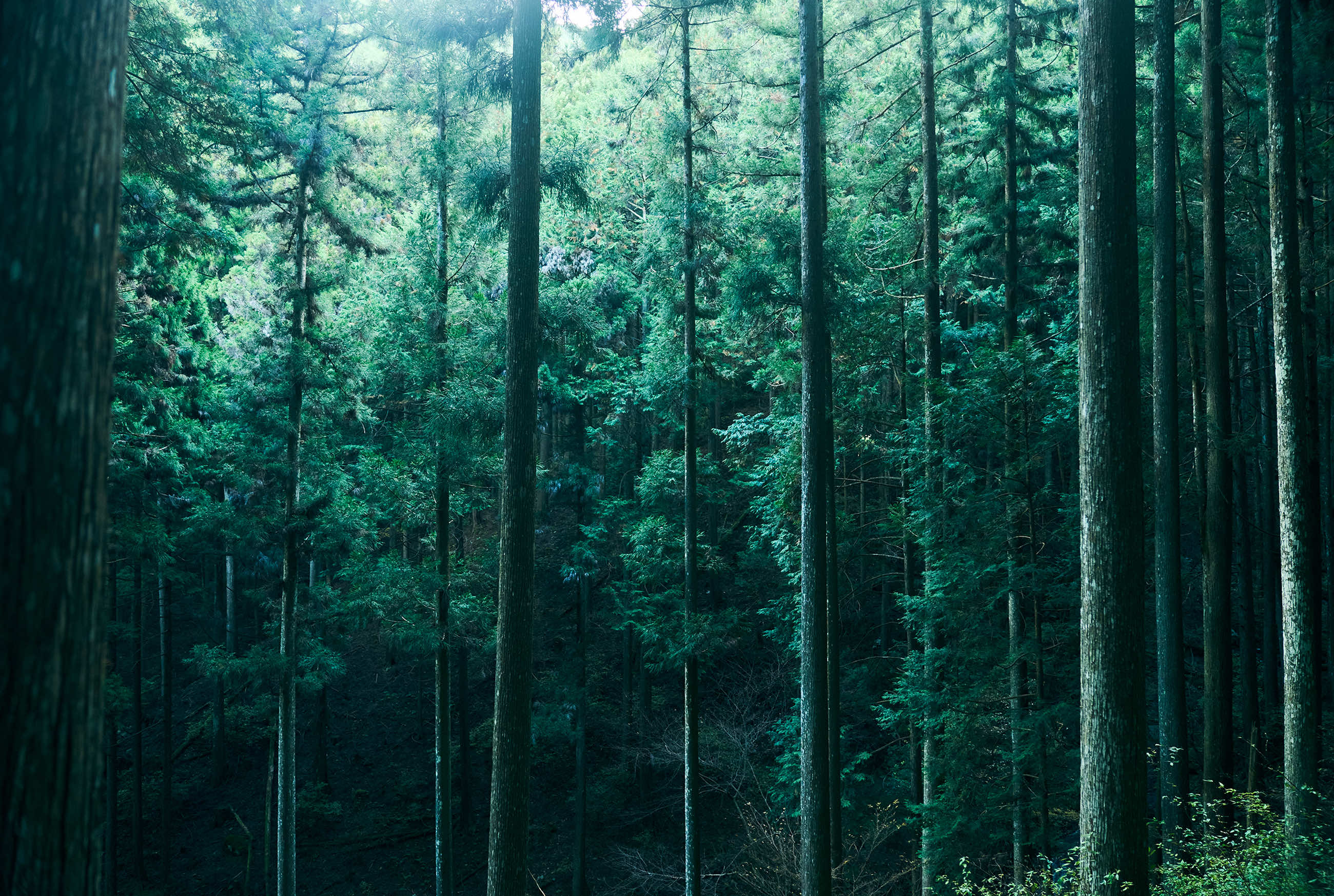
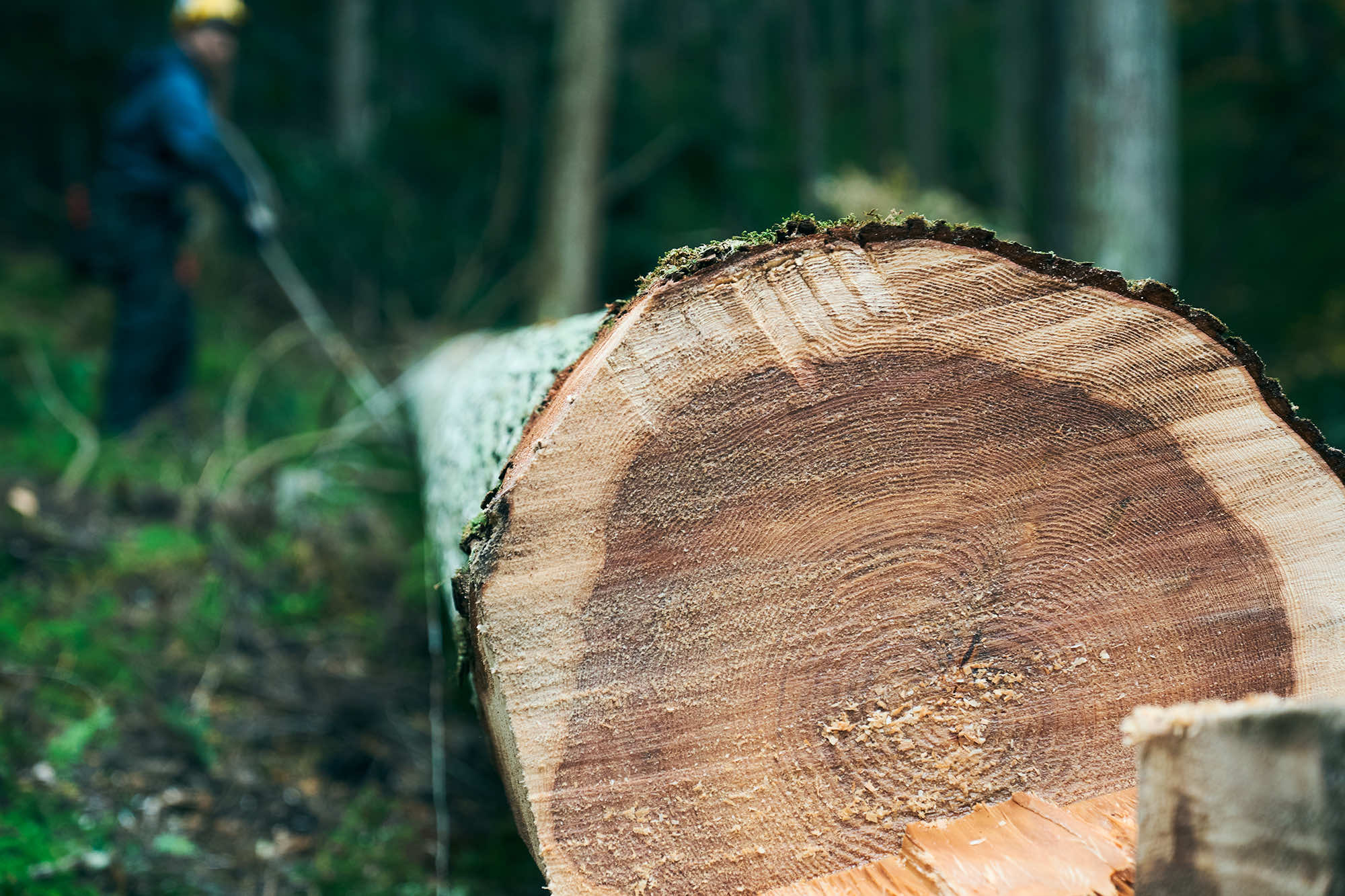
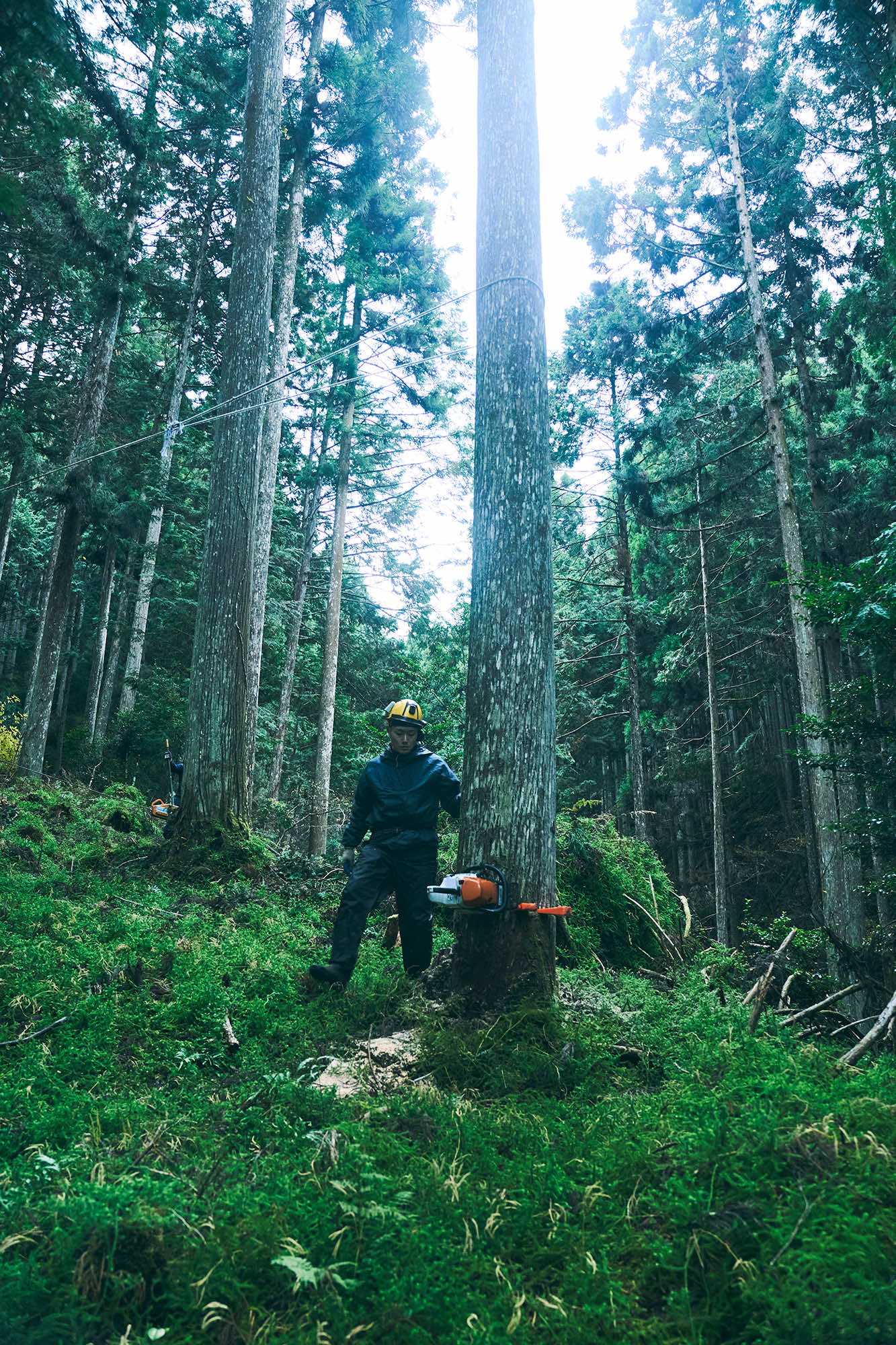
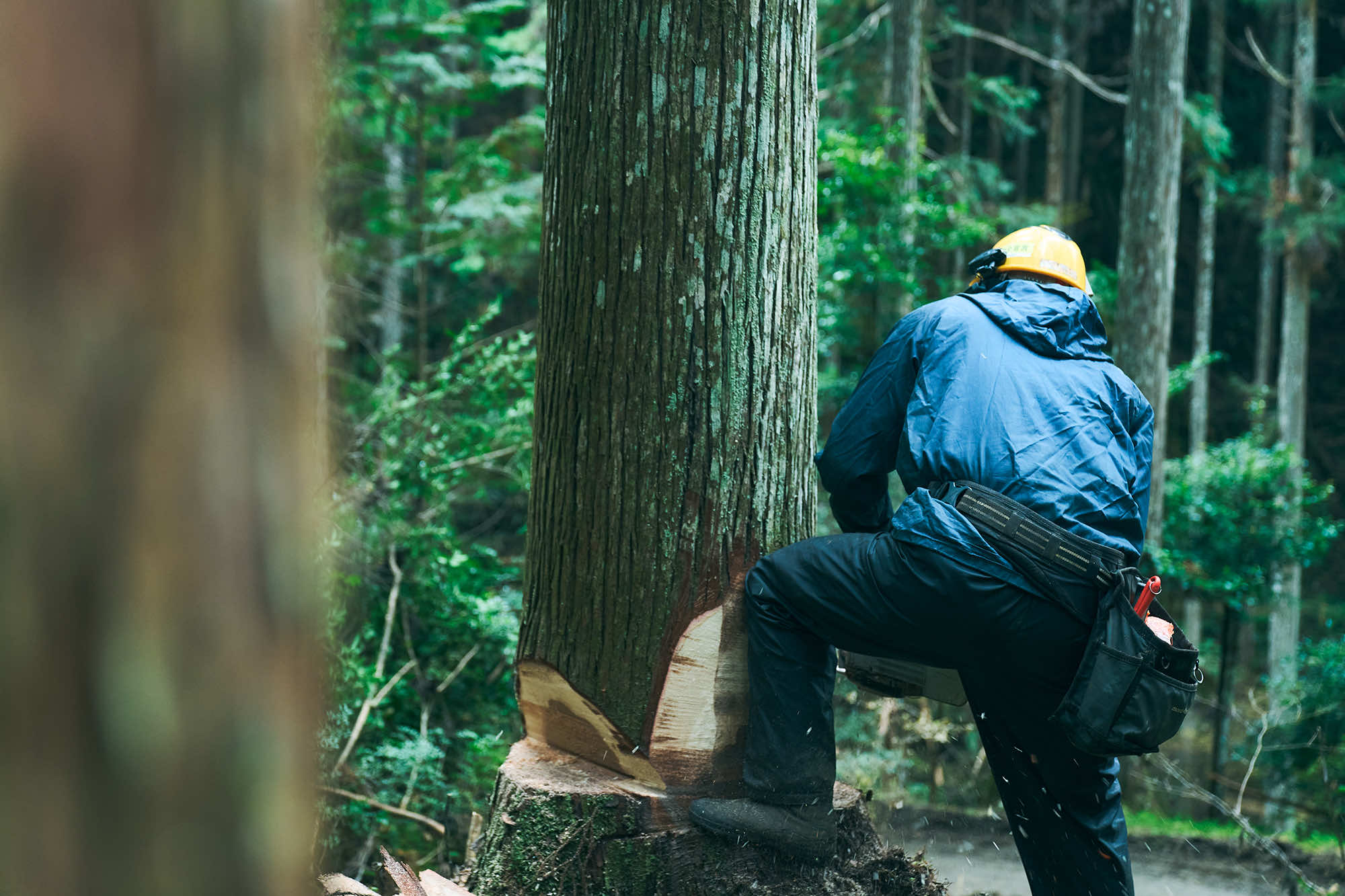
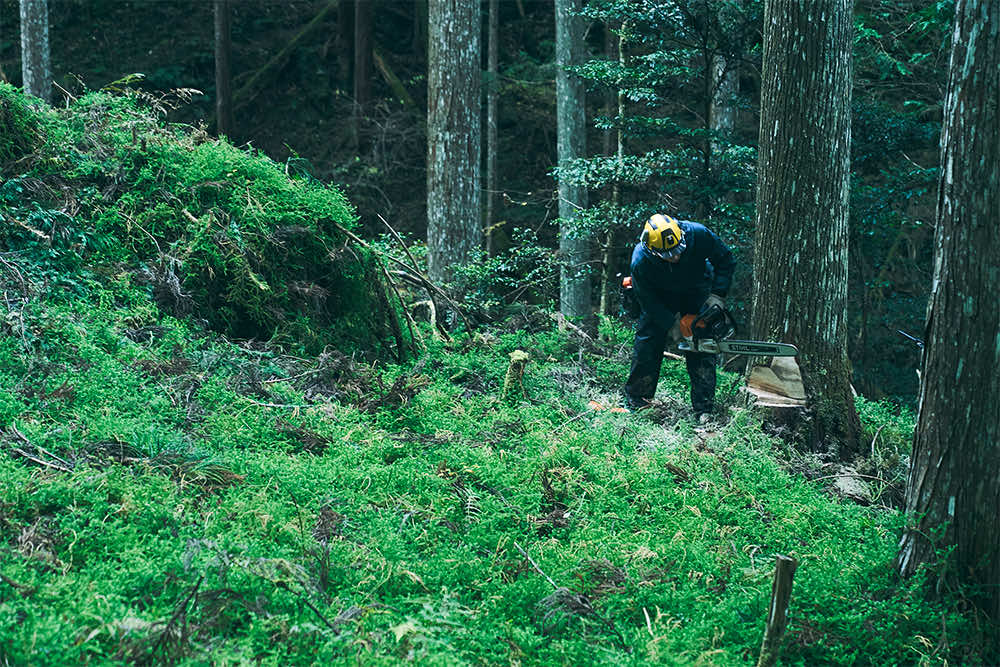
Yoshino cedar trees were once planted by hand and nurtured into forests over many years. They are far too majestic to be described as a mere raw material. Mr. Nakamura says there are things he could only appreciate after actually going into the mountains and witnessing the logging process firsthand.

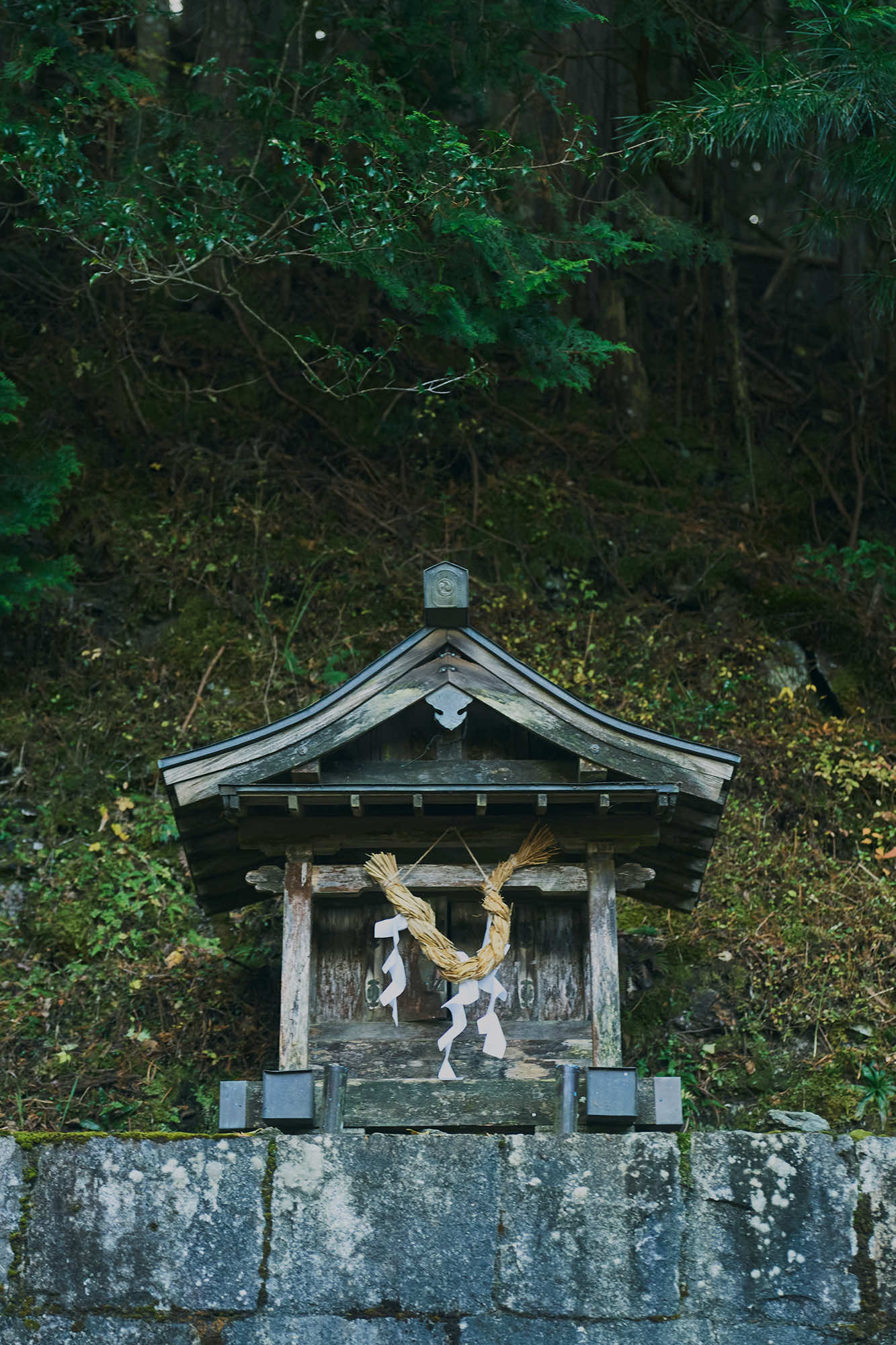
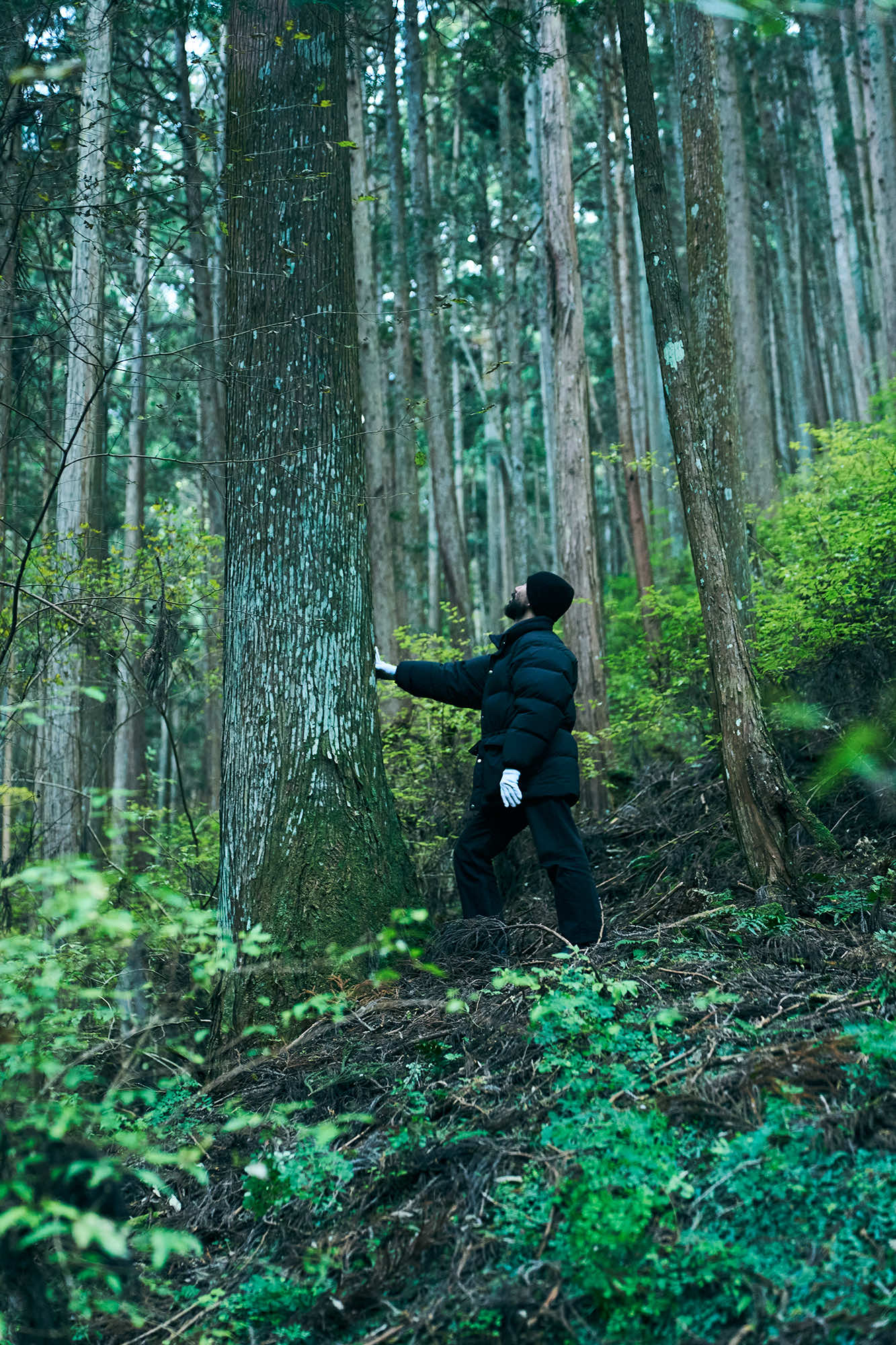
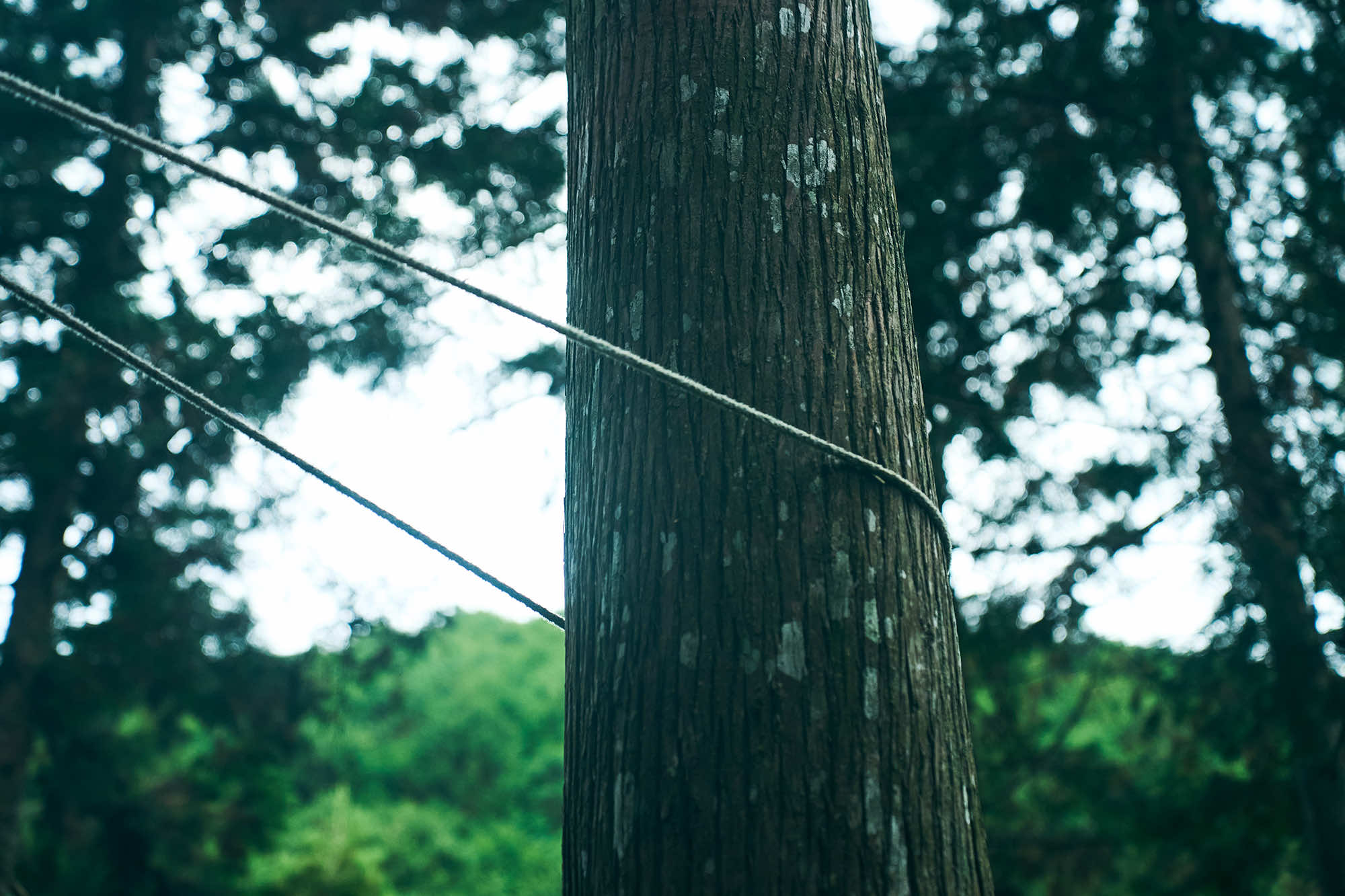
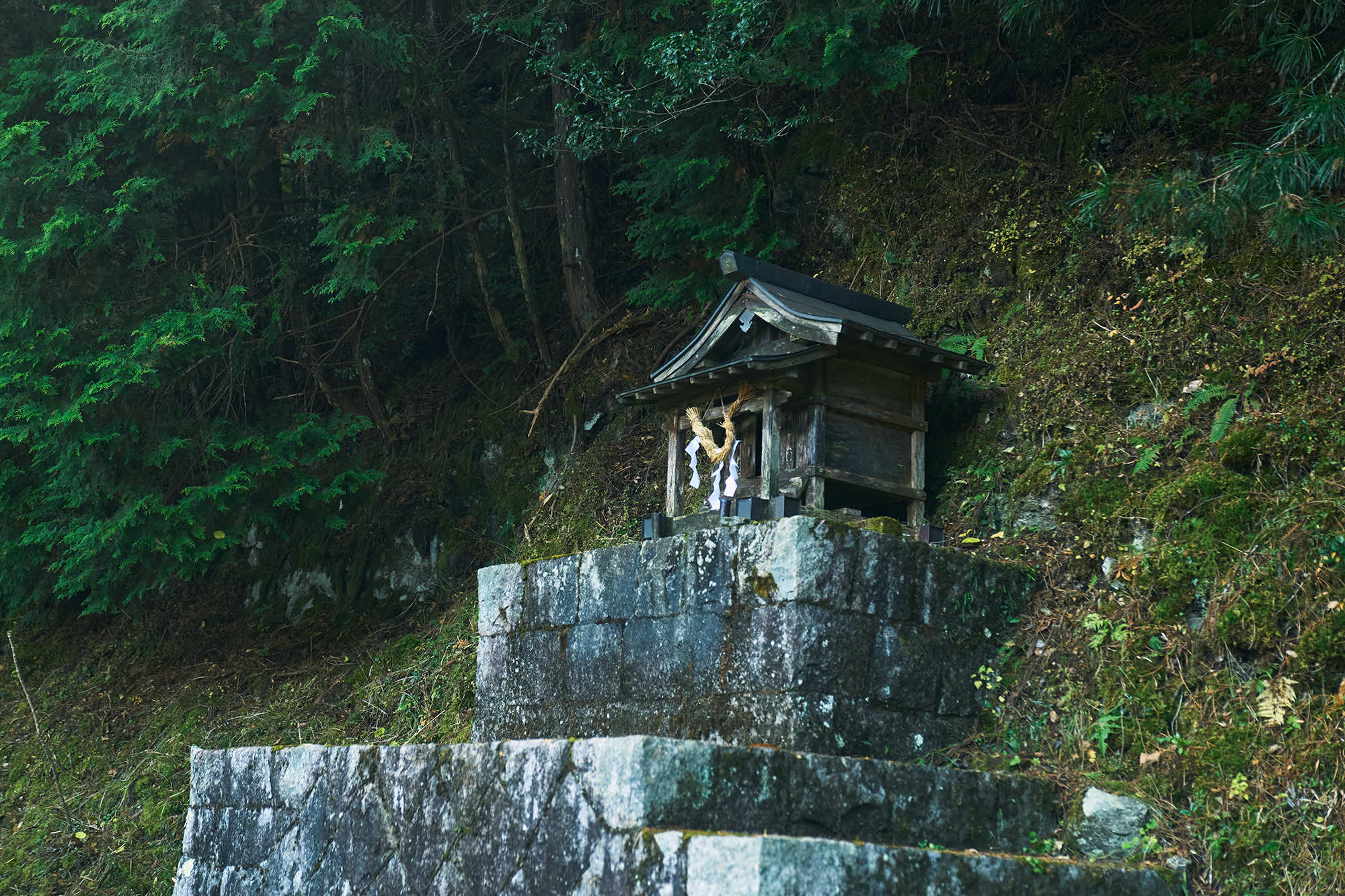
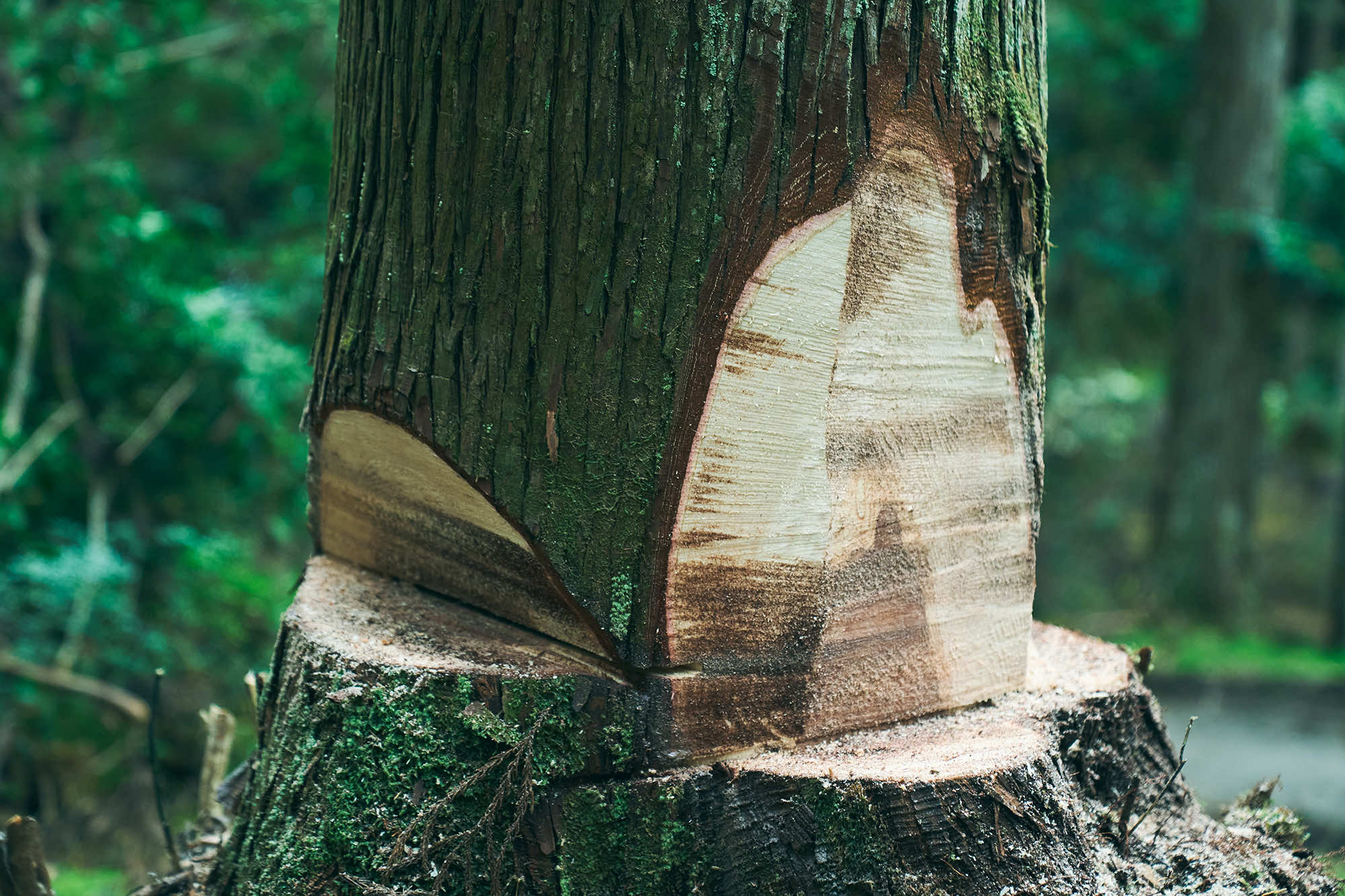
“What struck me most when I entered the mountains of Yoshino was the local people’s deep reverence for nature and for these sacred mountains,” he says. “There’s a shrine at the entrance to the forest. People always pray there before heading into the mountains. There are all sorts of stories about the gods—like, which days you shouldn’t go into the mountains and rules of etiquette—that we just can’t wrap our heads around. The grandeur and the fear when a tree falls. It left a far deeper impression on me than anything I had ever imagined. When cutting down a tree growing on a slope, the direction and angle at which it should fall is carefully calculated. I realized that it requires far more time and effort than I had imagined. It was a great learning experience for me in terms of working with natural materials, and I felt a strong sense of responsibility for the act of creating something.”

Direct collaboration
to explore
a new phase of forestry

Mr. Nakamura’s encounter with Yoshino cedar dates back two years. It was prompted by his participation, he relates, in the art festival “MIND TRAIL Okuyamato: The Museum in Your Heart,” in which participants experienced the grandeur of nature through artworks while trekking in the Nara Okuyamato area.

“I spent a month in the Yoshino area, interacting with local people involved in the forestry industry and listening to their stories every night.,” he says. “Through these conversations, I learned that demand for cedar—once touted as a high-quality timber—has dropped, resulting in plummeting timber prices and the decline of the forestry industry as a whole. One reason is that distribution channels have become extremely complex and are essentially a black box. The fact that timber is very expensive when it reaches the end user, while the price at which it is cut is very low, is discouraging the use of timber itself. Unless this situation is overcome to some extent, the forestry industry will continue to decline. Is there anything people like us, who make a living from design, can do? By incorporating the appeal of wood while reviewing distribution channels as a secondary theme, I hope to create an opportunity for a new and different phase in the industry. With this expectation in mind, we’ve entered into direct contracts with HOUEI FORESTRY and Ohtani Mokuzai, companies we met through the art festival, and are working on this project together.”

Strong and light: The appeal of Yoshino cedar

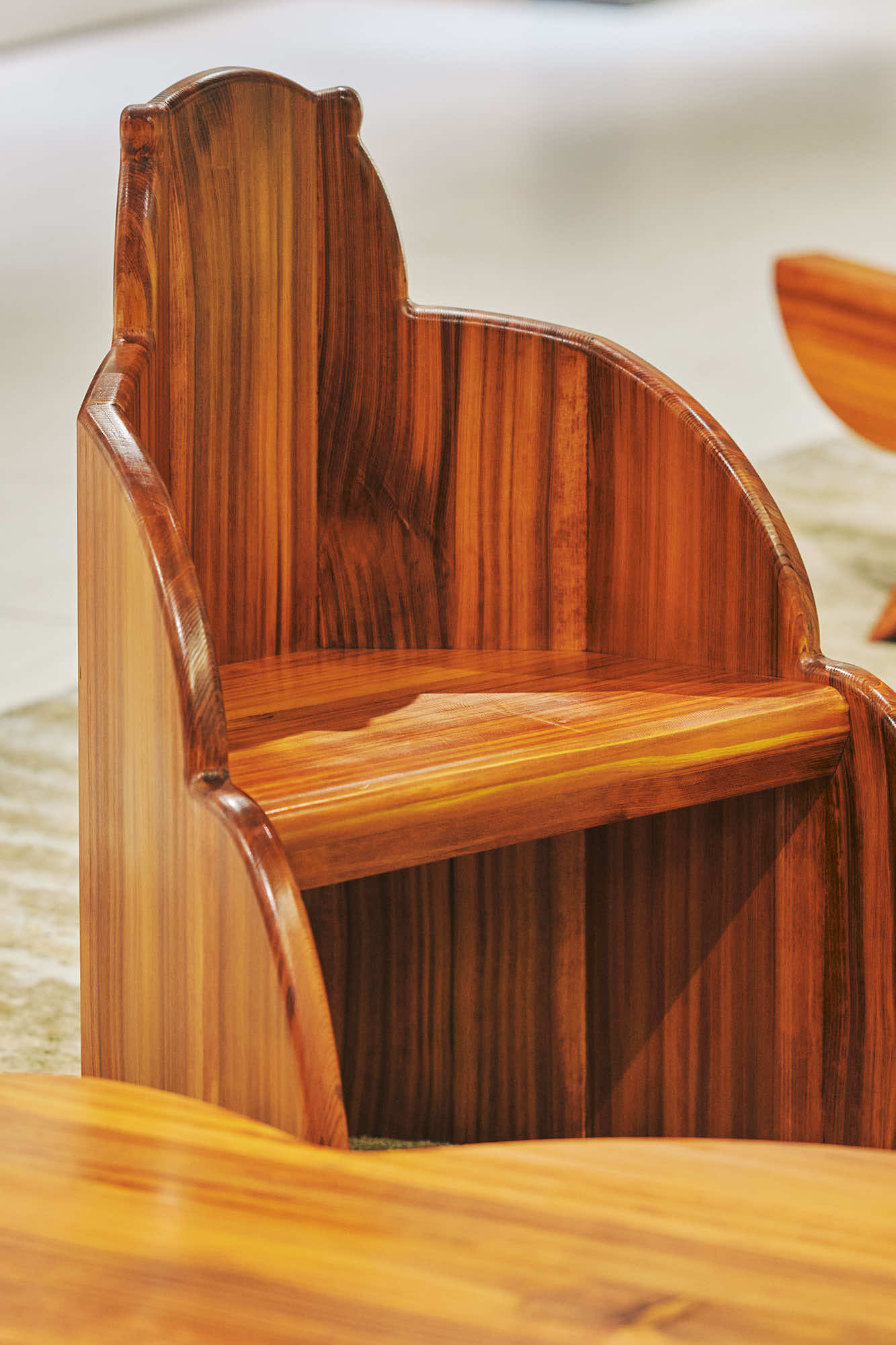
By taking the time to truly engage with this natural wood, says Mr. Nakamura, he came to appreciate anew the potential and charm of Yoshino cedar. As the first phase of the project, furniture made from Yoshino cedar will adorn the GINZA SIX interior.

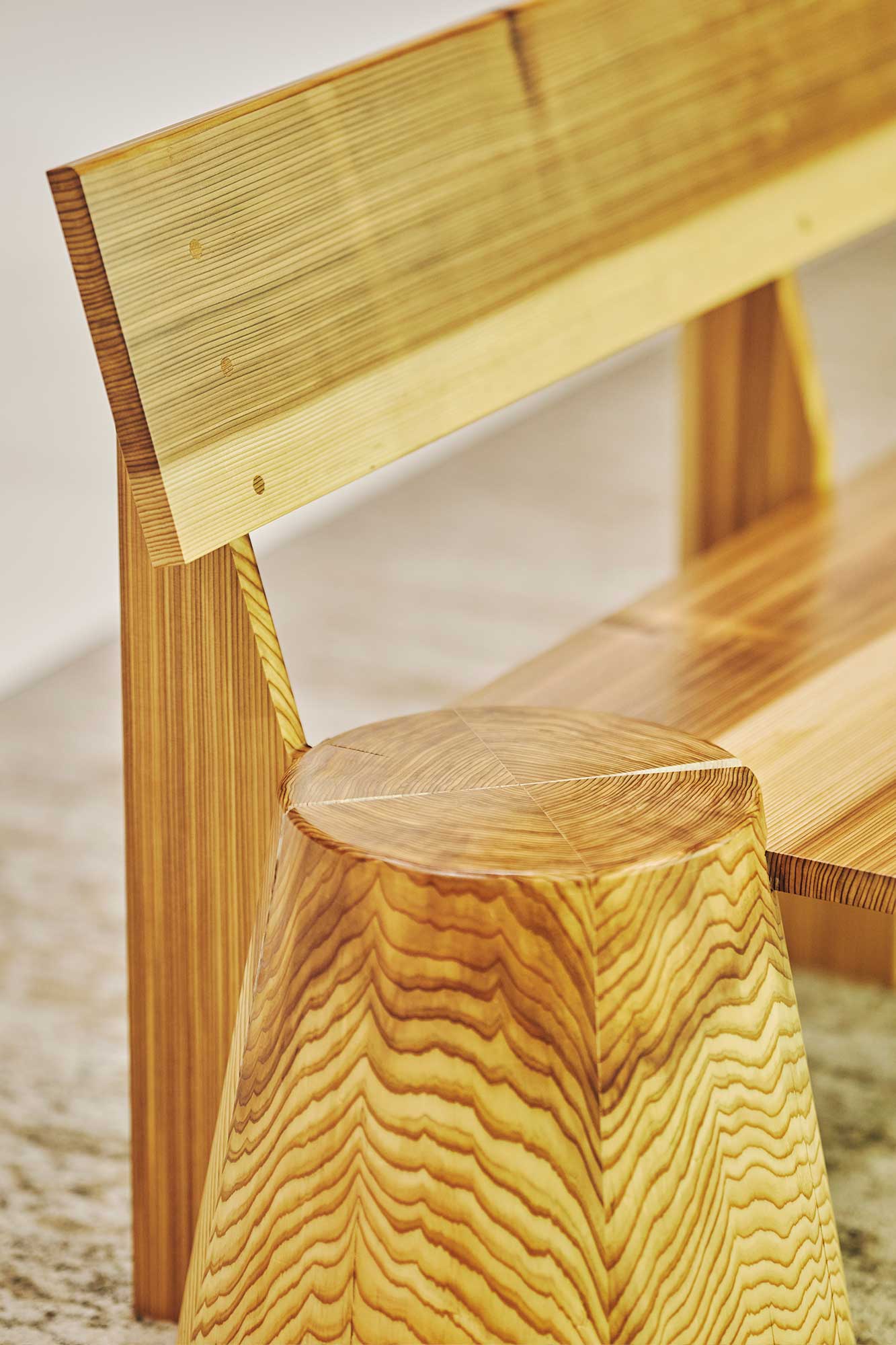
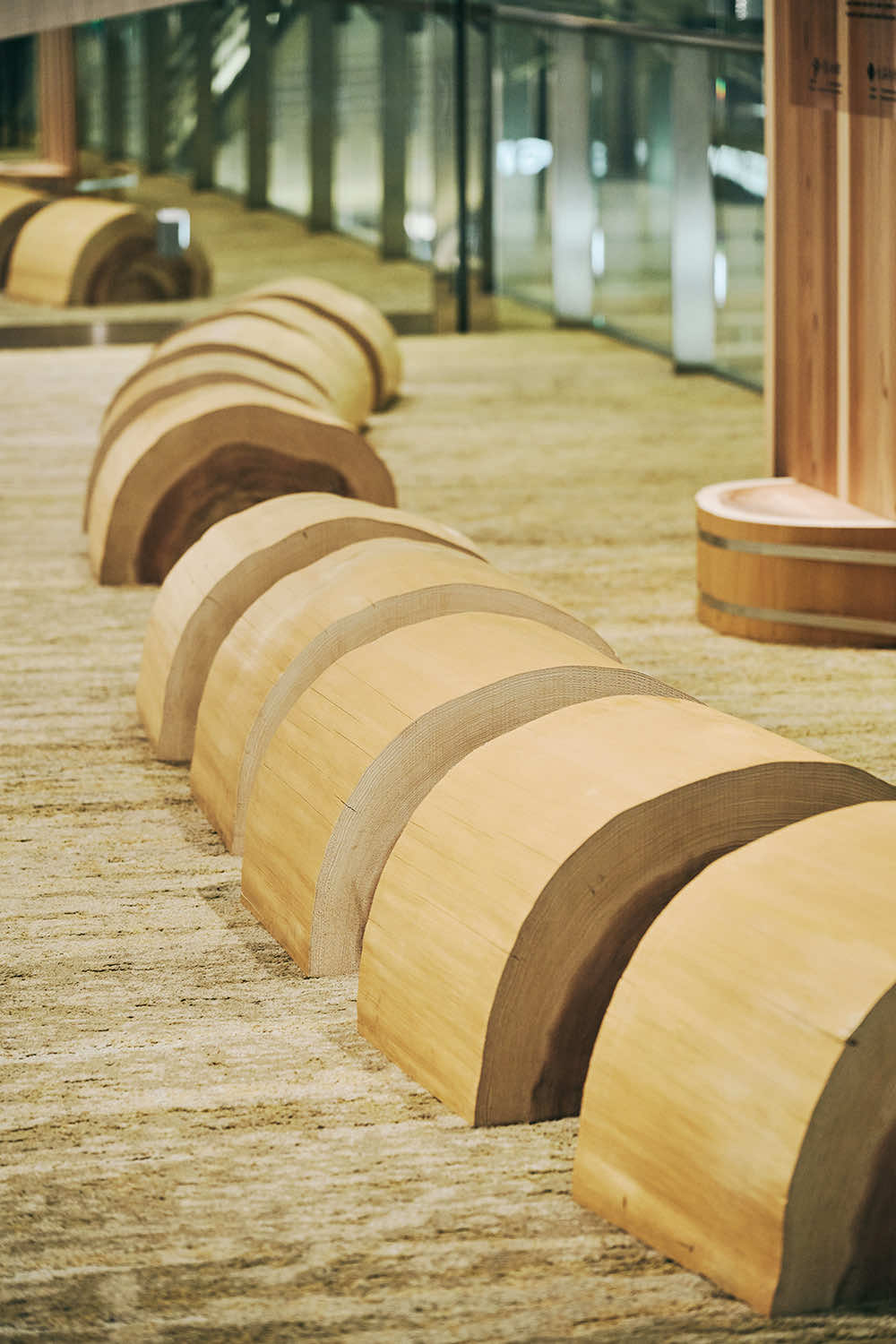
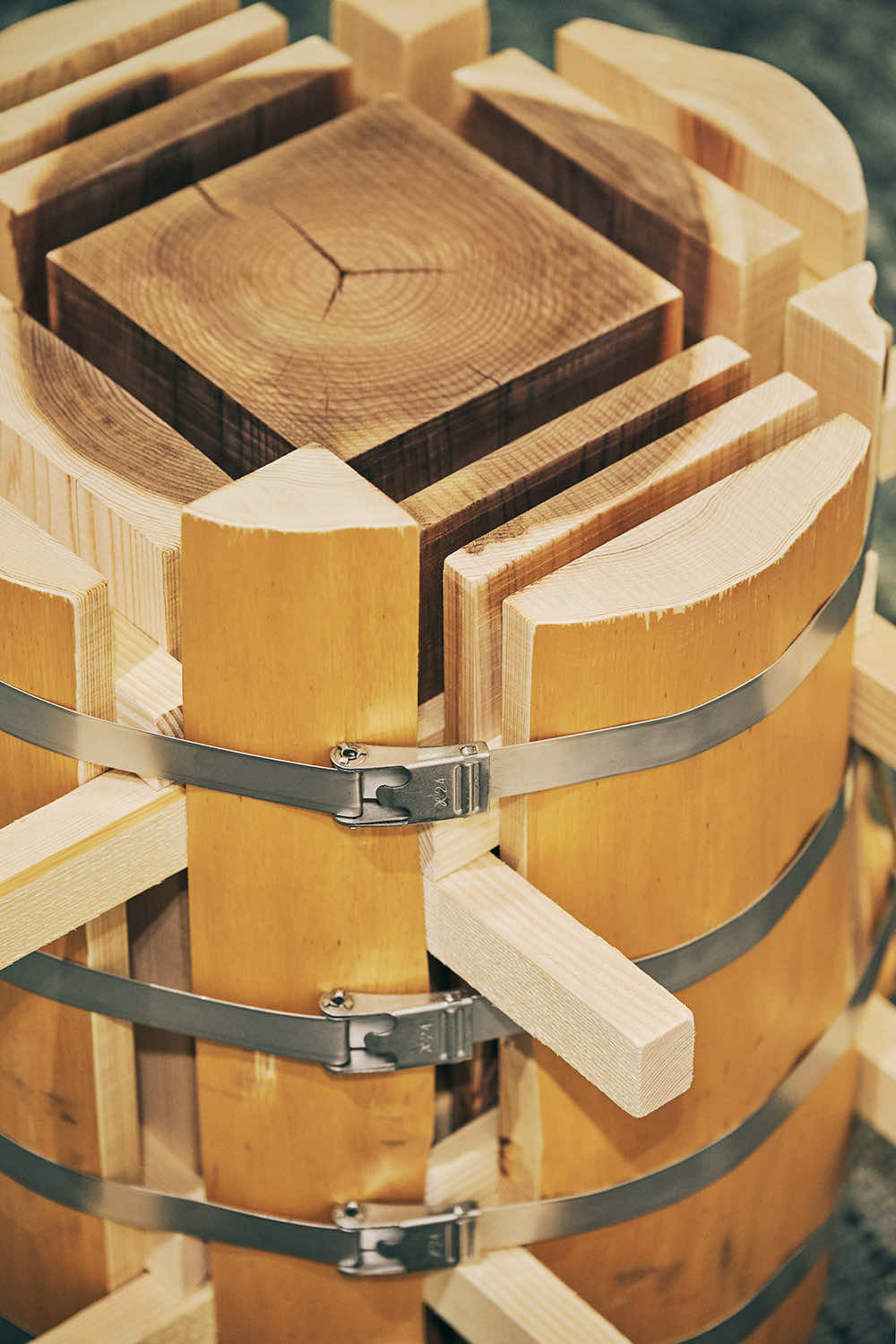
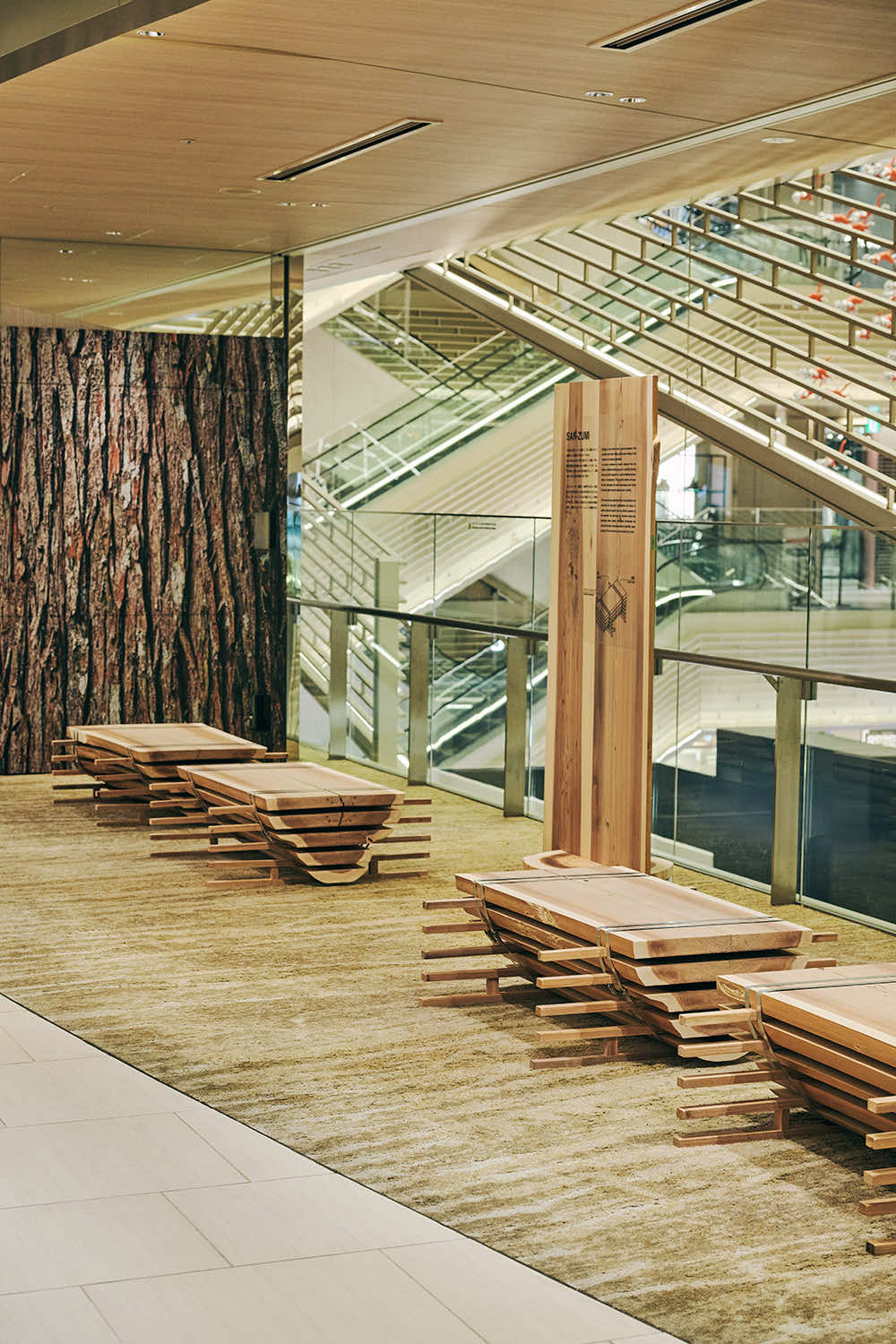
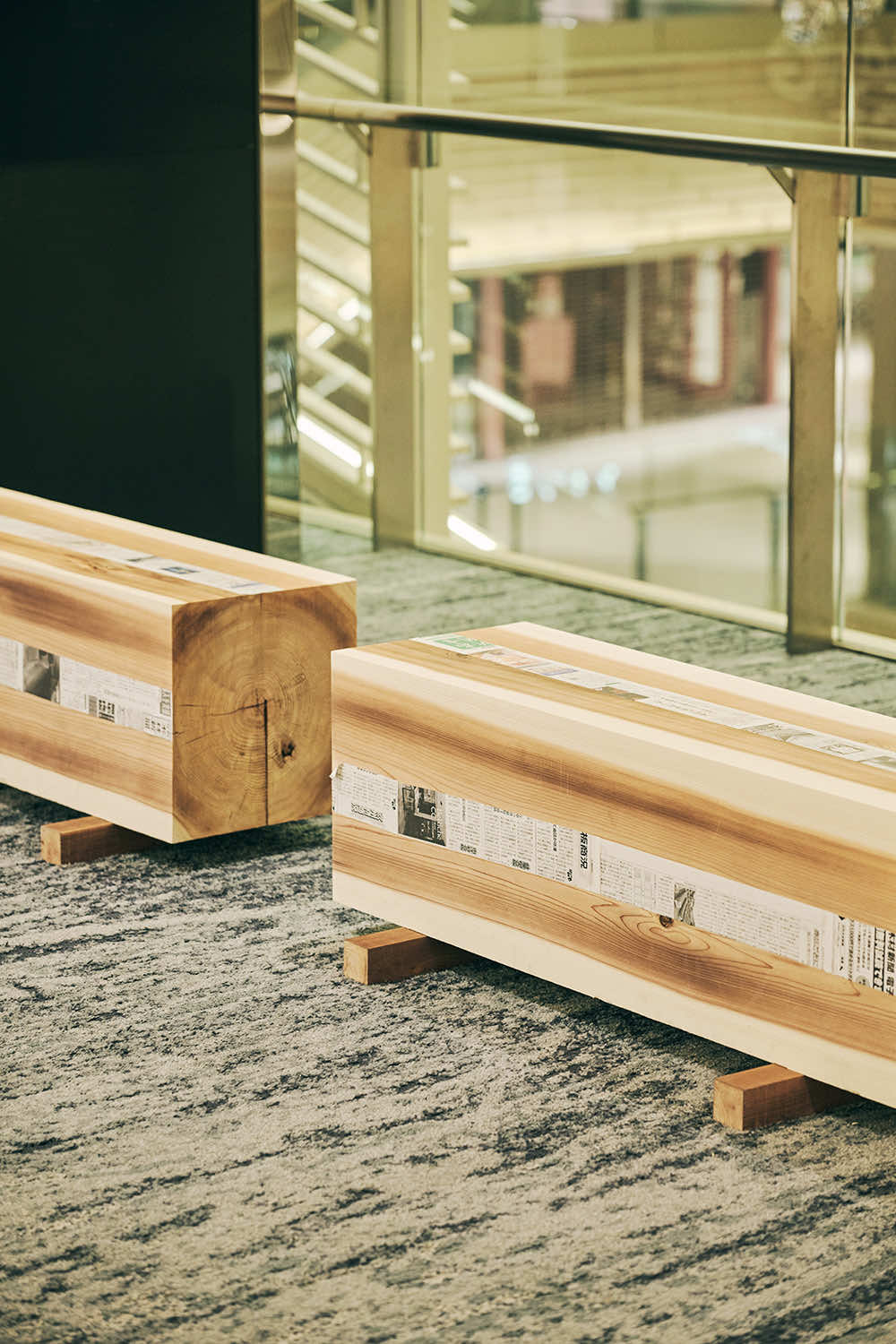
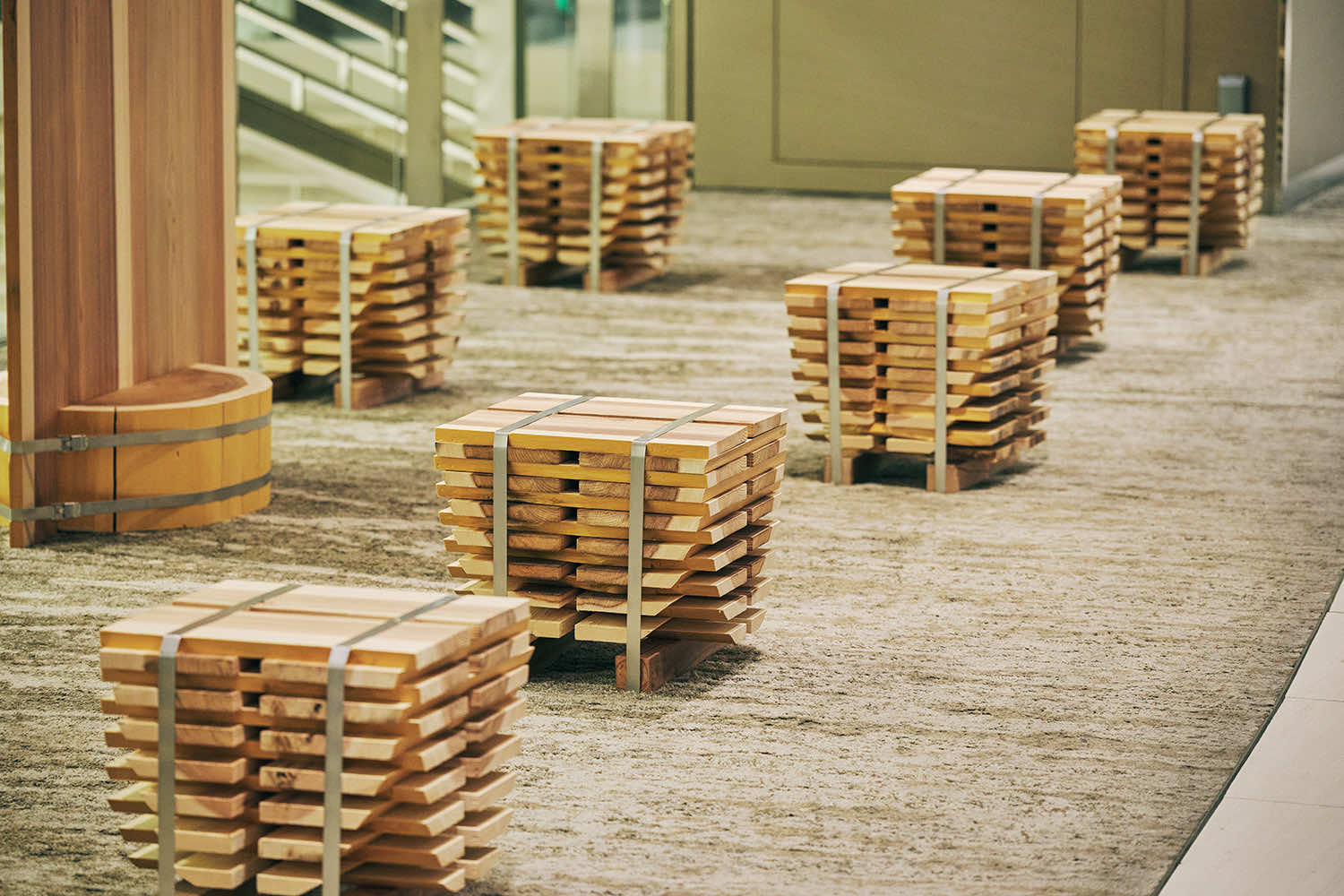
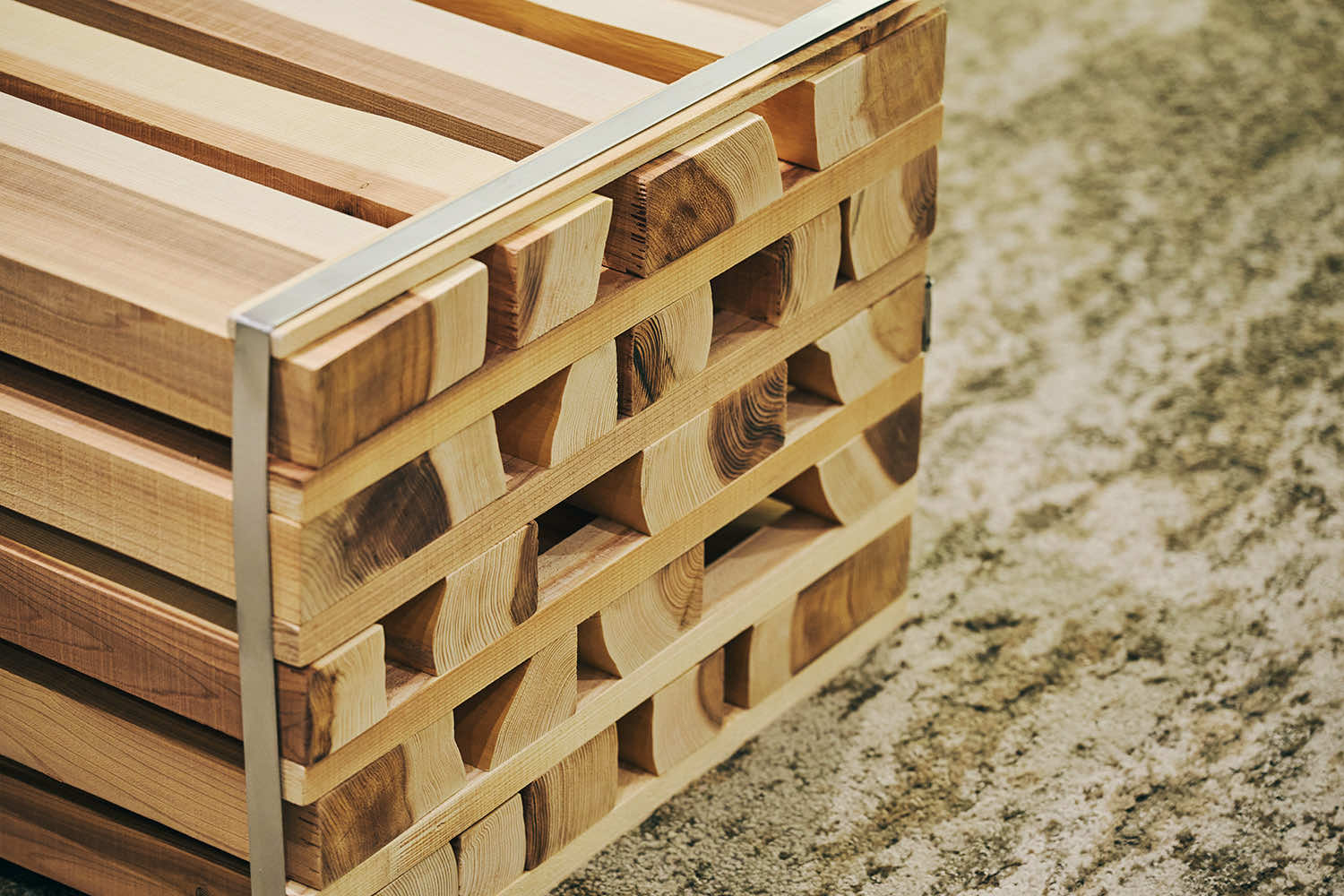
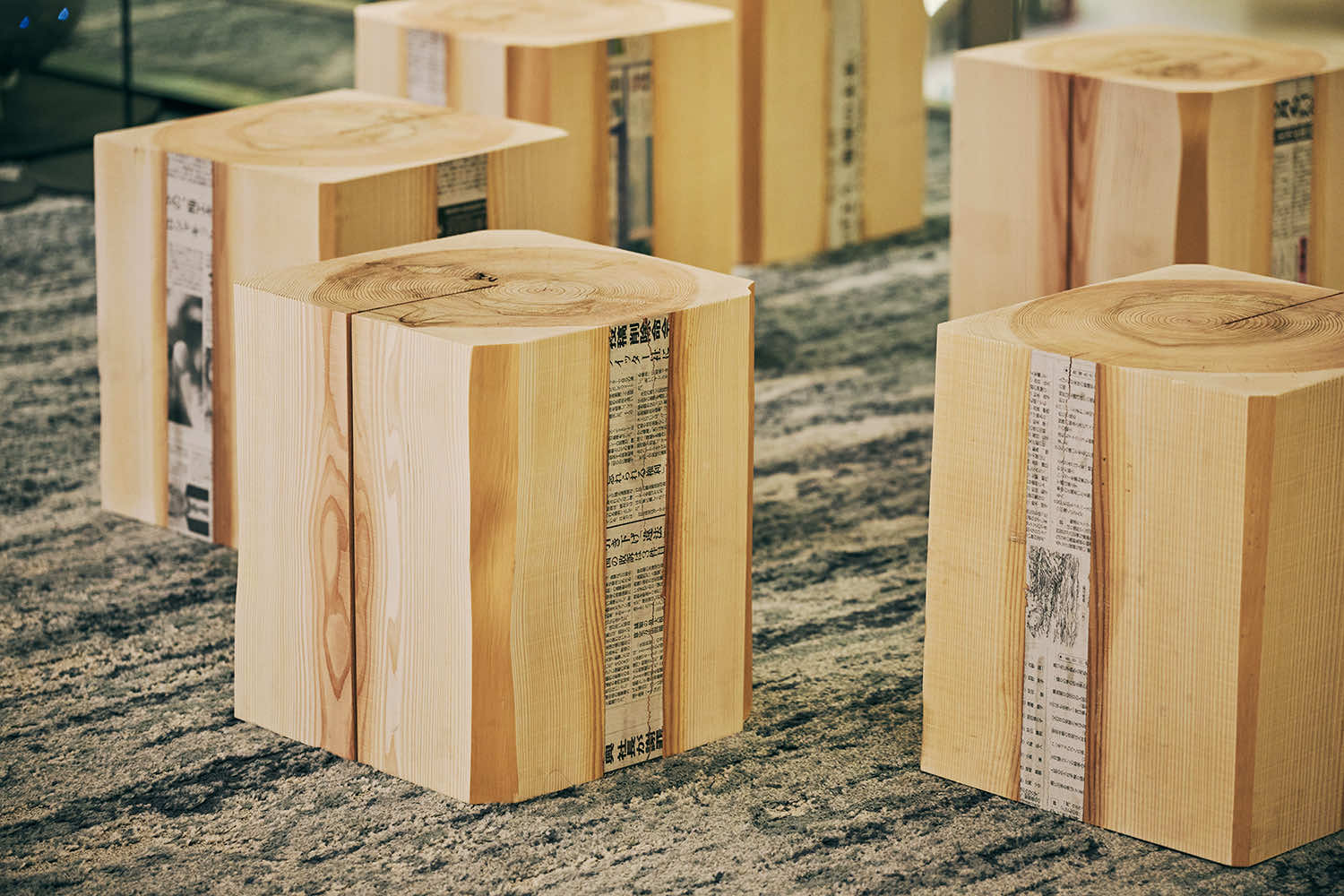
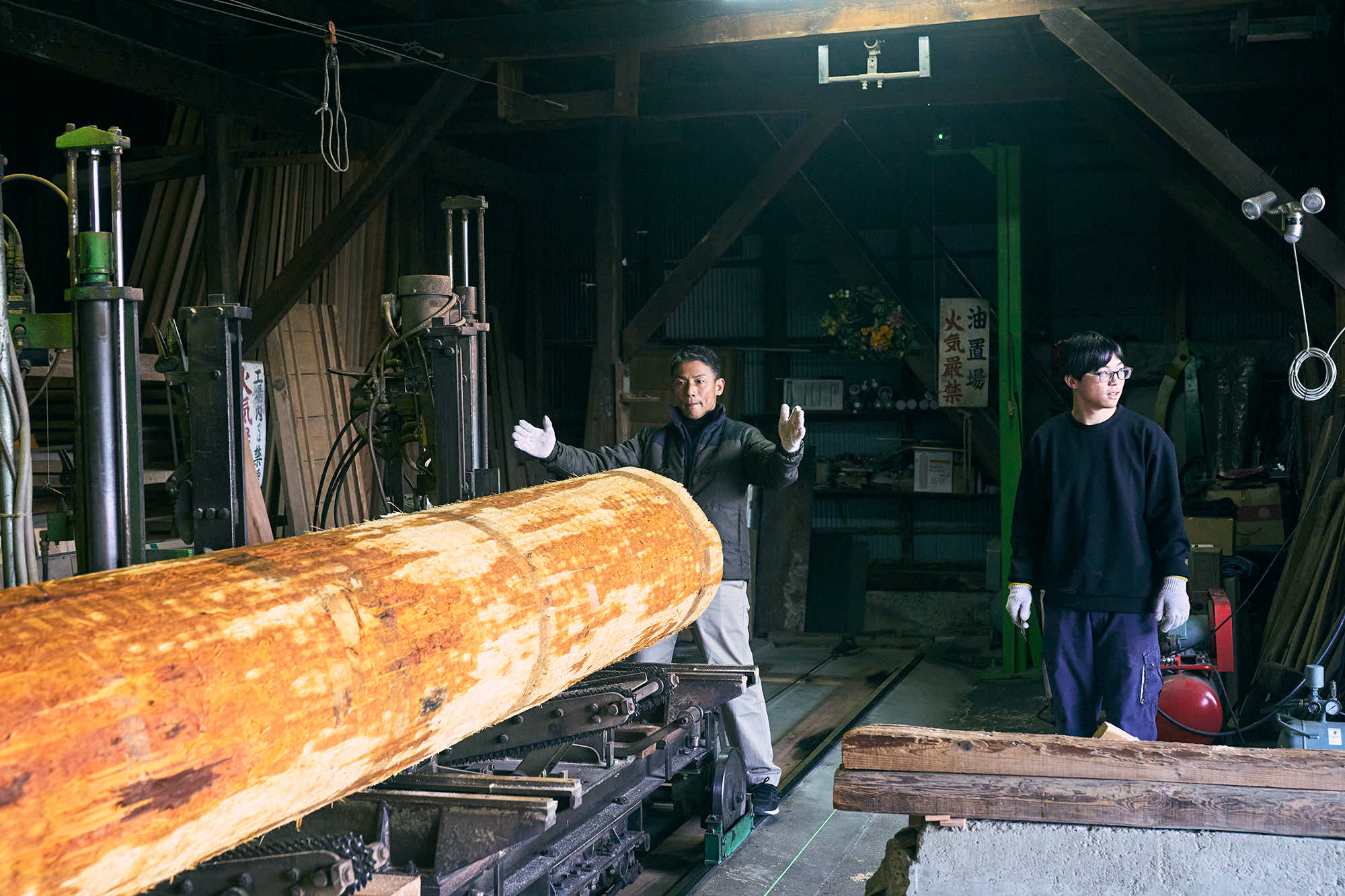
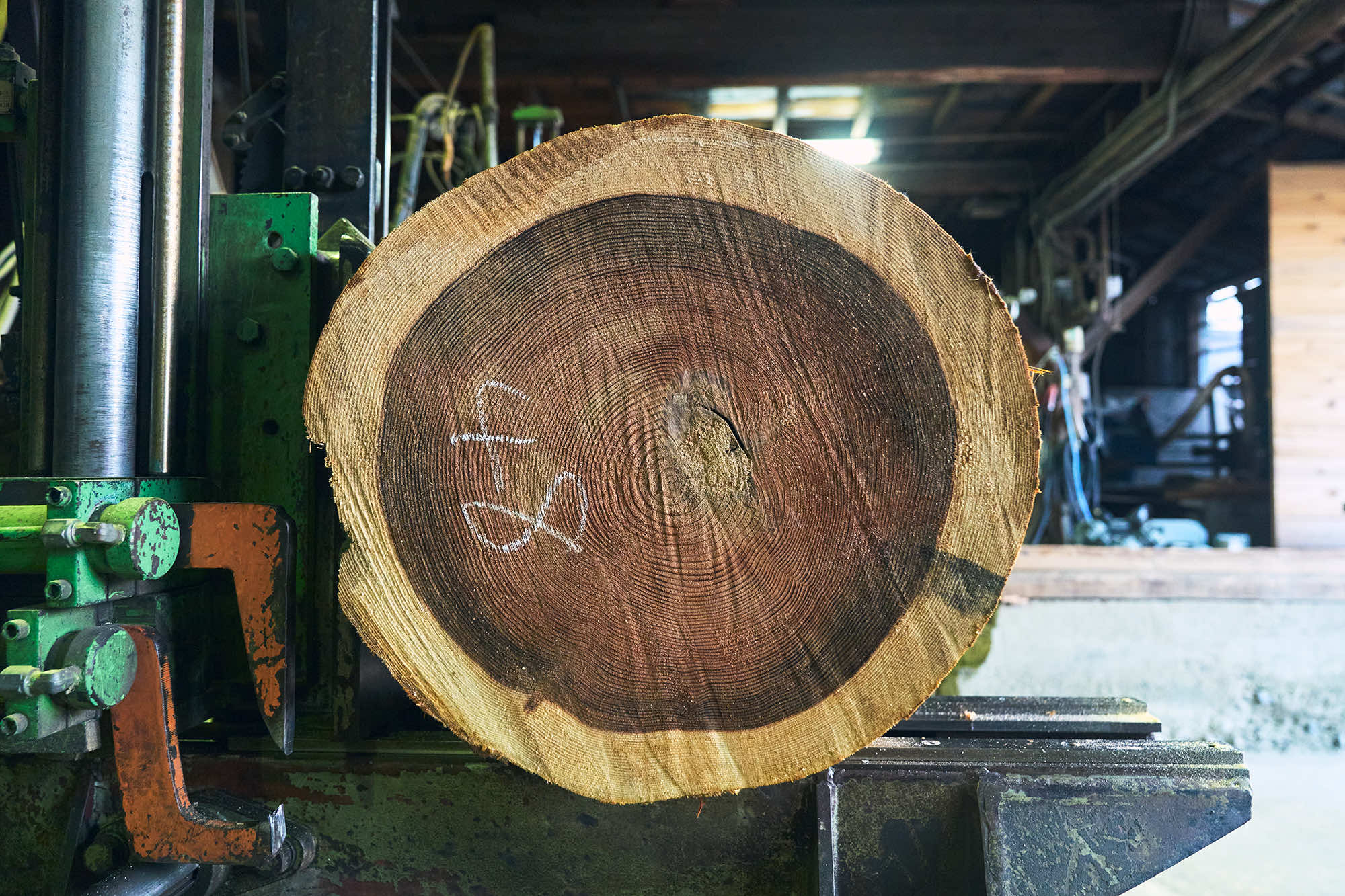
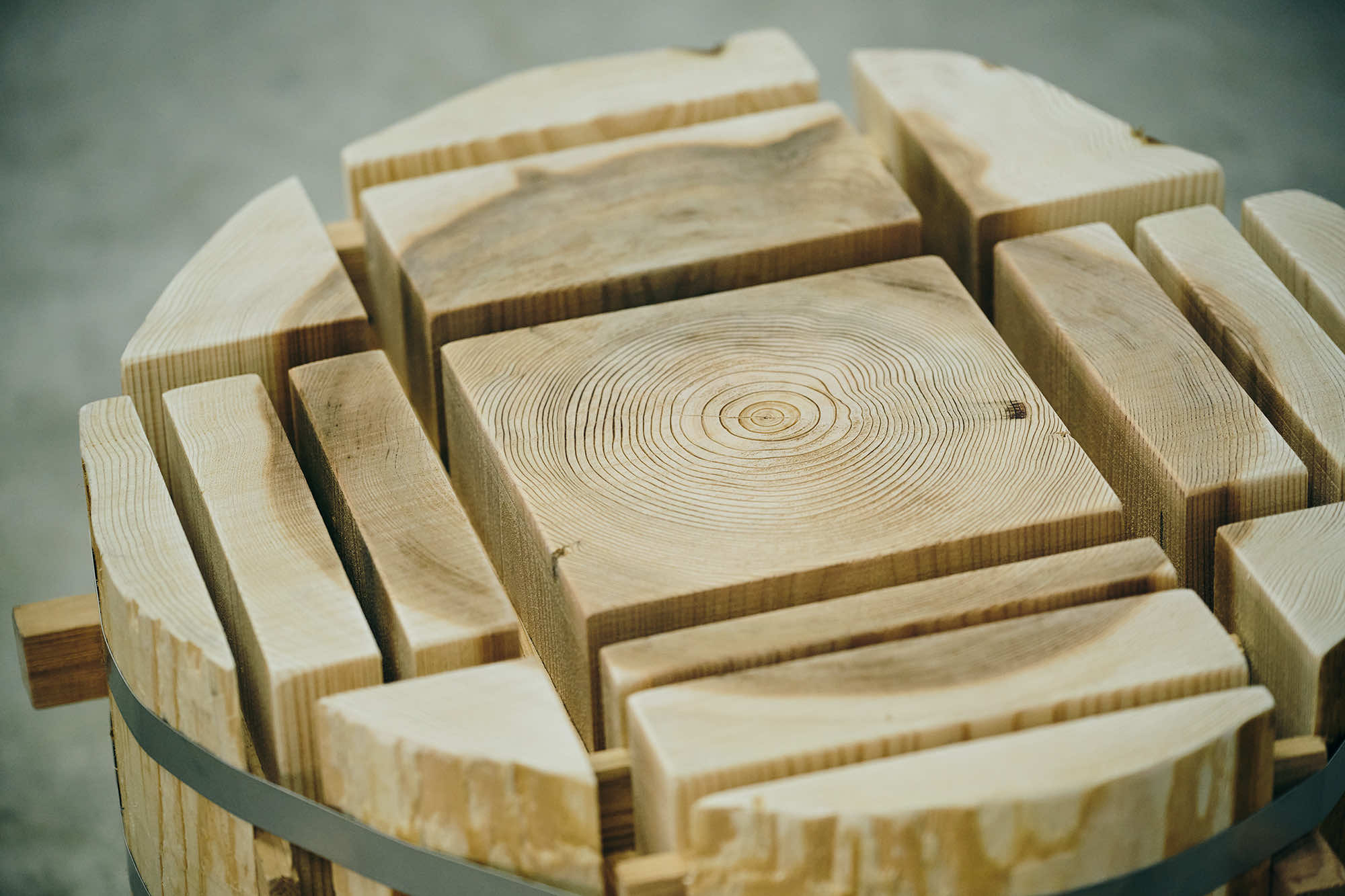
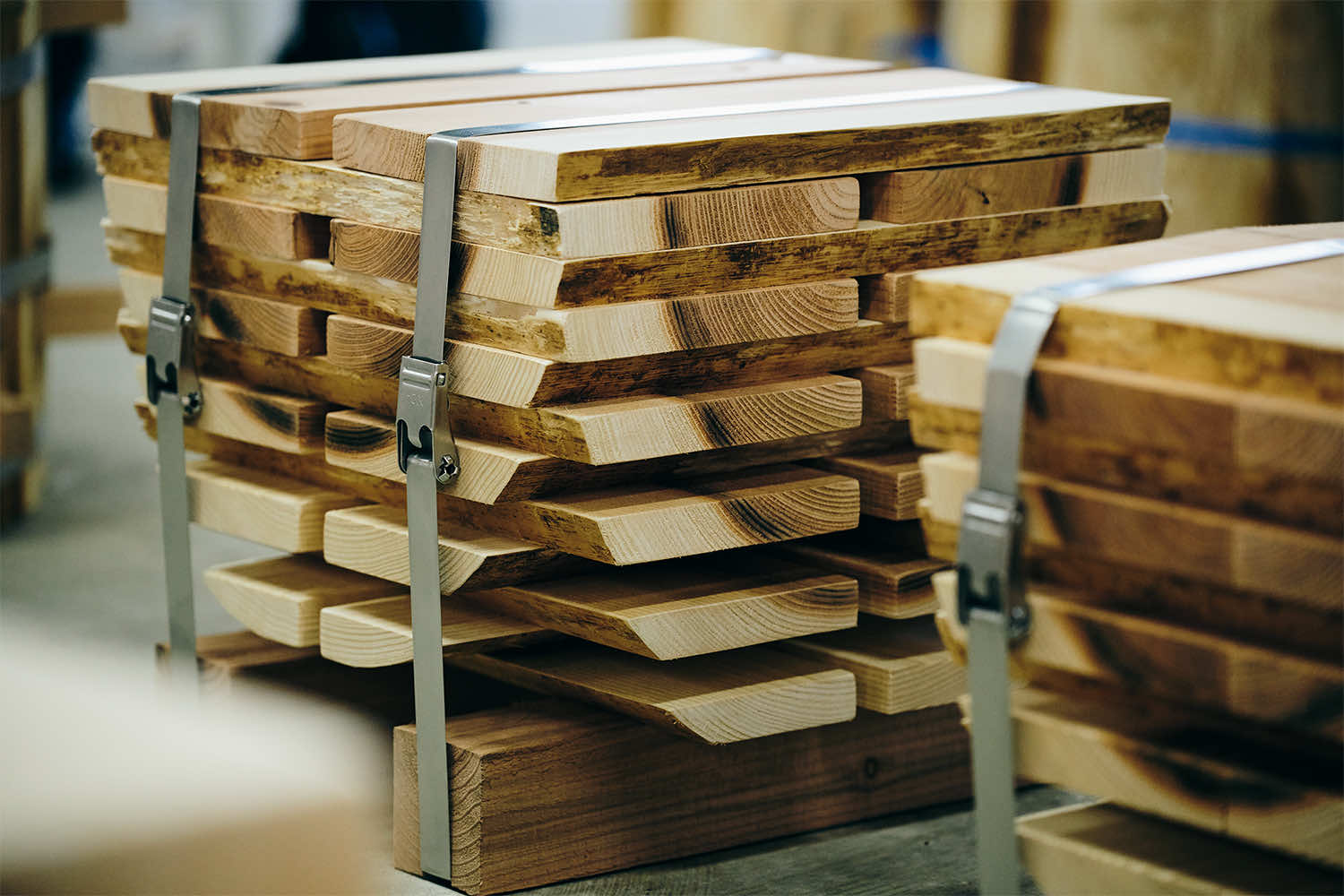
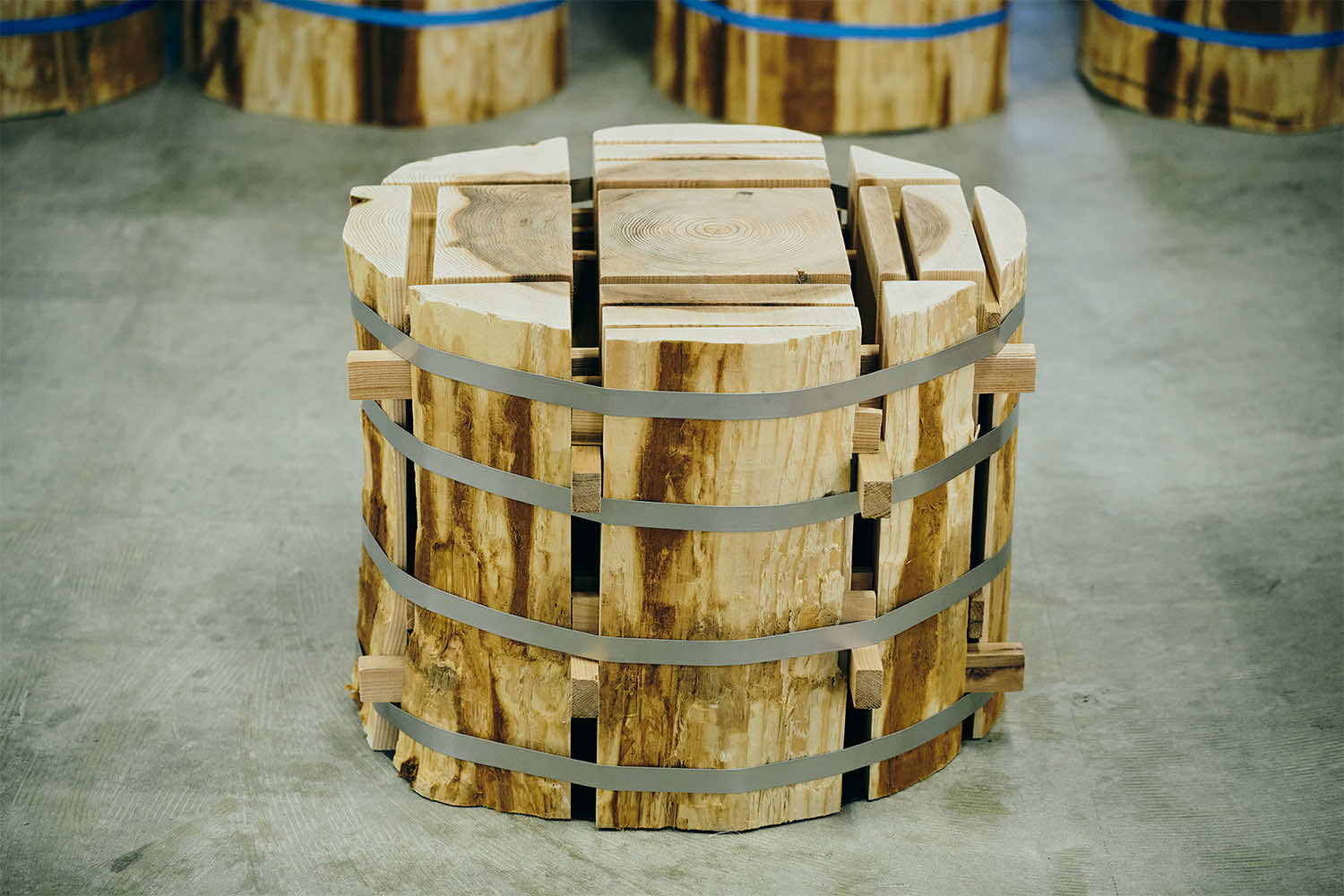
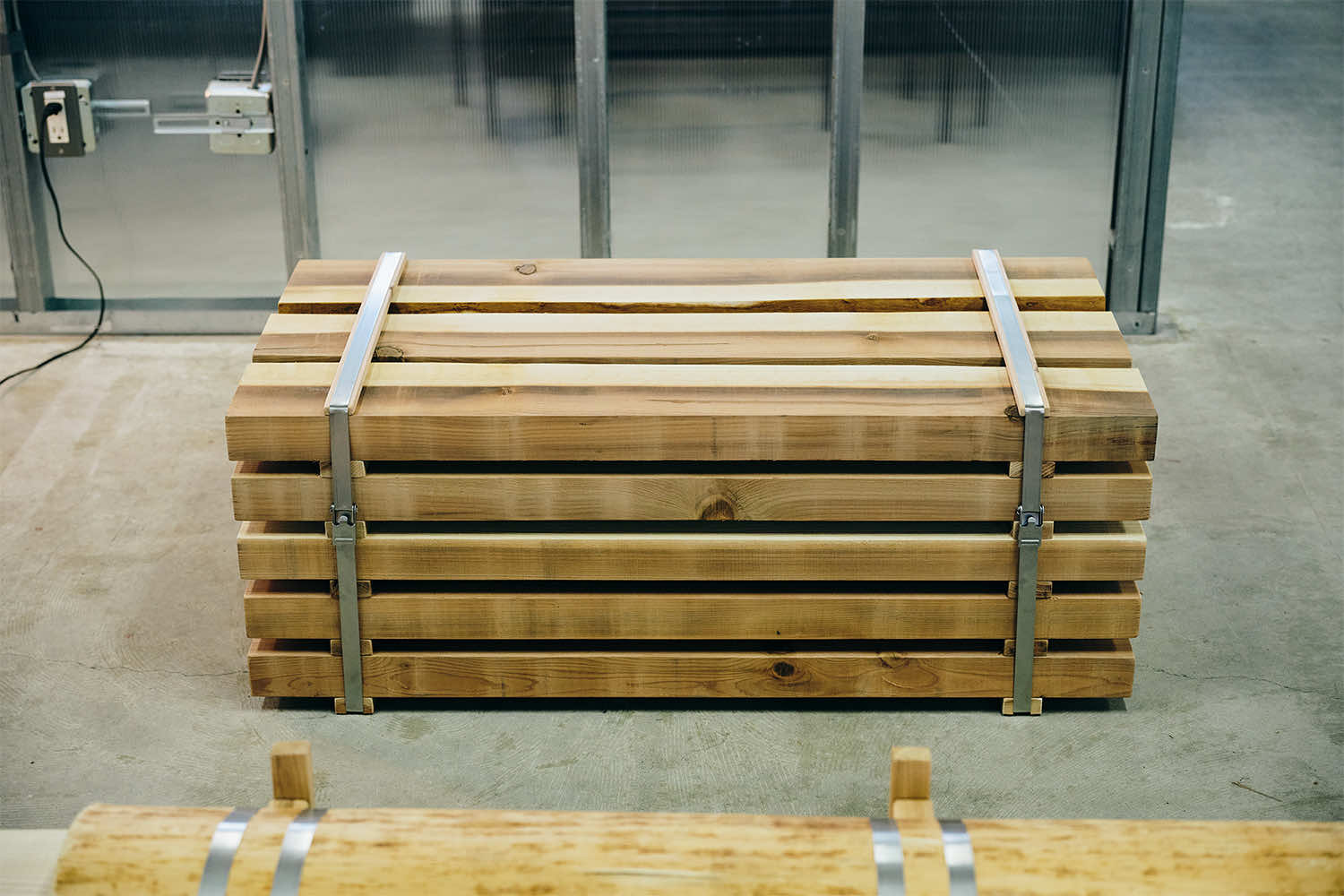
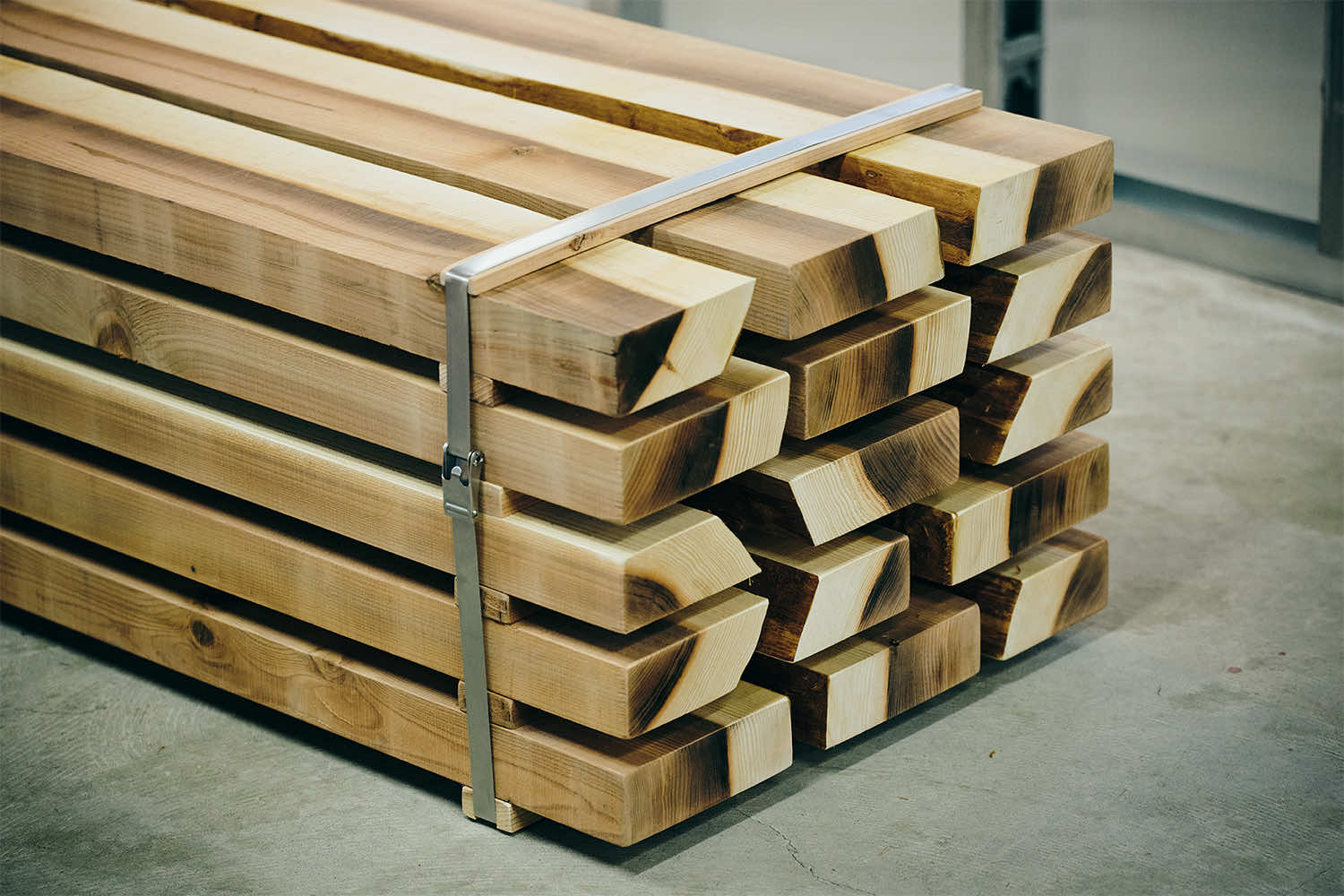
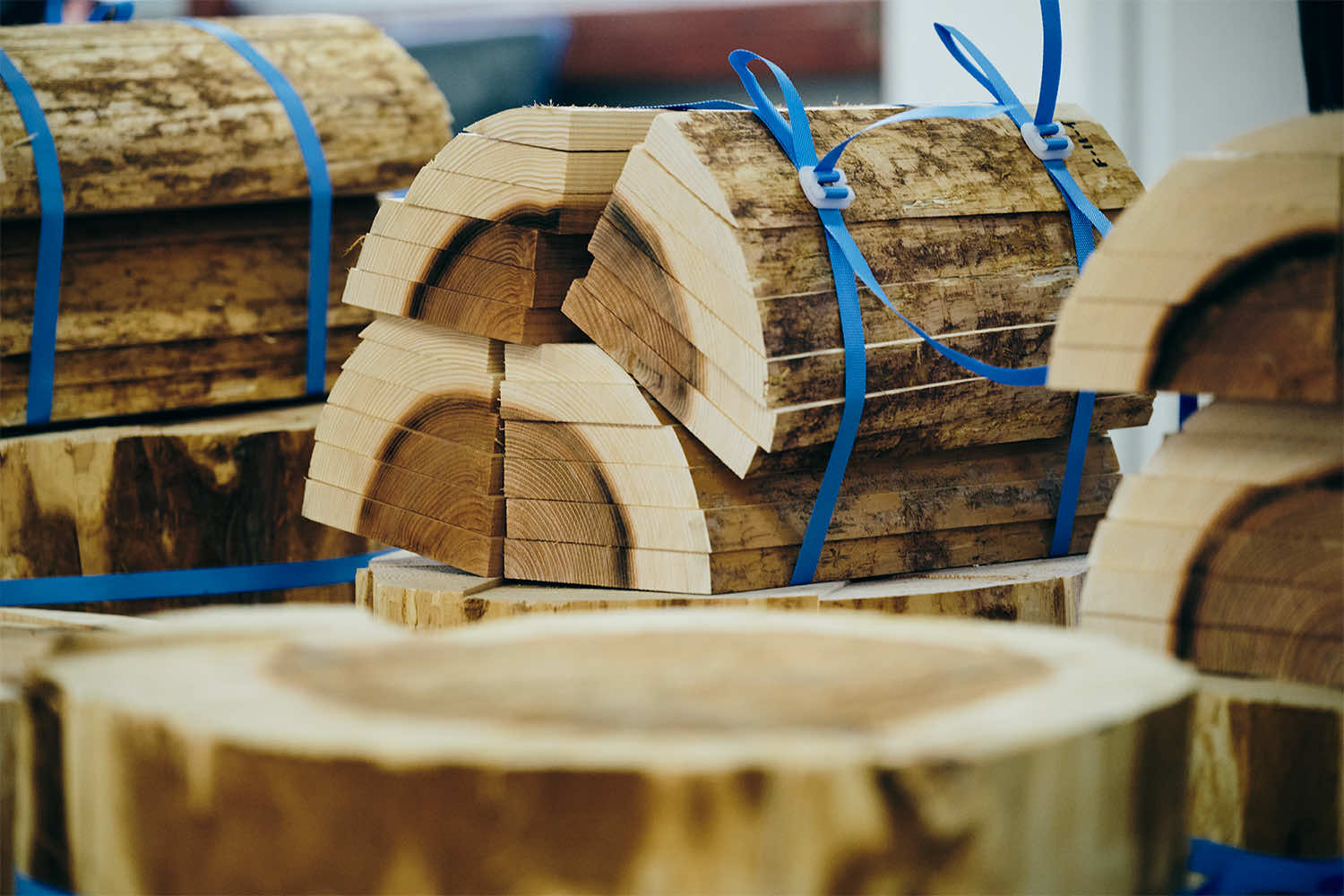
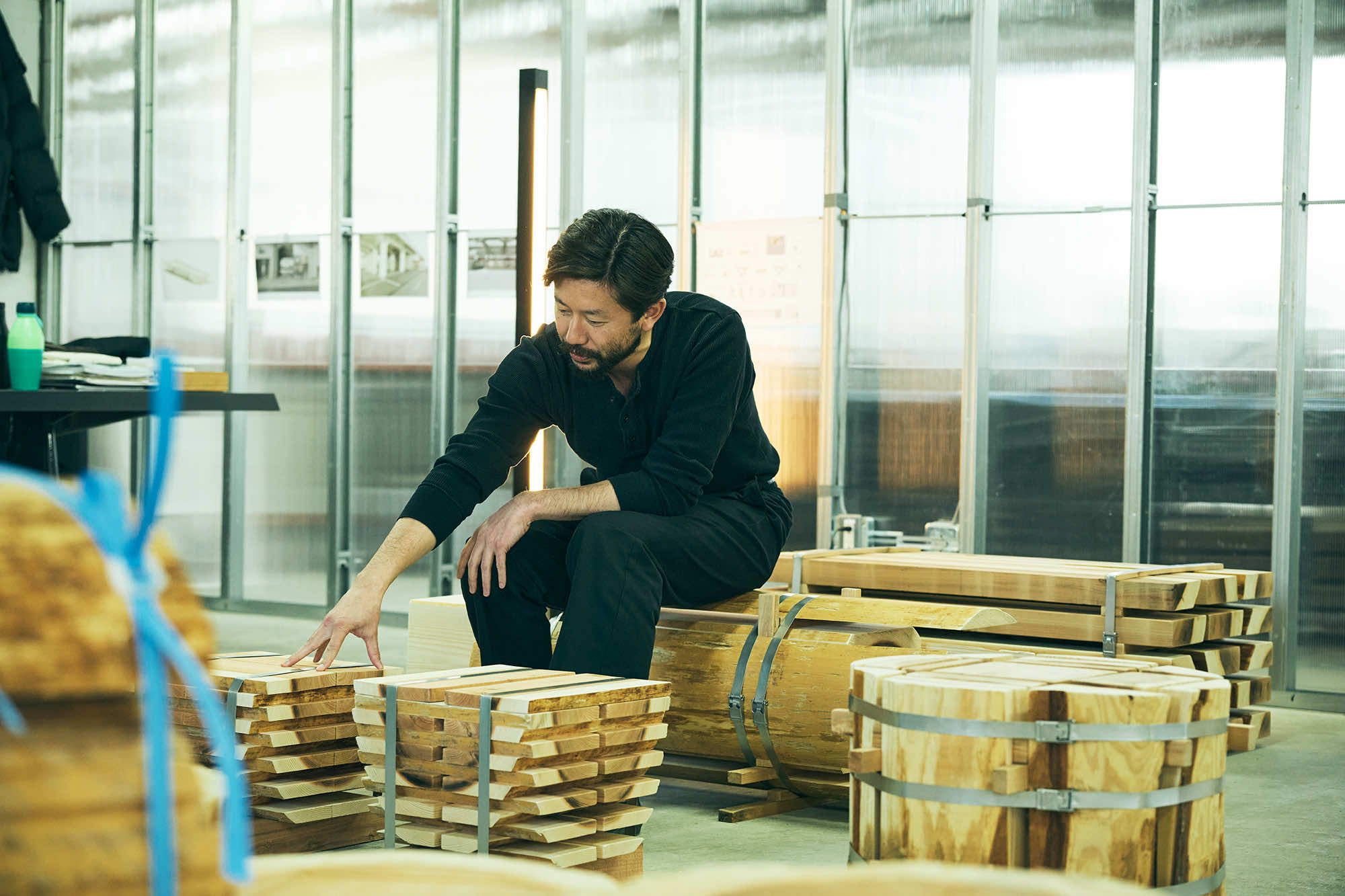
“Generally speaking,” he says, “people tend to say that cedar doesn’t have an attractive grain, but it really depends on how you use it. So, for this first phase, we deliberately kept the design understated. We created benches that make full use of the cuts typically made by our lumber supplier, Ohtani Mokuzai. Typically, a single log is cut into sections based on its parts, such as the core, flooring material, or laminated wood, but the cut alone is beautiful enough. All we at DAIKEI MILLS did was reconfigure the cut pieces of wood a little. Cedar is strong yet lightweight, making it highly practical for use in fixtures. And the beauty, grandeur, and texture of solid wood are wonderful.”

A single log
becomes a work of art as it is.

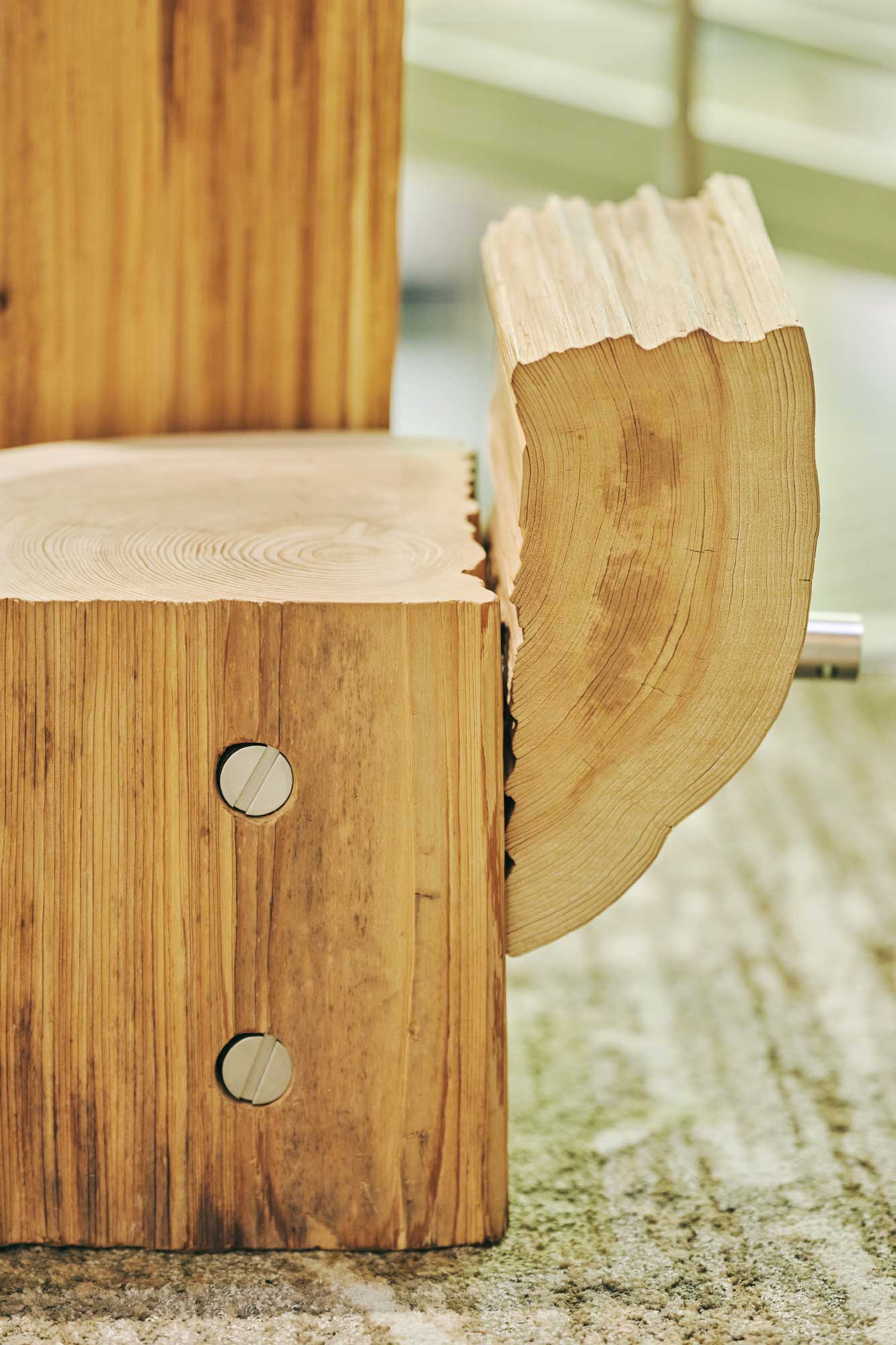
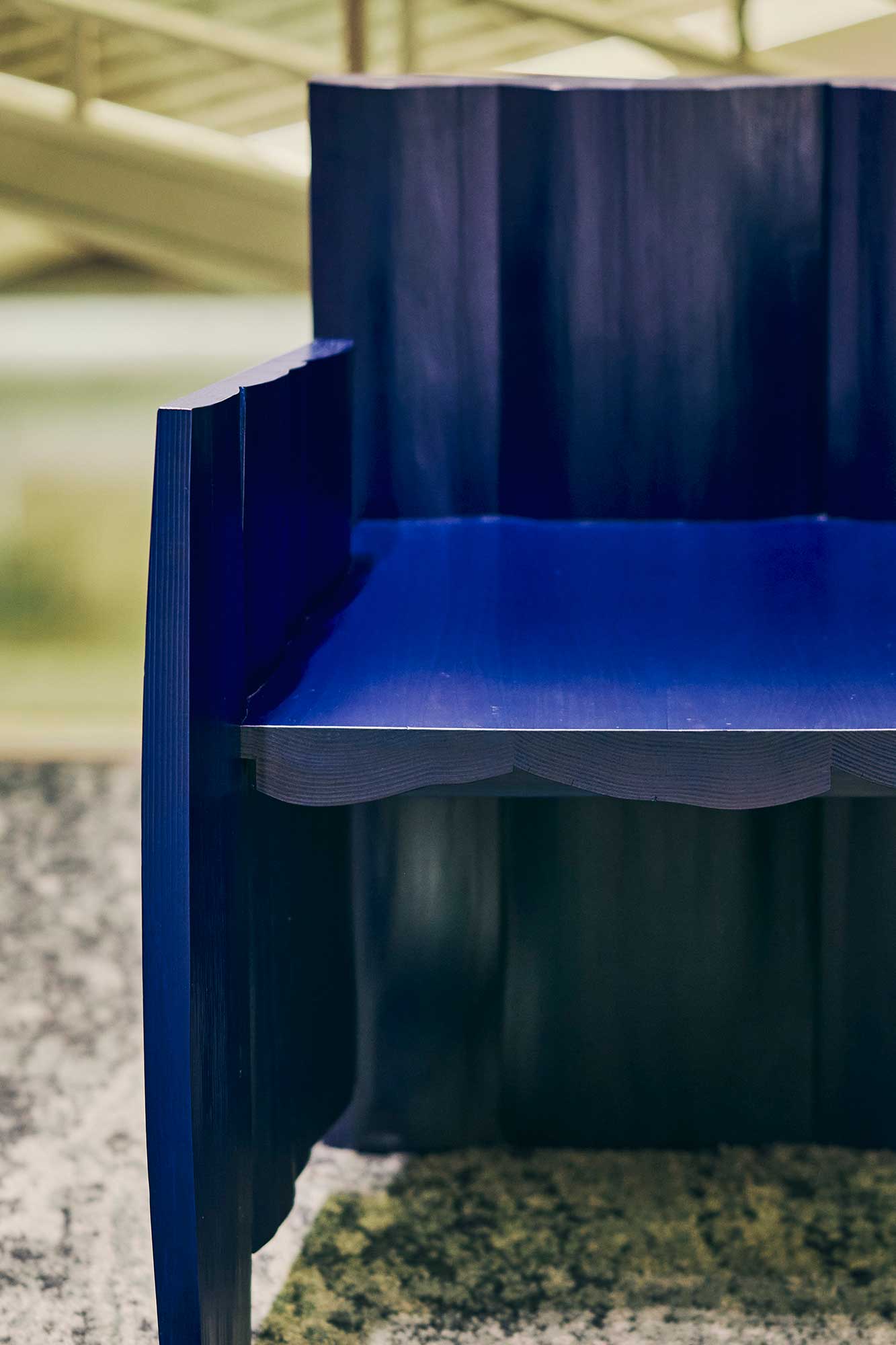
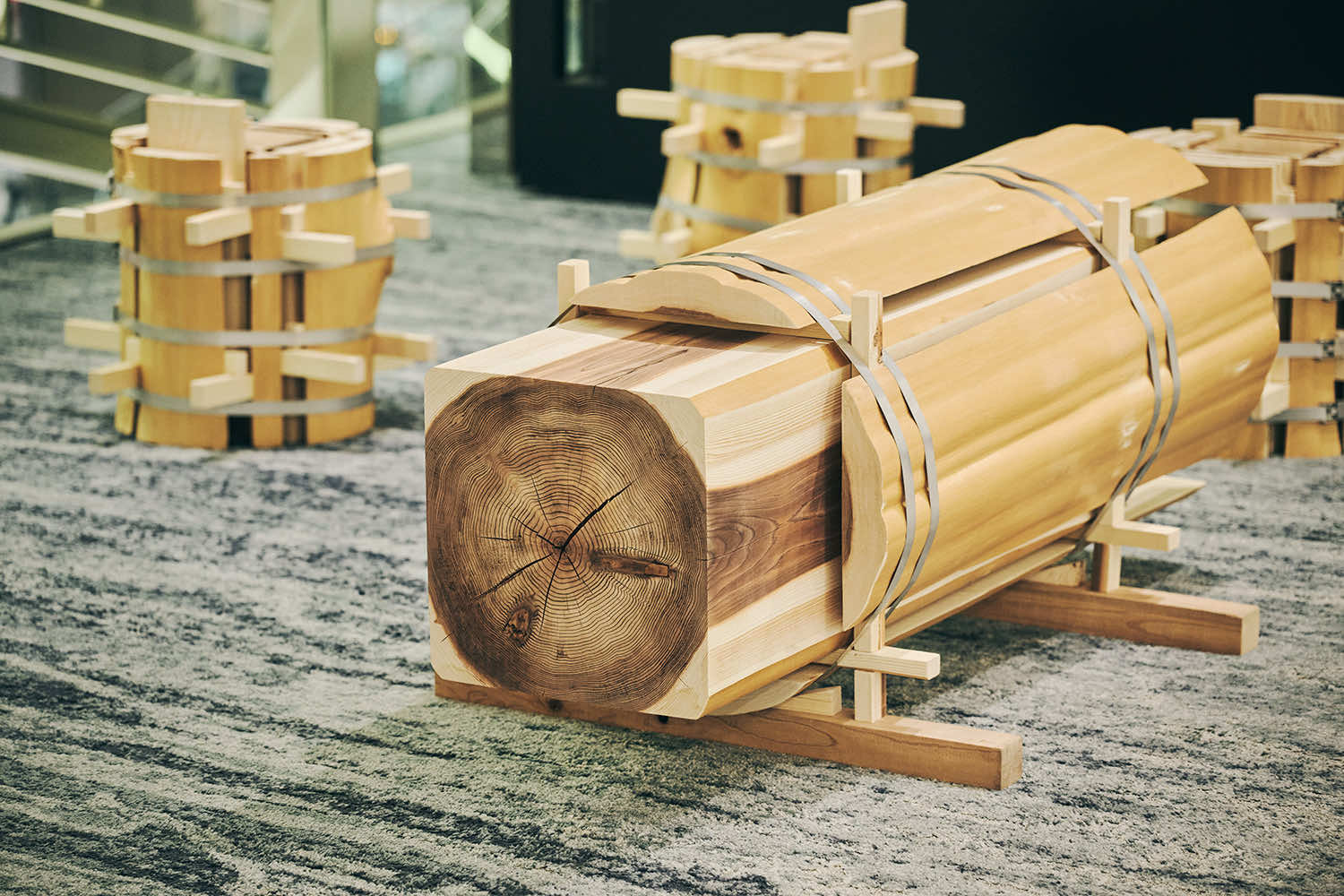
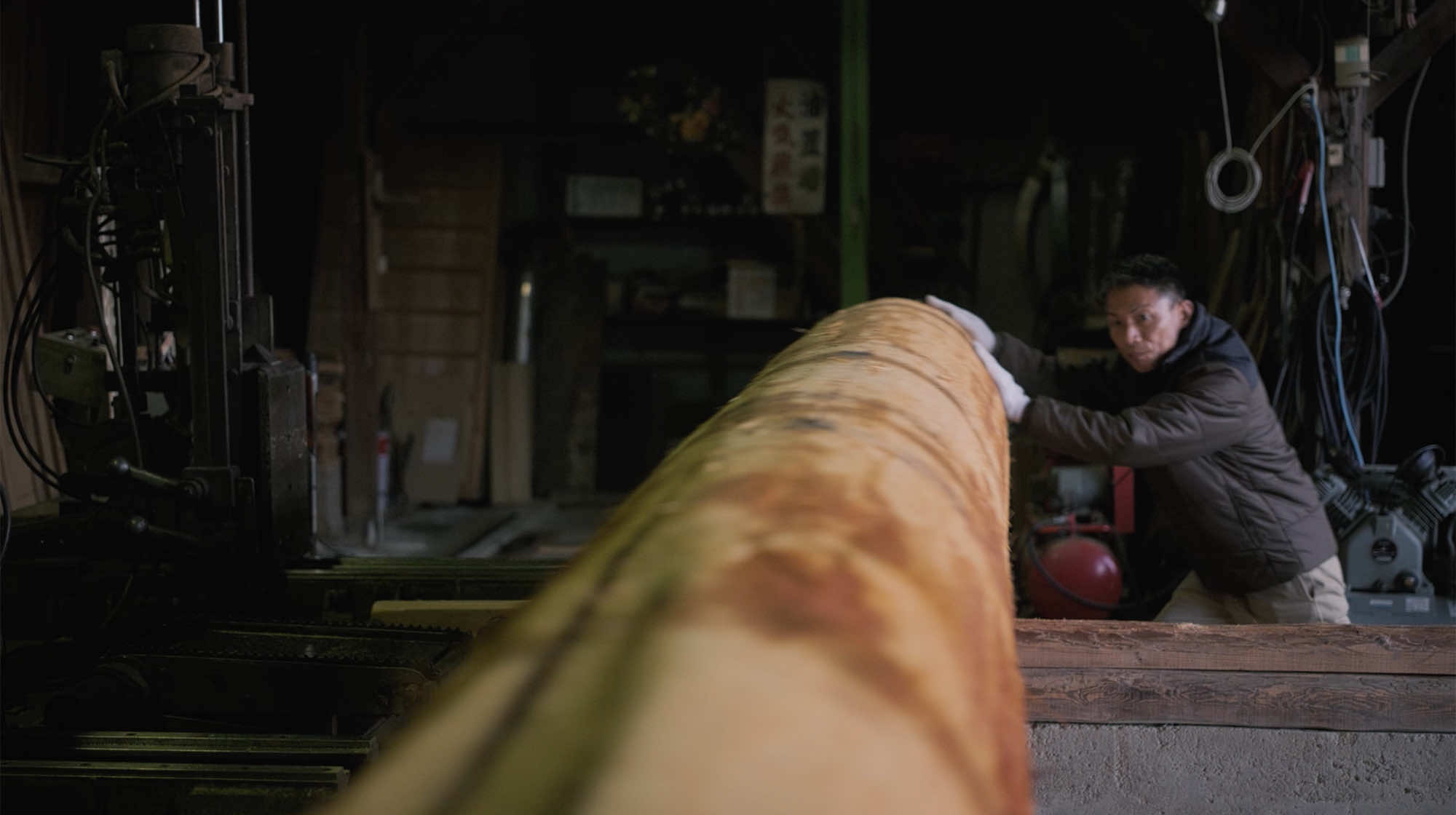
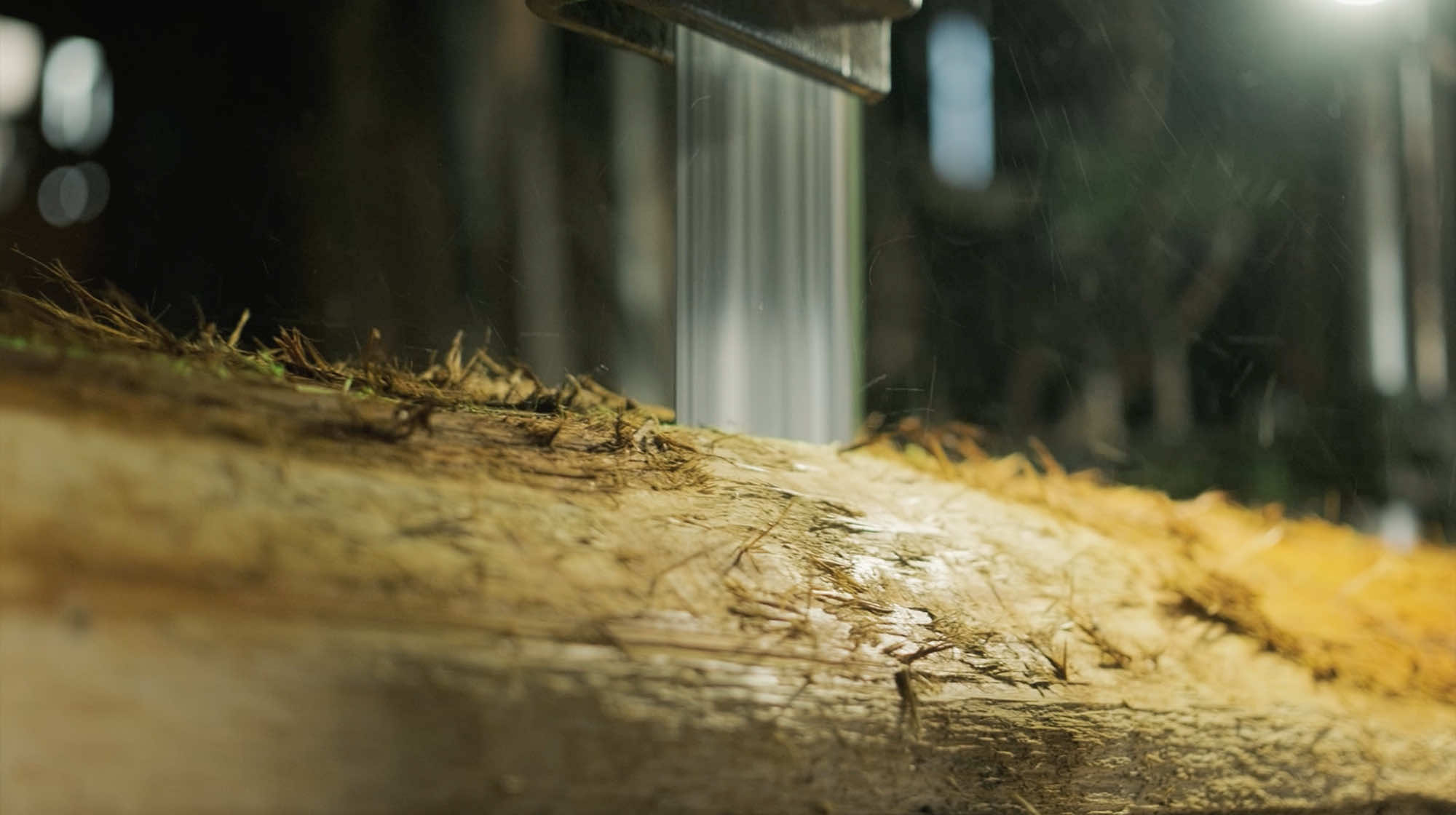
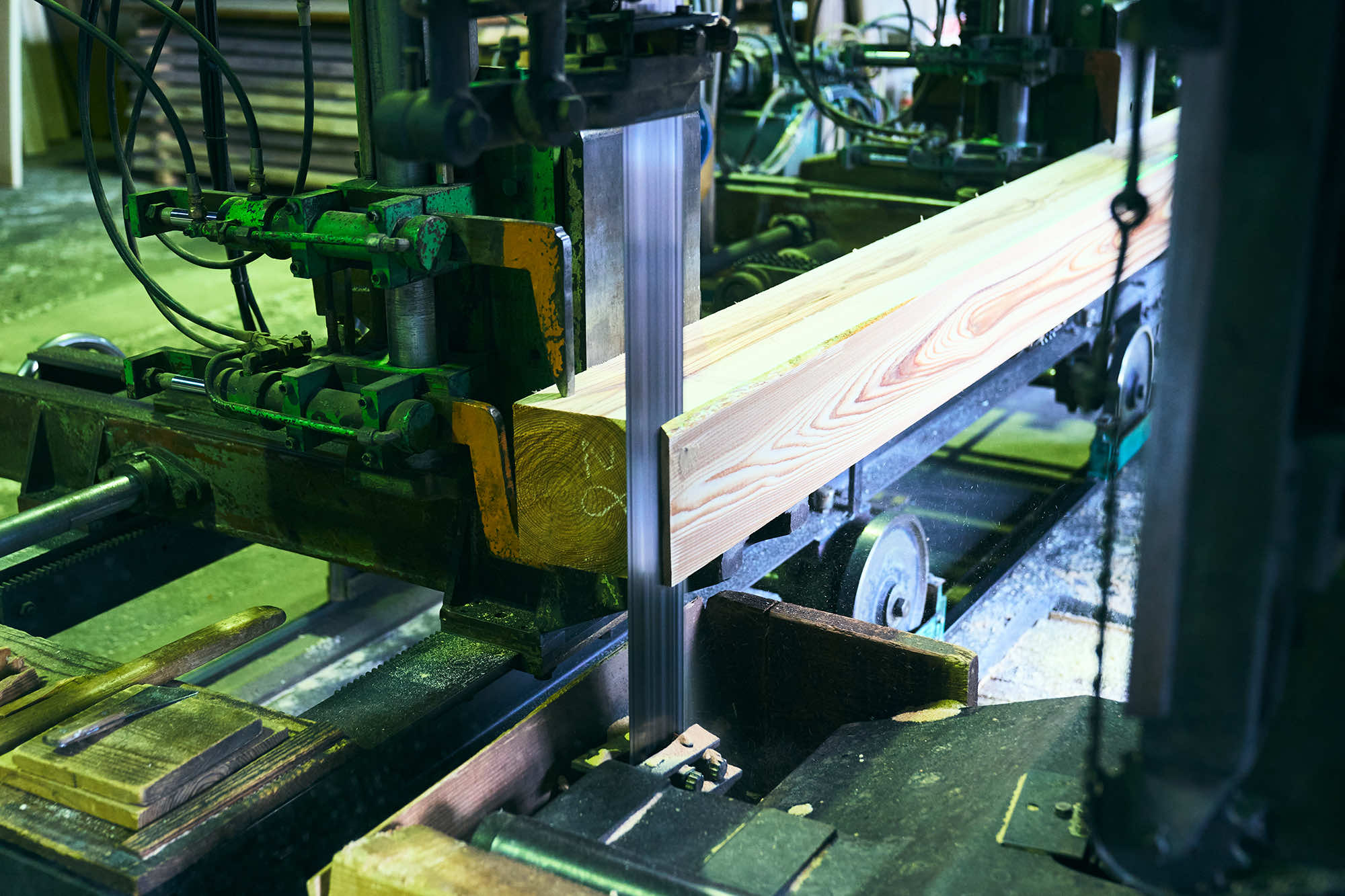
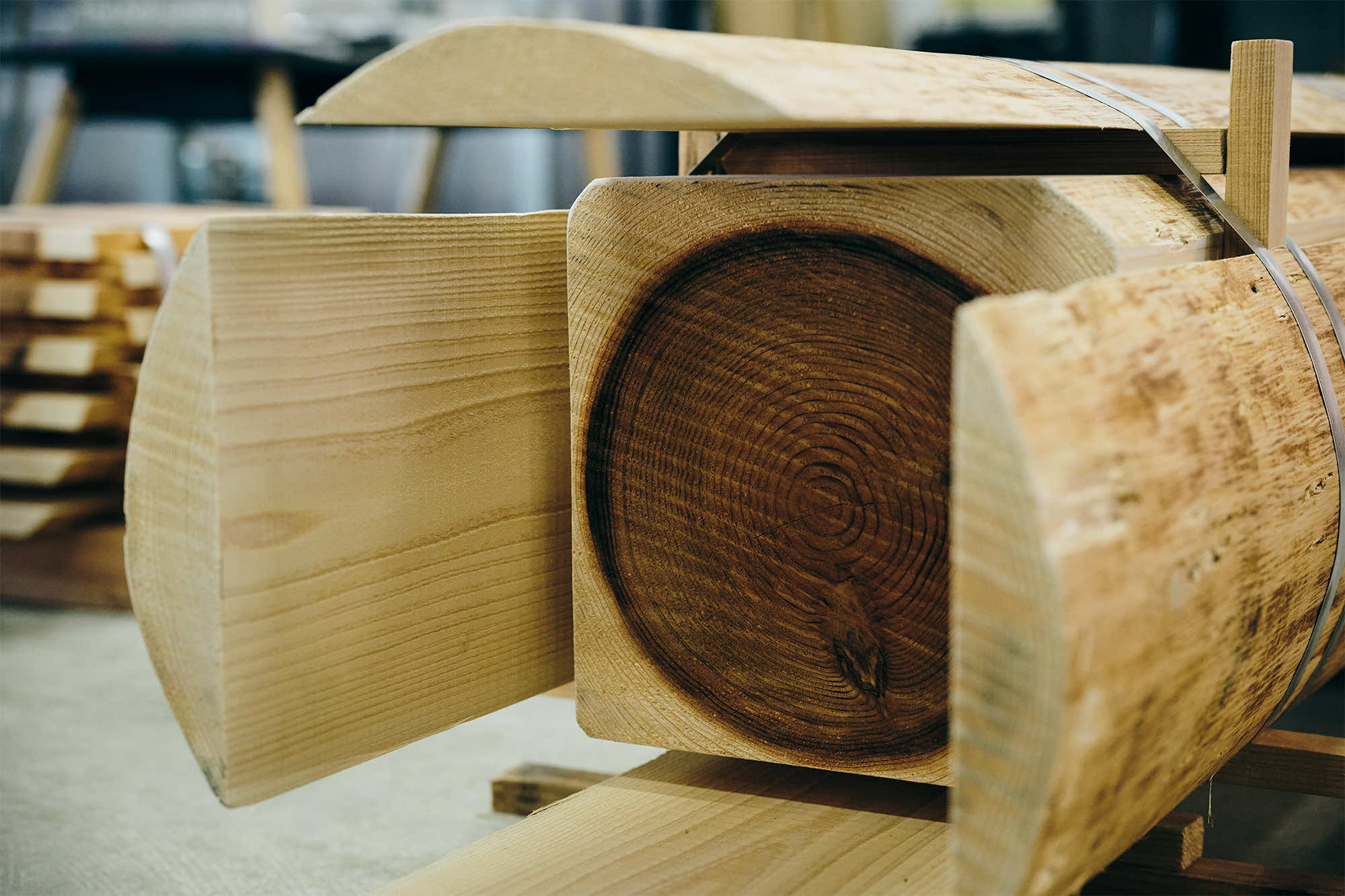
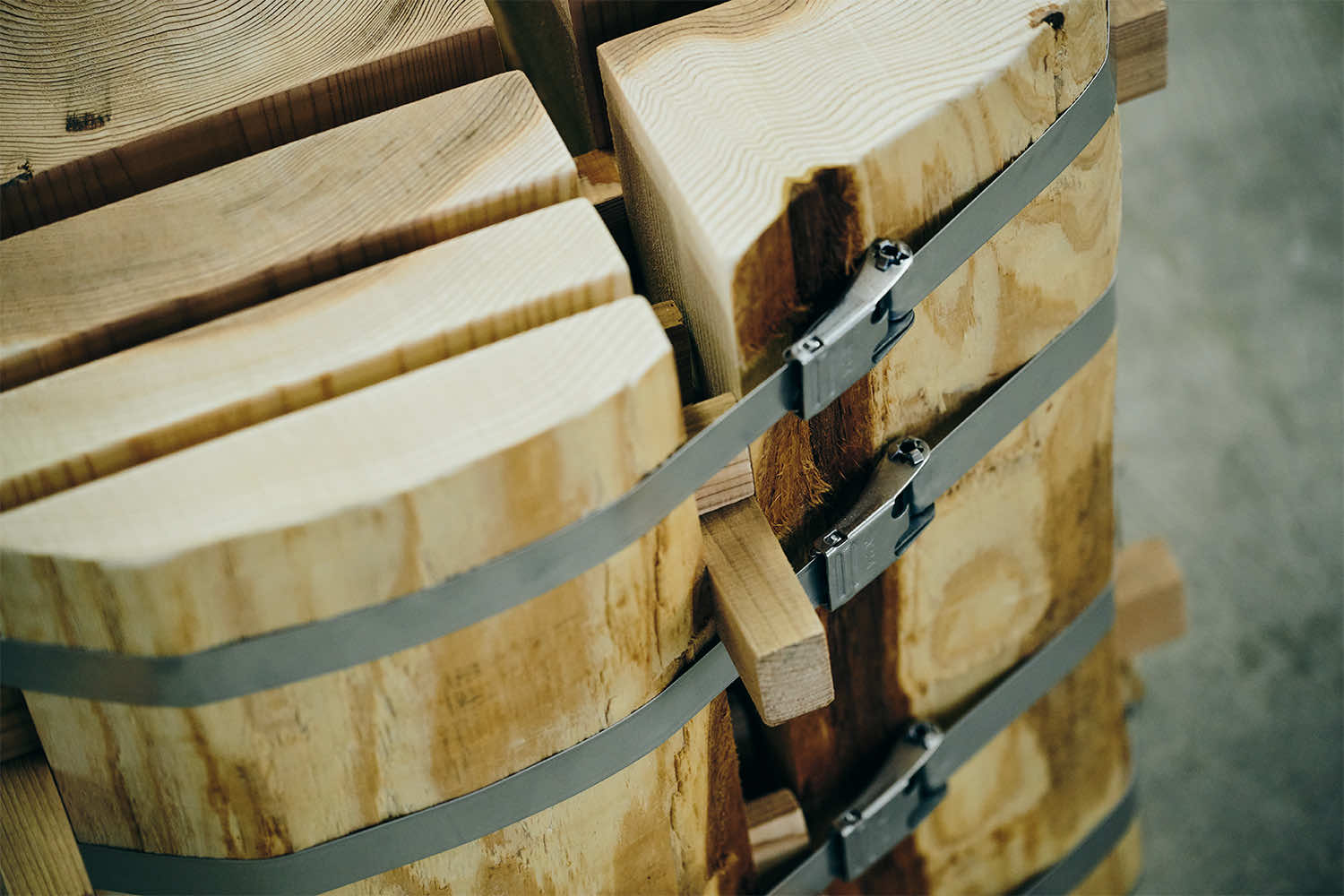
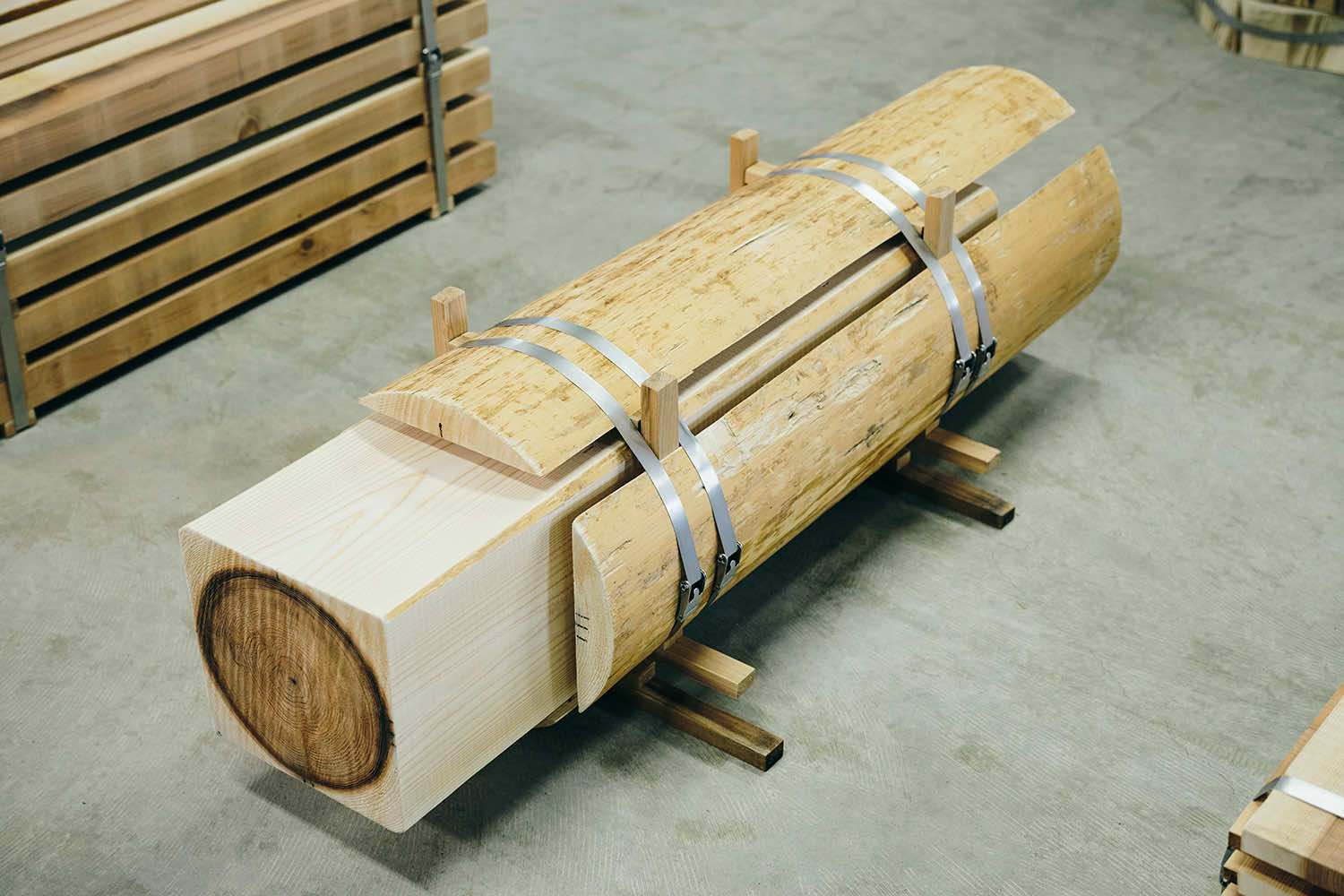
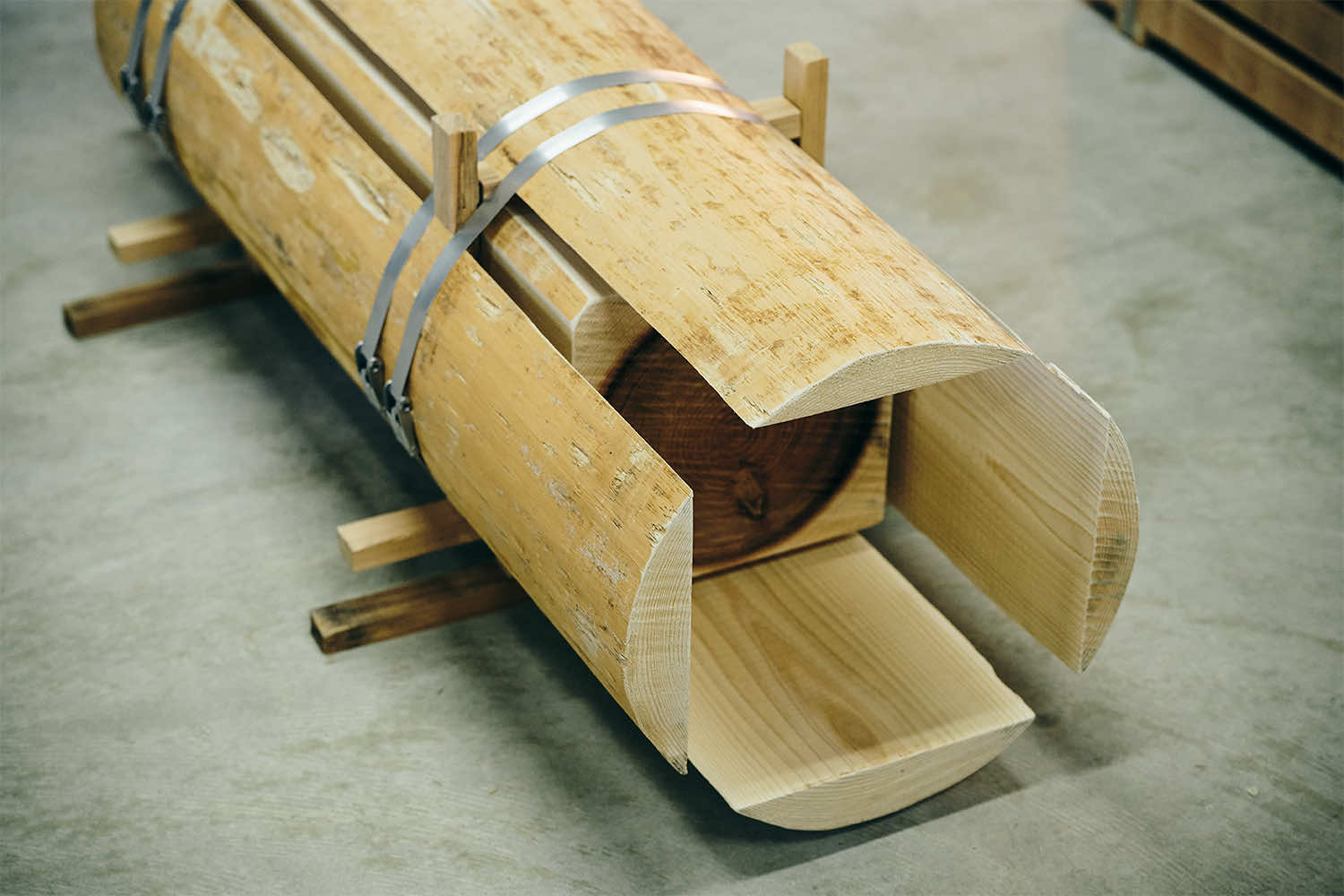
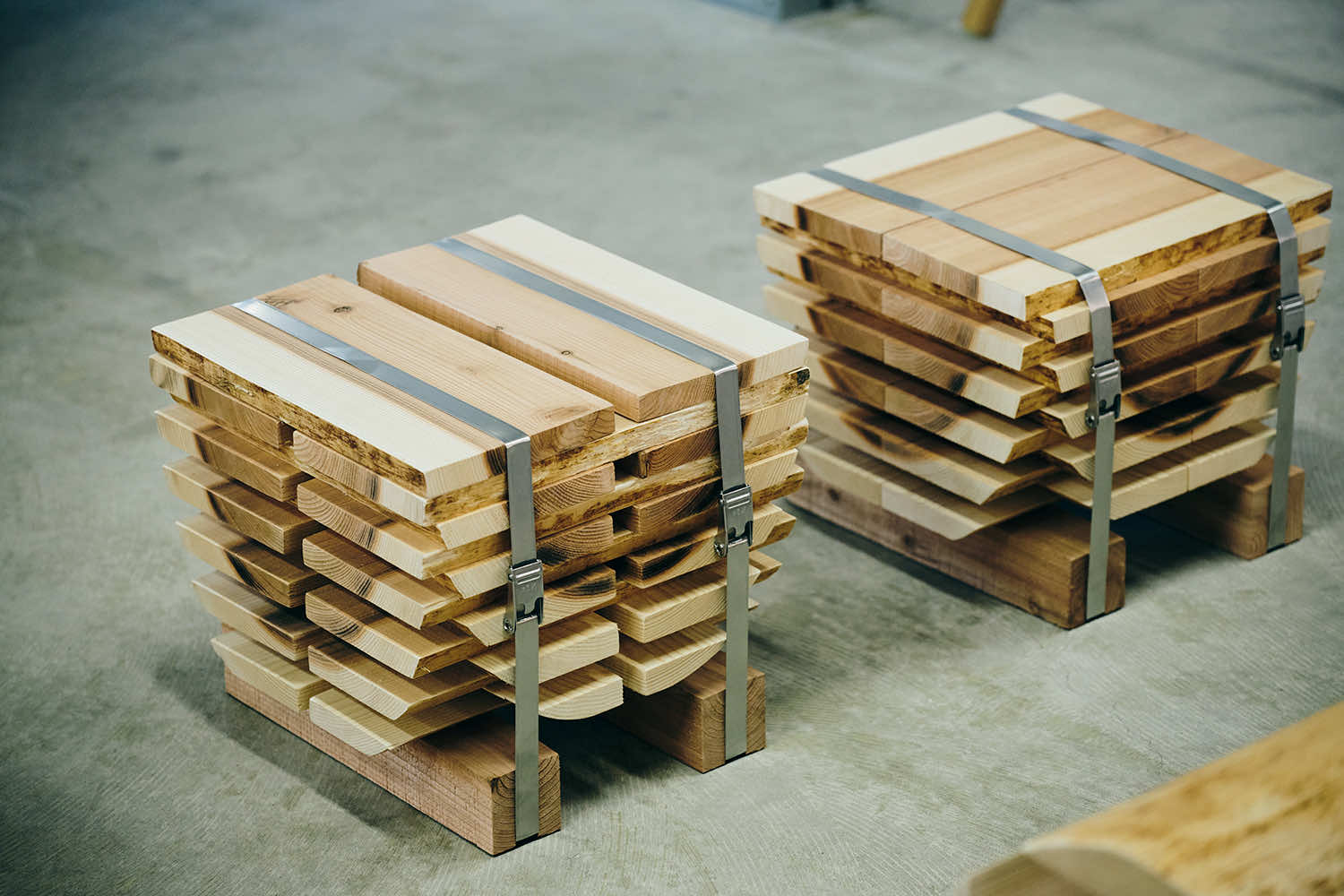
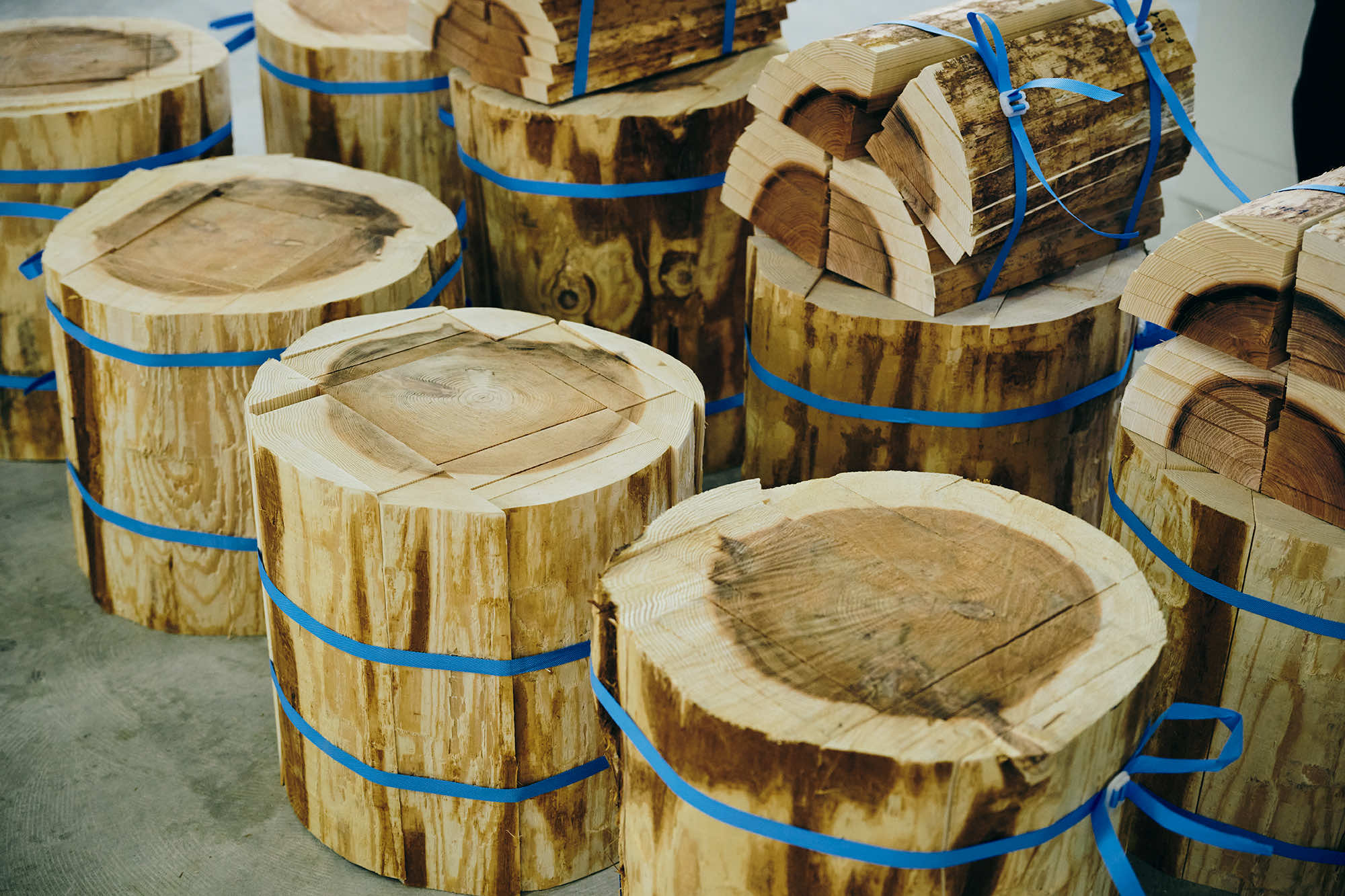
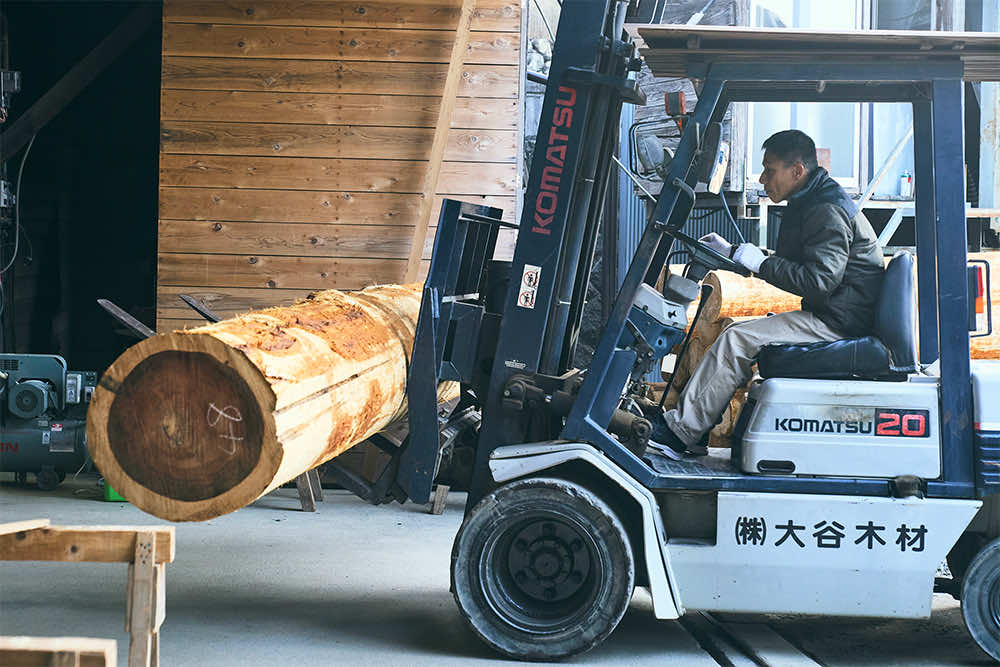
Mr. Nakamura says he kept the design understated and simply reconfigured the wood a little. But the benches and stools carved from a single log are modern art pieces that evoke the process of how felled trees are turned into lumber. The cuts typically used for standard building materials are retained as they are, clearly showing how efficiently the wood is cut with minimal waste. Simply arranging the pieces to make use of the gaps or rearranging them to vary the direction of the grain instantly enhances the aesthetic appeal of the growth rings. Even the bands used to bundle the squared lumber follow the actual process used at sawmills for distribution.

The large log bench highlights the wood grain which has had its bark freshly stripped and makes a striking statement, as if squared lumber projected from the log itself. When you witness the sawmilling process, something few people actually get to see, you can’t help but feel the vitality inherent in the logs and the raw power of wood as a material. It’s a work created by human hands, but it seems to convey an almost palpable sense of the forest.

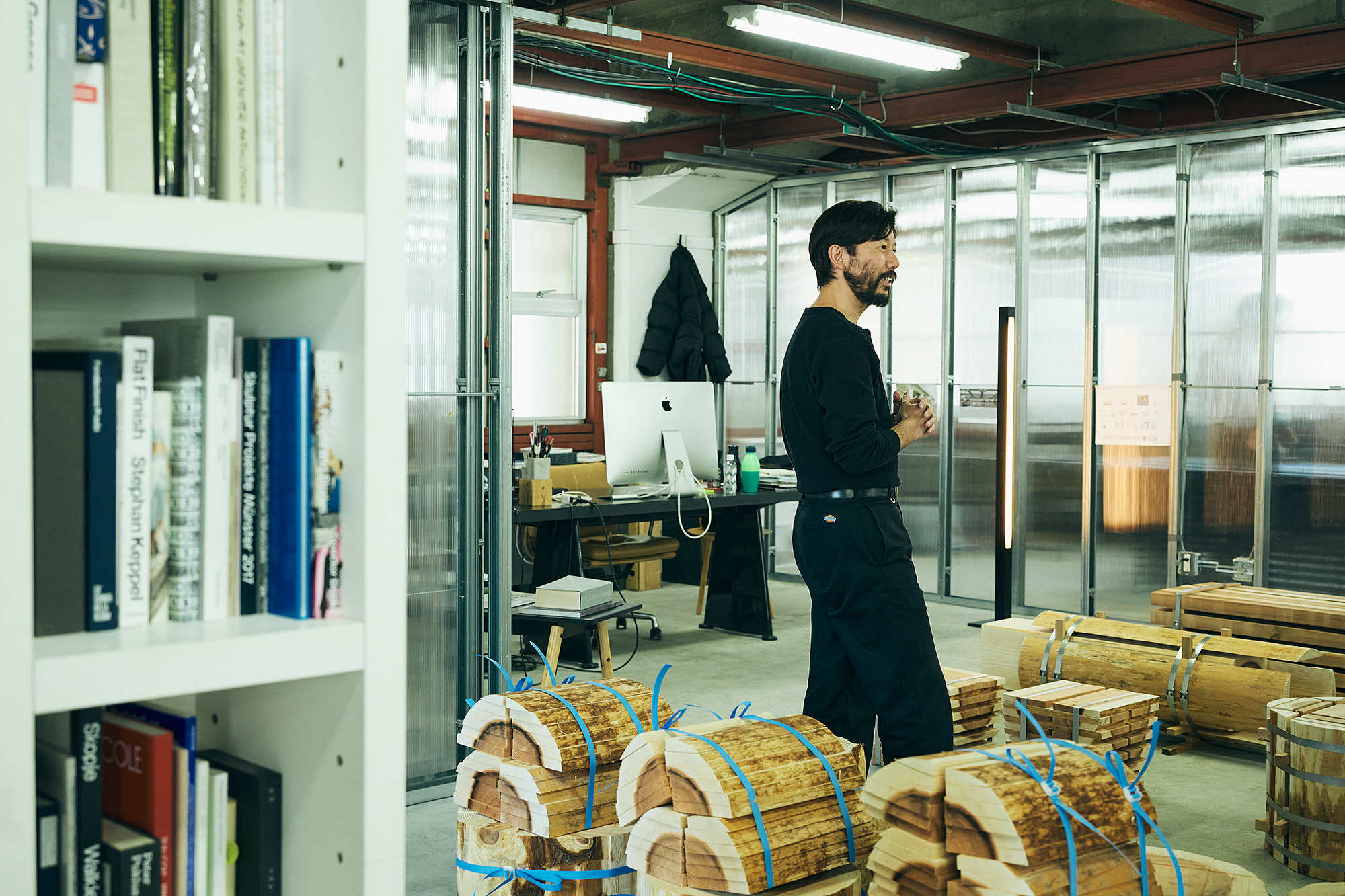
“It’s an art piece, but it’s also a product that we can actually touch and use,” says Mr. Nakamura. “With these solid-wood benches suddenly appearing within GINZA SIX—a space that brims with cutting-edge fashion and art—I think the contrast alone will create a fascinating visual impression.”

A communication tool
that starts with a single log

Mr. Nakamura has also been a key figure in creating new urban cycles within the city by spearheading the SKWAT movement, which temporarily occupies underutilized urban facilities and opens them up to the public. At this exhibition at GINZA SIX, he says, a series of installations await visitors, revealing how Yoshino cedar, over the course of three years, transforms in form, enhances the space, and serves as a tool for communication with visitors.

“In Phase 2, we plan to launch products created by six artist groups active both domestically and internationally,” Mr. Nakamura explains. “We reached out to artists who approach materials with genuine respect and sincerity. We will provide each artist with a 20-meter log. They will use four meters of the log to freely create a product. We ourselves are very much looking forward to seeing what kinds of products will emerge.”

“Thereafter, in Phase 3, the artists will be given free rein over the remaining 16 meters of the 20-meter log and challenged with creating small-scale architectural structures. By adding different content, these could become a café, a DJ booth, or even a bookstore. These will be distributed as pop-up installations throughout the facility to host small events, thereby creating community spaces. This initiative lets customers actually witness the entire process as it unfolds across Phases 1, 2, and 3.”

An art park featuring Yoshino cedar
will also emerge on the rooftop.

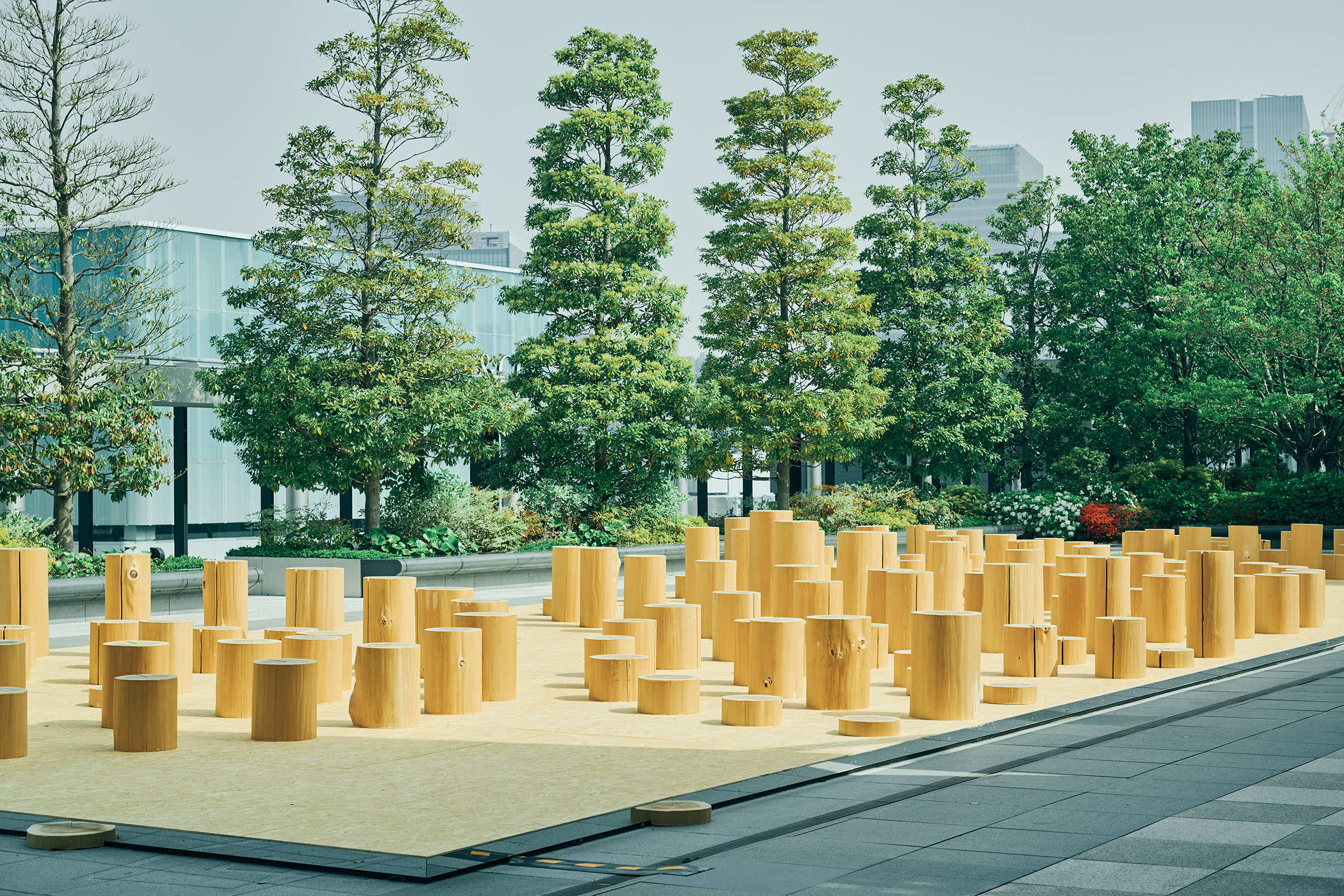
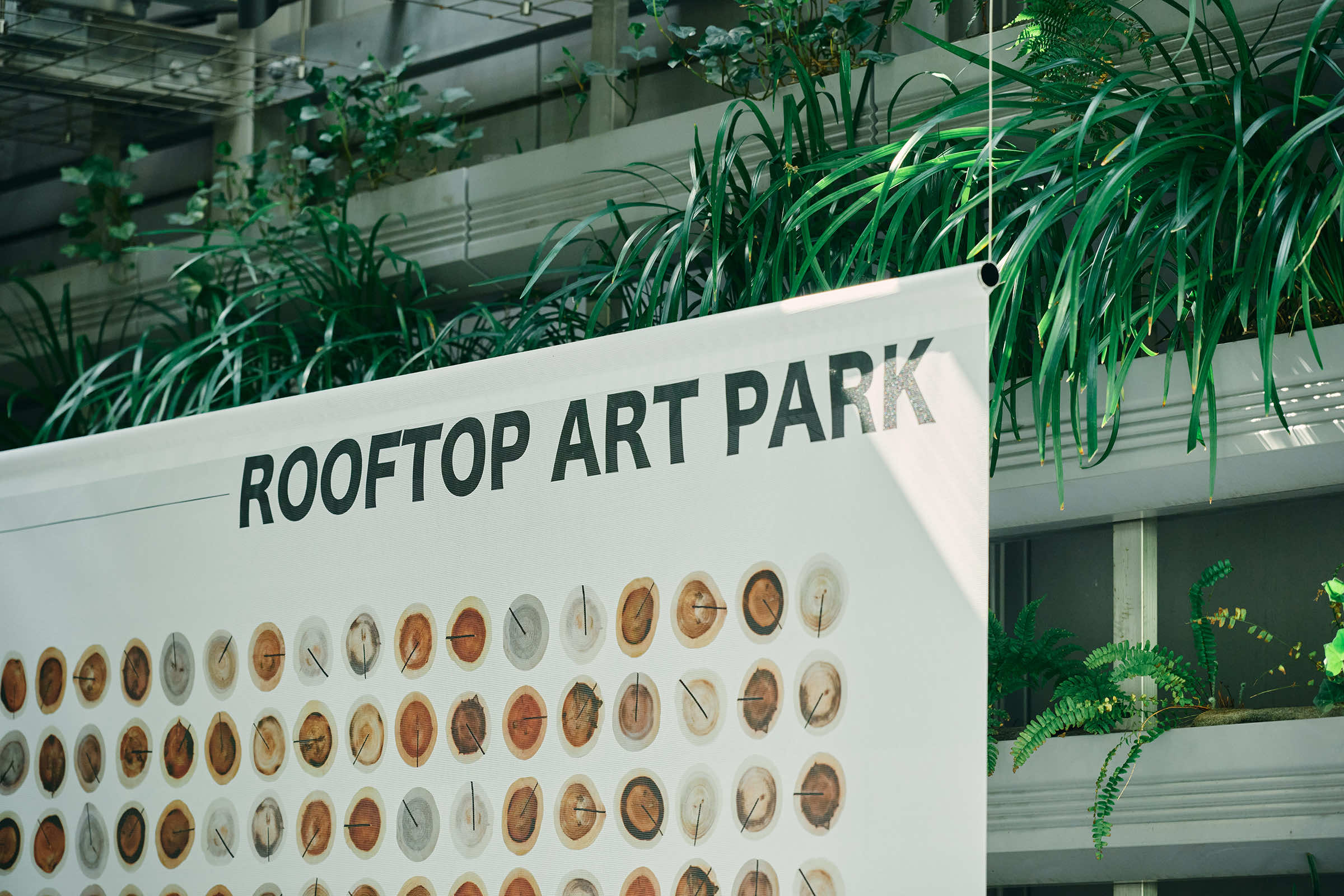
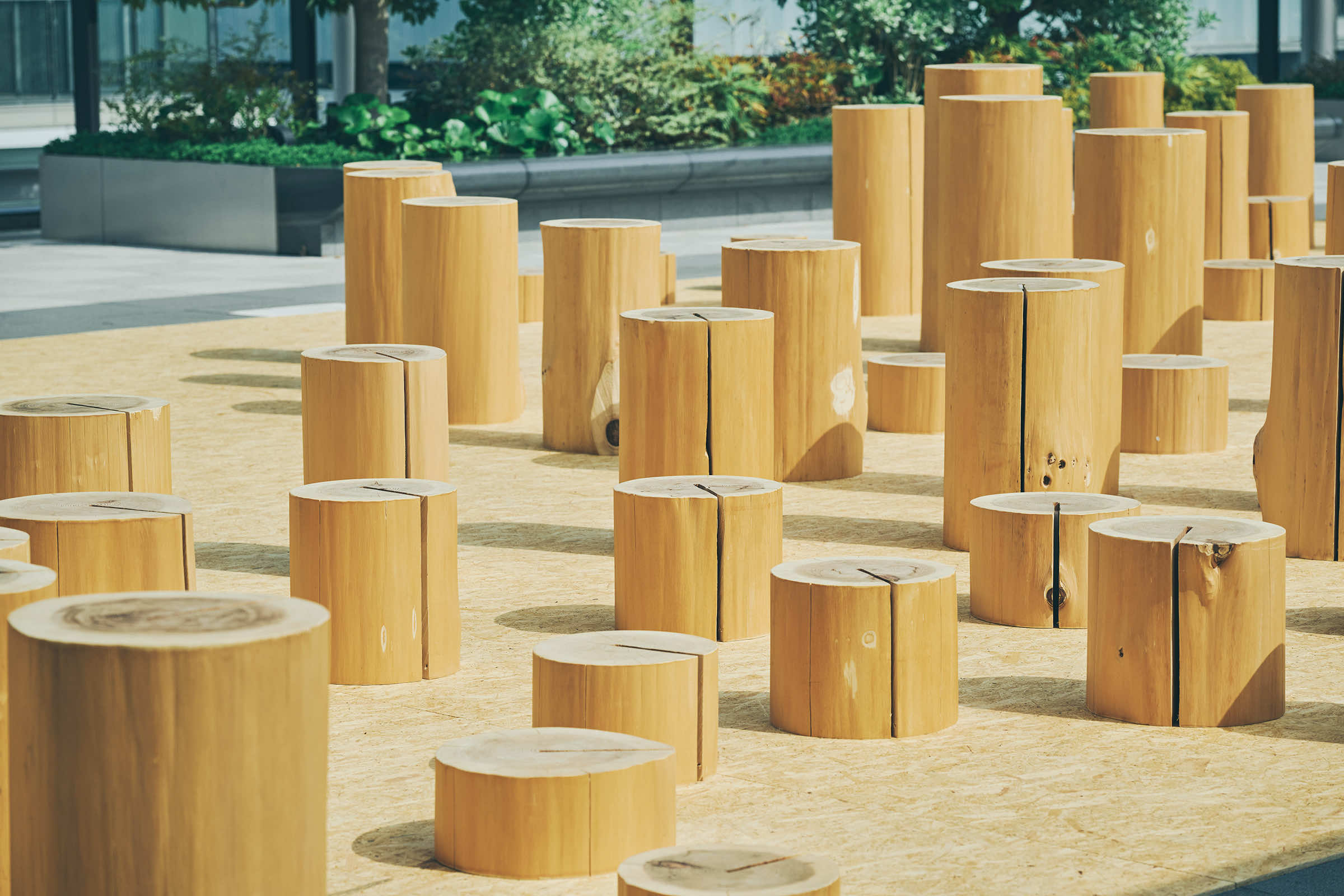
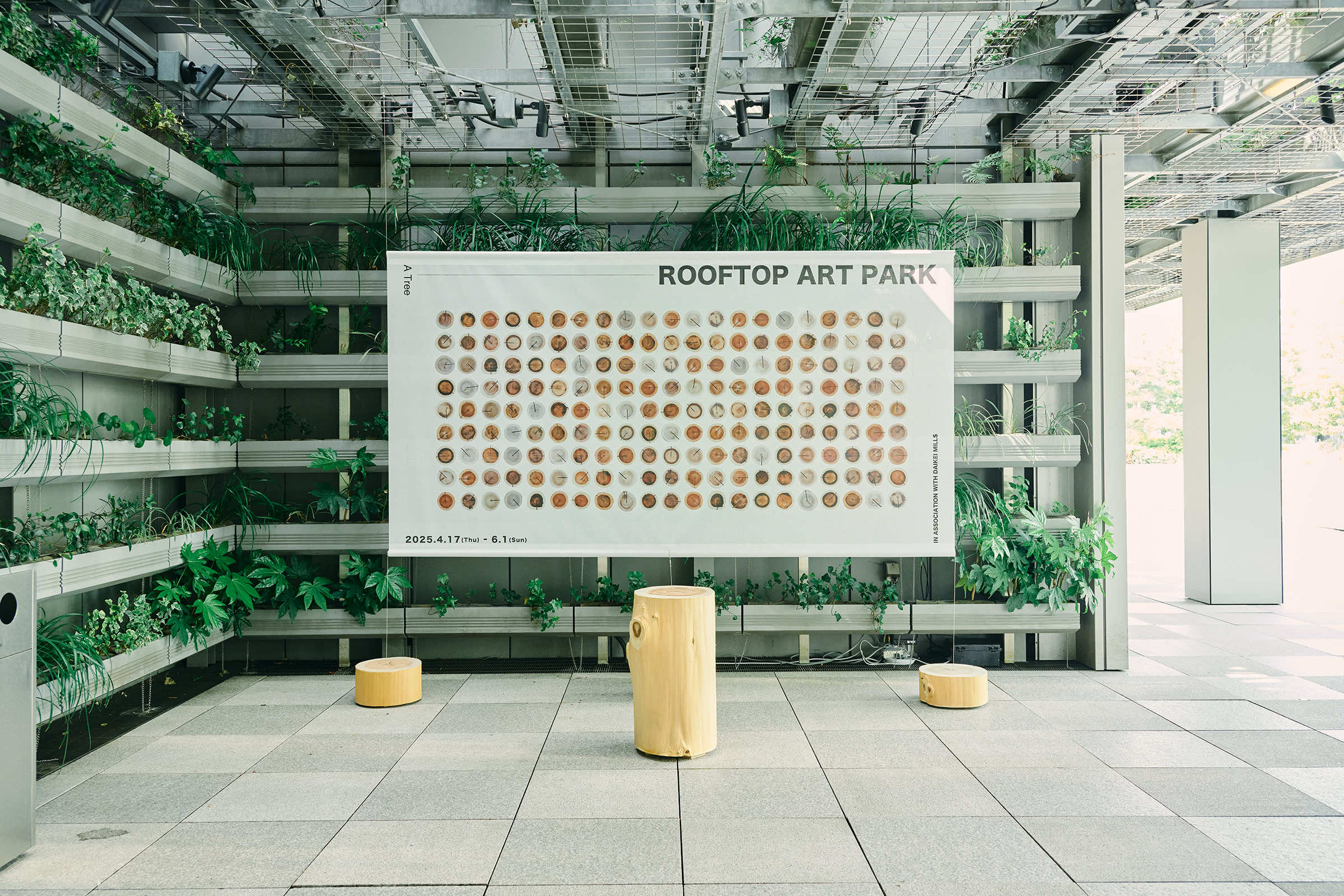
An art park featuring Yoshino cedar will appear on the rooftop. The park is sure to delight families with children and international visitors alike.

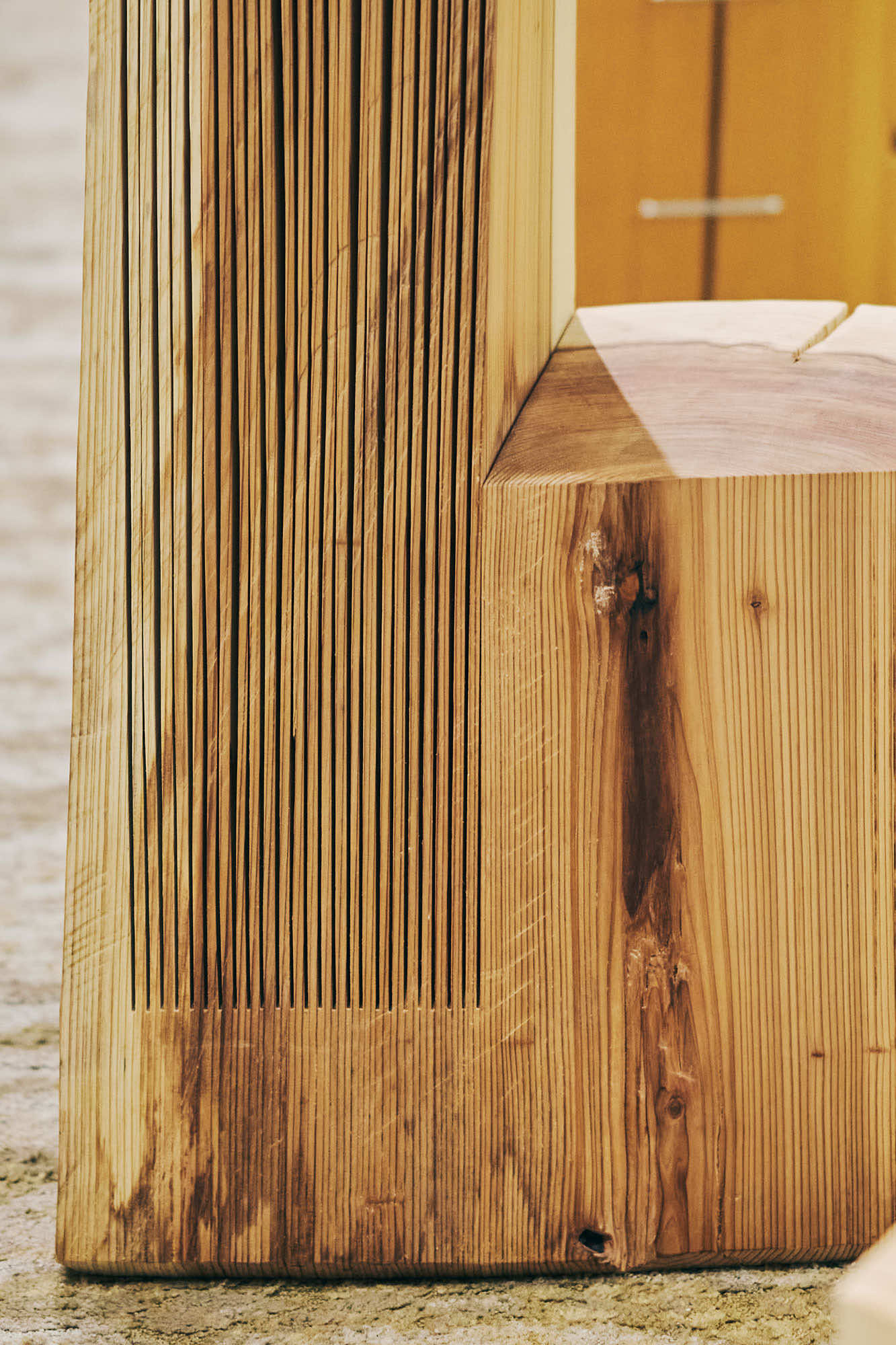
“The Yoshino cedar featured in the art park created in collaboration with HAKUTEN CREATIVE has undergone a traditional sawmilling process called ‘sewari[NQ: “seiwari”?]’ (back-splitting) to prevent and reduce surface cracking caused by drying,” Mr. Nakamura explains. “During the day, children can jump around on the steps. At night, visitors can enjoy a fantastical lighting installation created using this back-splitting, a spectacle not visible during the day.

Because GINZA SIX has such a strong affinity with art, there’s something about the space that allows even a single log lying there to trigger a pleasant illusion, prompting people to wonder, ‘Could this be art, too?’ From this perspective alone, I believe there’s great significance in presenting this project, A Tree, which prominently features the natural material of Yoshino cedar, at GINZA SIX.”

A Tree:Phase 1

Creators
DAIKEI MILLS, HOUEI FORESTRY, Ohtani Mokuzai
Exhibition Venue
Rest areas around the central atrium on the 3rd to 5th floors
Exhibition Period
From Thursday, April 17, 2025
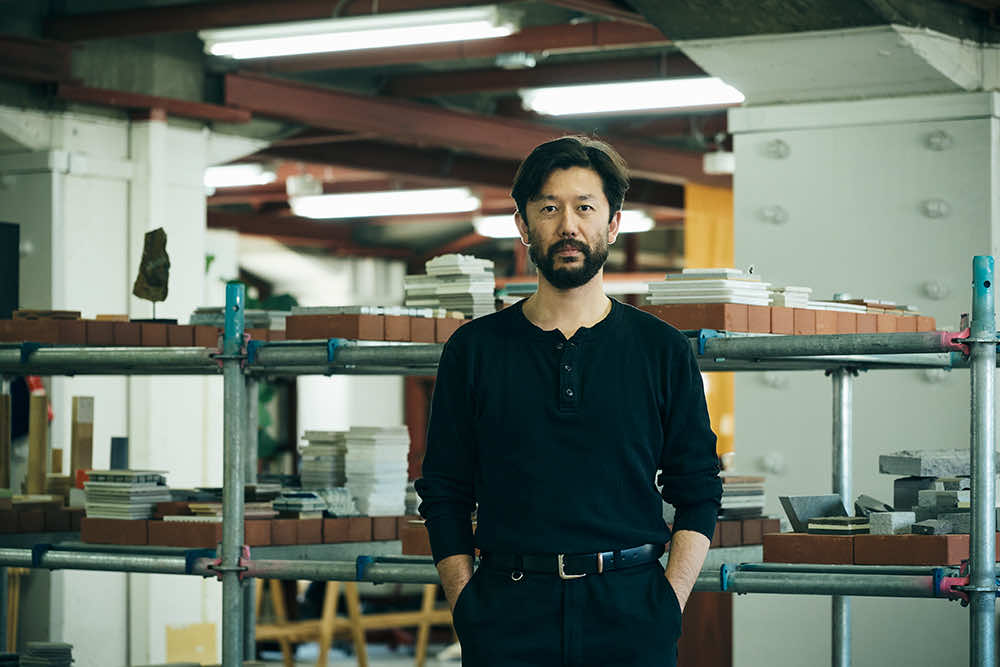
DAIKEI MILLS 中村圭佑

DAIKEI MILLS

DAIKEI MILLS is an architectural firm based in Tokyo. From commercial spaces for companies such as CIBONE, ISSEY MIYAKE, NOT A HOTEL, and LEMAIRE to the offices of creative firms like avex, kontakt, and Takram, the firm has worked on a wide range of projects, consistently exploring through its design practices the relationship between people and space.

Keisuke Nakamura

Born in 1983, Keisuke Nakamura is the representative of the architectural firm DAIKEI MILLS and SKWAT. He established the multipurpose free space VACANT in 2009 and the architectural firm DAIKEI MILLS in 2011. In 2020, he launched SKWAT, a movement that temporarily occupies urban voids (vacant facilities and urban spaces) and opens them up to the public. He also operates SKAC, an arts and culture center located beneath elevated train tracks, developed as part of the redevelopment of the area between JR Ayase Station and Kameari Station. Since 2021, he has served as part-time lecturer in the Department of Architecture and Environmental Design at Tama Art University.

https://www.instagram.com/skwat.site/ https://www.instagram.com/daikei_mills/
豊永林業株式会社

Houei Forestry Co., Ltd.

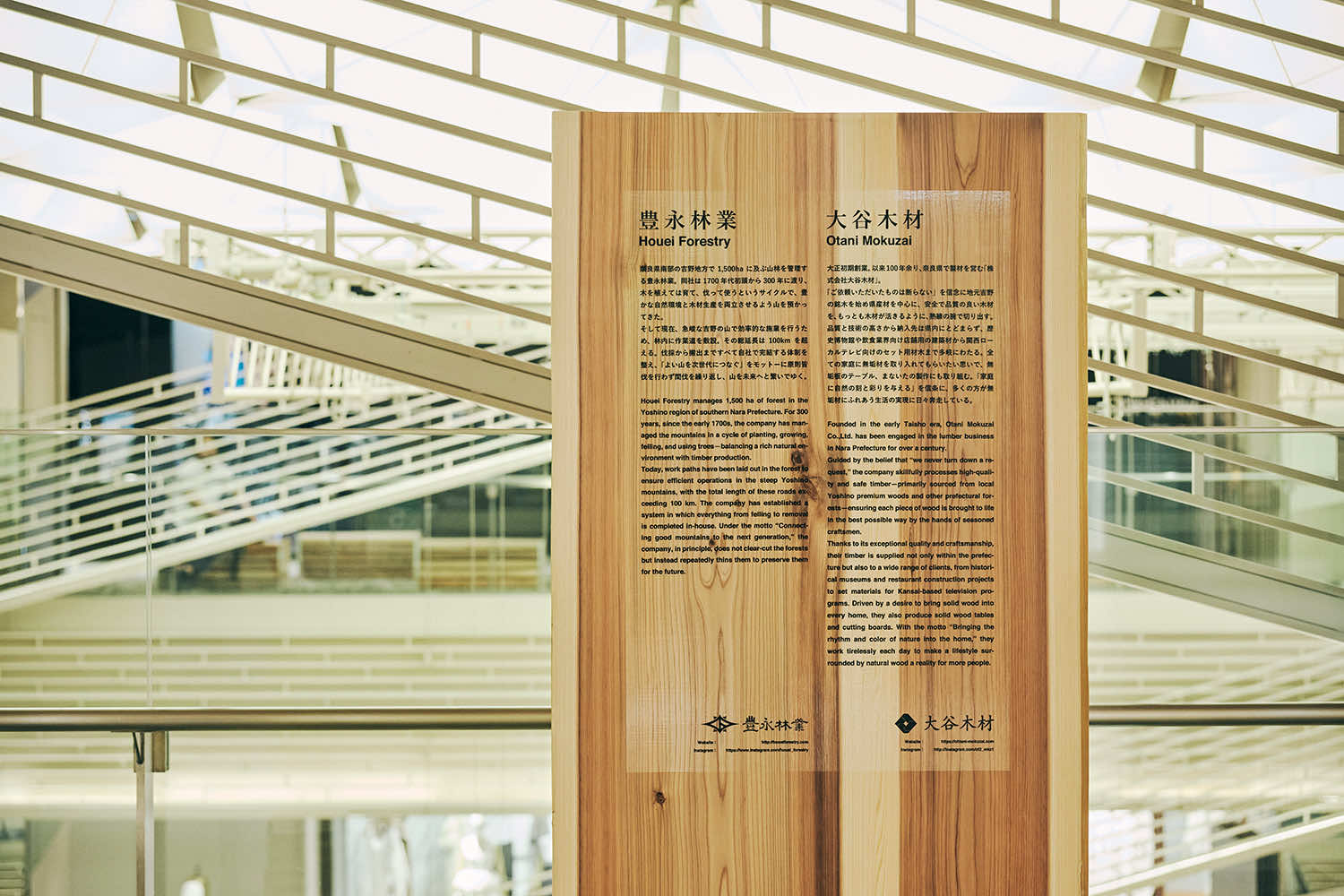
Founded in 1967, Houei Forestry manages 1,500 hectares of the Yoshino forestry region (where Japan’s earliest artificial afforestation efforts began) currently owned by the 16th generation of a forest-owning family. The company works diligently daily to maintain the mountain, performing tasks like site preparation, planting, underbrush clearing, pruning, and thinning.

https://houeiforestry.com
株式会社大谷木材

Ohtani Mokuzai Co., Ltd.

Founded in 1915, Ohtani Mokuzai operates a sawmill in Shimoichi-cho, Nara Prefecture. It produces high-quality lumber that makes the most of the natural appeal of the material, focusing primarily on premium timber from the local Yoshino region and other prefectural sources. Customers range from history museums and retailers to media production companies in need of set materials. Driven by a desire to see more homes incorporate solid wood, the company is also dedicated to crafting tables and cutting boards.

https://ohtani-mokuzai.com

[CREDIT]

Photos:
MEGUMI(tokyo), Yoshinori Kataoka [INFOCUS](Yoshino)
Text:
Chisa Nishinoiri
Web design:
Tomohiro Tadaki [Thaichi]
Edit & Produce:
Hitoshi Matsuo [EDIT LIFE], Rina Kawabe [EDIT LIFE]